
Side Dishes
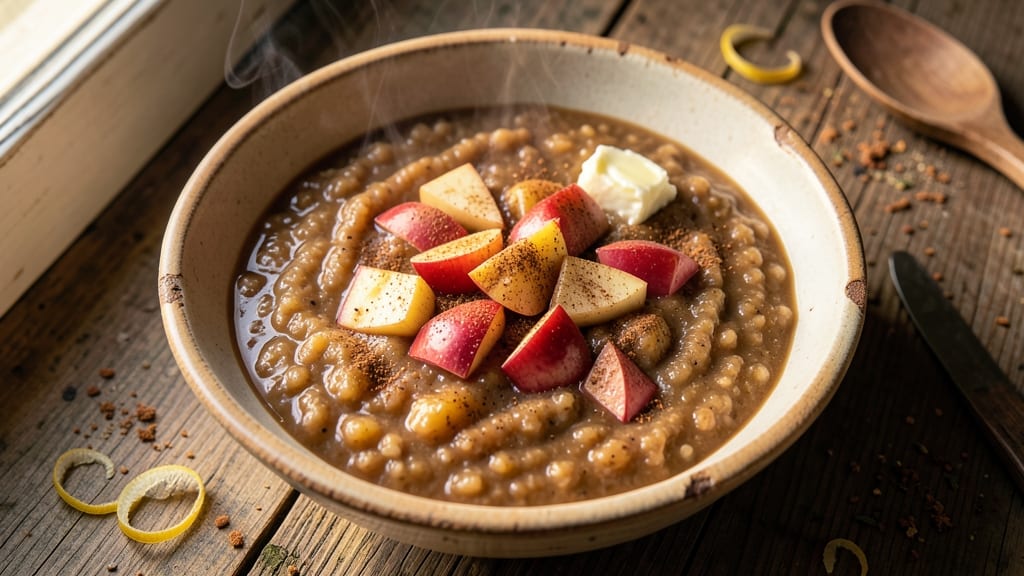
This 17th-century apple and potato porridge transports you to a rustic kitchen where simple ingredients created hearty meals. The recipe relies on just potatoes, apples, salt, and a whisper of cinnamon—no refined sugar or modern shortcuts.
Historical records suggest porridges like this were staples during harvest seasons, offering warmth and sustenance with minimal effort. The slow simmering of grated potatoes and apples creates a thick, creamy texture that feels both comforting and surprisingly sophisticated for its era.
What makes this dish authentic is its reliance on period-appropriate techniques: grated potatoes (no peeling, as skins were considered valuable), apples for natural sweetness, and a single spice—cinnamon—to balance the earthy flavors.
Unlike modern versions, this porridge was likely cooked in a heavy iron pot over an open flame, allowing flavors to meld deeply. The result is a dish that’s rustic yet refined, with a subtle sweetness from the apples and a satisfying heartiness from the potatoes.
This recipe delivers a foolproof, one-pot meal that requires only basic ingredients and patience. The slow cooking process transforms humble ingredients into something unexpectedly elegant, making it perfect for historical reenactments, cozy autumn evenings, or anyone craving a taste of the past.
Every spoonful carries the simplicity of 17th-century kitchens, yet feels surprisingly modern in its balance of flavors.
Serve this porridge warm, perhaps with a drizzle of honey if available, or as a side to roasted meats—a dish that would have been familiar to both peasants and gentry alike.
The beauty of this recipe lies in its authenticity without compromise, proving that some of history’s simplest meals are still worth making today.
Ingredients for apple and potato porridge 17th century
Four core ingredients and a whisper of cinnamon create this historically accurate porridge.
| Ingredient | Amount | Notes |
|---|---|---|
| Russet Potatoes 🥔 | 2 lb | Unpeeled, grated with skins |
| Apples 🍎 | 3 medium | Sweet-tart variety like Granny Smith |
| Ground Cinnamon 🌿 | 1 tsp | Freshly ground for authentic flavor |
| Sea Salt 🧂 | 1 tsp | Fine grain preferred |
| Fresh Water 💧 | 4 cups | Filtered or spring water ideal |
| Unsalted Butter 🧈 | 2 tbsp | Cold, cubed for slow melting |
| Honey 🍯 | 1 tbsp | Optional, for serving only |
| Heavy Cream 🥛 | ½ cup | Optional, for modern richness |
The potatoes are the foundation—Russet works best for its starchy texture, and leaving the skins on adds valuable nutrients just as 17th-century cooks would have done. Local farmers markets often carry heirloom varieties that would have been available in the 1600s, though any russet will suffice. Apples should be firm and slightly tart—Granny Smith or Bramley are excellent choices, though any cooking apple will work. The cinnamon must be ground fresh; Penzeys or bulk bins at specialty stores offer the highest quality. Grate the potatoes using a box grater with medium holes—this mimics the manual grating methods of the era.
No honey available? Maple syrup at half the amount serves as an acceptable substitute, though it carries a different flavor profile. Want to keep it strictly period-appropriate? Skip the honey entirely—this porridge was traditionally served plain or with a sprinkle of cinnamon. The heavy cream is the only modern addition; historical recipes would have used none. For a more authentic texture, reduce the water slightly and stir frequently to develop the natural starches. If using an iron pot, preheat it thoroughly—this was the standard cookware of the time and imparts a unique flavor.
This porridge keeps beautifully in the fridge for 4-5 days in an airtight container, though it's best enjoyed fresh. For long-term storage, freeze portions in ice cube trays—perfect for single servings. Reheat gently over low heat, adding a splash of water if needed. The flavors deepen overnight, making it even more satisfying the next day. For historical reenactments, serve in wooden bowls with a sprinkle of fresh cinnamon—just as it would have been presented in 17th-century kitchens.
Why You'll Love This Recipe
- No Peel Required: I swear by this trick—just scrub those Russets and chop them straight into the pot with the apples. No peeling, no fuss, and the skins add a subtle earthiness that makes it taste like you’ve been cooking all day.
- Sweet-Savory Magic: The cinnamon and salt do all the work here—warm, cozy spice cutting through the natural sweetness of the apples while the potatoes keep it hearty. Honestly, it’s the kind of dish where you’ll forget it’s "just" porridge.
- Leftovers That Shine: This keeps for days in the fridge, and reheats like a dream. I’ve served it cold the next morning with a drizzle of honey, or warmed it up for lunch—no one ever guesses it’s yesterday’s dinner.
- Pantry Staple Power: You’re using ingredients you already own: potatoes, apples, cinnamon, salt, and water. Between us, that’s cheaper than takeout and half the ingredients of most "fancy" breakfasts. My wallet thanks me every time.
Step-by-step instructions for apple and potato porridge
This rustic porridge brings 17th-century warmth to your table with simple techniques and bold flavors.
Prepare the Potatoes and Apples
Using a box grater or food processor, grate the 2 lb Russet Potatoes with skins on into a large bowl. The skins add earthy depth and fiber—don't peel them. Core and dice the 3 medium Apples into small, even pieces. I prefer Granny Smith for their tartness, which balances the potatoes' sweetness. Keep the apple pieces uniform so they cook at the same rate.
Transfer both the grated potatoes and diced apples to a heavy-bottomed pot. The skins and apple texture will create a satisfying rustic mouthfeel in the finished porridge. Reserve any apple juice that collects in the bowl—it's packed with flavor and should be added to the pot later.
Simmer with Spices and Water
Add the 4 cups Fresh Water, 1 tsp Ground Cinnamon, and 1 tsp Sea Salt to the pot. Bring to a gentle boil over medium-high heat, then immediately reduce to a simmer. I like to stir occasionally during the first 10 minutes to distribute the spices evenly. The mixture will foam vigorously at first—this is normal as starches release from the potatoes.
Simmer uncovered for 20-25 minutes, stirring every 5 minutes, until the potatoes are completely tender and the mixture thickens into a creamy consistency. You'll know it's ready when a wooden spoon leaves a clean trail in the porridge and the potatoes collapse easily under gentle pressure. If the mixture seems too thick before this point, add 2-3 tablespoons of water to maintain the proper texture.
Finish with Butter and Cream
Once the porridge reaches a thick, velvety consistency, remove it from heat. Stir in the 2 tbsp Unsalted Butter, cubed, and the 0.5 cup Heavy Cream. The butter will melt slowly, adding richness, while the cream lightens the texture slightly. Let the mixture sit for 2 minutes to allow the butter to fully incorporate—this prevents lumps and creates a silky finish.
Taste and adjust seasoning if needed. The cinnamon should be warm and aromatic, the salt balanced against the sweetness. For an authentic 17th-century touch, I recommend serving immediately while the porridge is still warm, allowing the natural flavors to shine without modern embellishments.
Serve with Honey (Optional)
Ladle the porridge into warm bowls and drizzle each serving with 1 tbsp Honey. The honey enhances the apple's natural sweetness and provides a pleasant contrast to the earthy potatoes. For a more rustic presentation, garnish with an extra sprinkle of cinnamon or a few apple slices on top. This final touch not only adds visual appeal but also reinforces the spiced harmony that defines this dish.
The porridge should be thick enough to coat the back of a spoon but still light enough to allow the individual flavors of potato and apple to be distinguished. Serve with crusty bread to soak up any remaining porridge—it's a tradition that dates back centuries and remains delightfully satisfying today.
Pro Tips For Making Apple And Potato Porridge 17th Century
- PEEL POTATOES THIN: I learned this the hard way—thick skins turn your porridge into a gummy mess. Use a sharp knife and slice off just the outer layer, leaving the pale flesh intact. The texture will be creamy without the gluey aftermath.
- COOK APPLES UNTIL SOFT: Don’t rush the apples—they should collapse into the potatoes, not just float. Simmer them until they’re fork-tender (about 10-12 minutes), or they’ll stay stubbornly crunchy. (Yes, even if you’re impatient like me.)
- SALT THE WATER WELL: Skimping on salt here means bland porridge later. Use at least 1 teaspoon per quart of water—enough to taste it before the potatoes even go in. The starch absorbs flavor, so don’t hold back.
- STIR LOW AND SLOW: After the potatoes break down, switch to a wooden spoon and keep the heat low. High heat turns this into glue; gentle stirring keeps it thick and velvety. (Your future self will thank you.)
Storing and reheating this recipe
Fridge Storage
Store your porridge in an airtight glass container for up to 4-5 days—the flavors actually deepen overnight as the spices meld together. I use Pyrex with snap-on lids because they seal tightly and are easy to reheat.
Let it cool completely before refrigerating to prevent condensation, which can make the porridge watery. The texture will thicken further in the fridge, so you may need to add a splash of water when reheating. 🥫
Freezer Preservation
For longer storage, freeze portions in ice cube trays or small airtight containers. Portion into single-serving sizes for easy reheating later. Label with the date—this porridge stays excellent for up to 3 months.
When ready to eat, thaw overnight in the fridge, then reheat gently. Freezing works best with the heavy cream omitted to maintain the porridge's rustic texture. 🧊
Reheating Methods
For the best texture, reheat on the stovetop over low heat with a splash of water or apple juice to prevent drying. Stir frequently and add more liquid if needed—this porridge should be creamy but not gluey.
Microwave reheating works in a pinch: cover with a damp paper towel and heat in 30-second intervals, stirring between each, until steaming hot. Never reheat above 165°F to preserve its delicate flavors. 🔥
Historical Serving Tips
To serve authentically, transfer the porridge to a wooden bowl or cast-iron skillet warmed over the fire. In 17th-century kitchens, this would have been reheated directly on the hearth. Add a sprinkle of cinnamon or a drizzle of honey at the table—just as they would have done.
The porridge was often served with crusty bread or salt pork for a complete meal, much like a hearty breakfast or harvest feast. 🍯
Texture Adjustments
If your porridge seems too thick after reheating, stir in 1-2 tablespoons of warm water or apple juice until smooth. For extra creaminess, add a pat of cold butter and let it melt slowly.
The key is patience—historical recipes relied on slow cooking to develop the natural starches, so don't rush the process. The result should be silky yet rustic, with distinct potato and apple flavors. ✨
Leftovers Reinvention
Transform leftover porridge into apple-potato pancakes by mixing with a beaten egg and cooking in a buttered skillet. Or spread it on toasted bread with a drizzle of honey for a rustic open-faced sandwich.
These ideas were common in 17th-century households—nothing was wasted! The porridge's versatility makes it perfect for creative leftovers. 🍞
Nutrition facts
Frequently asked questions
Why were potatoes and apples commonly paired in 17th-century porridges?
Potatoes provided essential carbohydrates and filled bellies affordably, while apples added natural sweetness without sugar—a luxury in the 1600s. The tartness of apples also balanced the earthy flavor of potatoes, creating a harmonious taste that required no expensive spices. Historical records show this combination was especially popular during harvest seasons when both ingredients were abundant.
Can I substitute modern potatoes for this recipe?
Yes, but Russet potatoes are ideal—their high starch content creates the perfect creamy texture. If using waxy potatoes like Yukon Gold, expect a slightly firmer result. For authenticity, leave skins on unless they're particularly tough. The skins add fiber and earthy flavor that 17th-century cooks valued.
What's the best way to achieve that rustic 17th-century texture?
Grate the potatoes coarsely (no food processor—box grater mimics period methods) and simmer uncovered for 20-25 minutes without stirring too often. The slow cooking lets starches develop naturally. For extra authenticity, use an iron pot—its heat retention creates the deep, even cooking that defines historical recipes.
Is cinnamon the only spice used in this porridge?
Yes, this recipe stays true to historical accounts where cinnamon was the most common spice available in European kitchens. Ground versions were expensive, so whole sticks were often simmered in the pot and removed before serving. For extra authenticity, use cassia cinnamon (the true 17th-century variety) rather than modern Ceylon cinnamon.
How can I make this porridge more filling for a modern meal?
Serve with crusty bread or salt pork (just as they did in the 1600s) to create a complete meal. For extra protein, stir in crumbled bacon during the last 5 minutes of cooking. The porridge's natural thickness makes it satisfying on its own, but these additions were common period pairings that would have been familiar to 17th-century diners.