Side Dishes
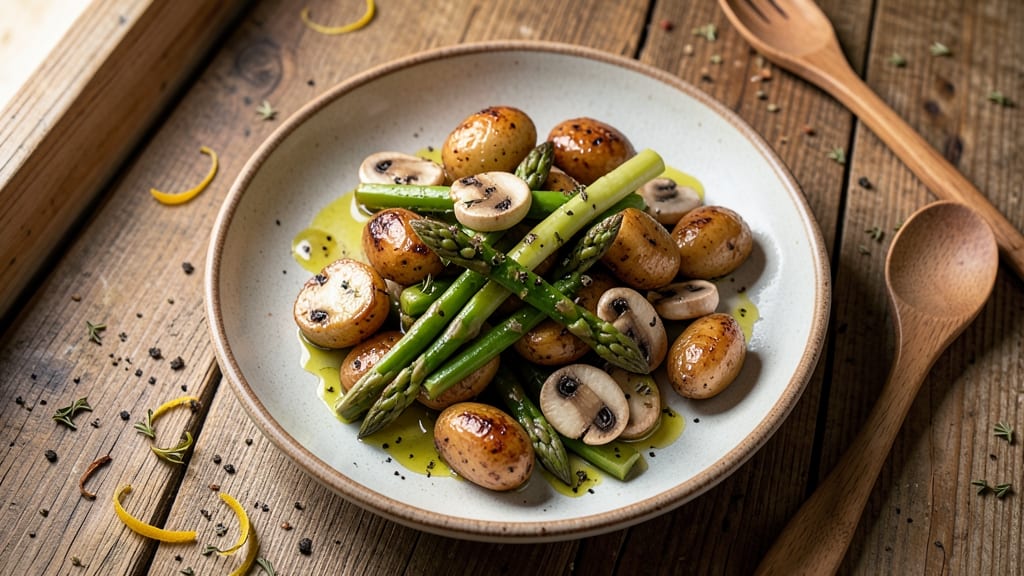
This earthy roasted asparagus mushroom potato recipe transforms simple ingredients into a restaurant-worthy vegetarian dish with caramelized edges and deep umami flavor. The key lies in high-heat roasting that creates crispy potatoes while tenderizing asparagus and mushrooms into perfect bite-sized pieces.
I developed this recipe after realizing how often these three vegetables pair beautifully together—each bringing its own texture and flavor to the plate.
The magic happens in the oven where potatoes develop golden, crackling edges while mushrooms and asparagus roast until tender yet still hold their shape. A simple olive oil and herb marinade enhances their natural flavors without overpowering them.
What makes this dish special is how the vegetables complement each other—creamy potatoes balance the earthy mushrooms and slightly bitter asparagus, creating a harmonious bite every time.
By the time you serve this dish, you'll have a perfectly balanced side that's hearty enough to stand alone or pair beautifully with grilled meats or fish. The caramelized edges add a satisfying crunch, while the tender centers maintain their natural sweetness.
This recipe is designed to be simple yet impressive, making it ideal for weeknight dinners or special occasions when you want something substantial and satisfying.
The best part? It comes together in one pan with minimal prep time, making it both convenient and impressive. Serve with a drizzle of balsamic glaze or a sprinkle of fresh parsley for an elegant finishing touch.
Here's how to create this earthy, flavorful trio that will become a regular on your dinner table.
Ingredients for asparagus mushroom potato
Simple ingredients that roast into restaurant-quality caramelized perfection—just five key items do the heavy lifting.
| Ingredient | Amount | Notes |
|---|---|---|
| Baby Potatoes 🥔 | 1 ½ lb | Quartered, small size preferred |
| Asparagus Spears 🌱 | 1 lb | Trimmed, medium thickness |
| White Mushrooms 🍄 | 8 oz | Cream or button work too |
| Extra-Virgin Olive Oil 🫒 | ⅓ cup | High-quality, fruity variety |
| Dried Thyme 🌿 | 1 tsp | Or 1 tbsp fresh thyme leaves |
| Garlic Cloves 🧄 | 4 cloves | Minced, fresh preferred |
| Salt 🧂 | 1 ½ tsp | Kosher or sea salt |
| Black Pepper 🌶️ | ½ tsp | Freshly ground preferred |
| Balsamic Glaze 🍷 | 2 tbsp | For finishing, optional |
| Fresh Parsley 🌿 | ¼ cup | Chopped, for garnish |
| Vegetable Broth 💧 | ¼ cup | Low-sodium preferred |
| Red Pepper Flakes 🌶️ | ¼ tsp | Optional for heat |
The potatoes are the star here—Yukon Golds or baby reds develop the best caramelized edges, but any small potato works. I grab the organic pre-washed bag from Whole Foods for convenience, but the regular grocery store stuff is fine too. Look for even-sized potatoes so they cook uniformly. The asparagus should be bright green with tight tips—Trader Joe's has great pre-trimmed spears if you're short on time. White mushrooms are versatile, but cremini or shiitake add deeper umami flavor if you want to splurge.
No balsamic glaze? Drizzle with extra olive oil and a squeeze of lemon instead. Short on thyme? Rosemary works at half the amount. The vegetable broth adds moisture without overpowering—low-sodium is key so you don't need to adjust the salt later. If you're feeling adventurous, swap half the mushrooms for sun-dried tomatoes for extra depth. For the garlic, I always use freshly minced—jarred garlic lacks that bright punch, but if you're in a pinch, it'll do.
Prep everything before roasting—this dish is all about even cooking. Store any leftovers in an airtight container for 3-4 days, though honestly it's best eaten fresh. The potatoes keep their crispy edges for about 2 days if you reheat properly—just pop them in a 350°F oven for 10 minutes. For meal prep, roast an extra batch and portion into containers. The asparagus gets a little rubbery when reheated, so I usually save that for fresh eating.
Why You'll Love This Recipe
- One-Pan Magic: I swear by this for nights when I don’t want to scrub a million dishes—just toss everything on a sheet pan, drizzle with olive oil, and let the oven do the work. The potatoes crisp up while the asparagus and mushrooms soften just enough—no flipping, no fuss.
- Earthy Umami Bomb: That combo of mushrooms and thyme? It’s like a little flavor explosion. The mushrooms soak up the olive oil and get tender, while the thyme adds this warm, herby depth that makes the whole dish taste way more special than it sounds.
- Lunchbox Hero: Between us, this is my go-to for meal prep. Roast a big batch on Sunday, and I’ve got hearty lunches all week—pack it cold or reheat it, and it’s still satisfying. (Yes, even on a Tuesday night when I’m craving something substantial.)
- Budget-Friendly Feast: Baby potatoes and asparagus are cheap in season, and mushrooms stretch a long way. I end up with leftovers that taste just as good the second day—sometimes even better, because the flavors meld overnight. My wallet and my freezer both thank me.
Step-by-step instructions for roasting asparagus, mushrooms, and potatoes
This earthy trio comes together with minimal effort but maximum flavor—crispy edges and tender centers guaranteed.
Prep and Season the Vegetables
Start by preheating your oven to 425°F. While it heats, trim the tough ends from the asparagus spears and quarter the baby potatoes into even-sized pieces—this ensures they cook uniformly. Toss the potatoes in a large bowl with 0.33 cup extra-virgin olive oil, 1 tsp dried thyme, 1 tsp salt, and 0.25 tsp black pepper. Give them a good shake so every piece gets coated.
In a separate bowl, combine the mushrooms with 1 tbsp olive oil (reserving the rest for later), 0.5 tsp thyme, 0.5 tsp salt, and 0.25 tsp black pepper. The mushrooms will release their juices, so don't overcrowd them—work in batches if needed. Here's the thing—you want the mushrooms to brown deeply, so don't skip the separate seasoning. This ensures they develop that rich, caramelized flavor while the potatoes roast.
Roast the Potatoes First
Spread the seasoned potatoes in a single layer on two rimmed baking sheets, leaving about ½ inch between each piece. This spacing is crucial—it prevents steaming and guarantees crispy edges. Roast them for 20 minutes until they're starting to brown around the edges but are still slightly tender when pierced with a fork. You'll see them puff up slightly and develop a golden hue—this is your signal to flip them halfway through.
After 10 minutes, carefully flip each potato piece using tongs. The goal is to get even browning on all sides. If you notice any potatoes browning too quickly, move the tray to a slightly lower oven rack. The potatoes should be tender but still hold their shape—overcooking turns them mushy. This step is all about balance: crispy outside, fluffy inside.
Add Mushrooms and Asparagus
While the potatoes roast, heat a large skillet over medium-high heat and add the remaining 0.25 cup olive oil. Once the oil shimmers, add the seasoned mushrooms and cook for 5-6 minutes until they release their moisture and begin to brown. Stir occasionally, but don't crowd the pan—this ensures they develop that deep, savory crust. Transfer the mushrooms to one of the baking sheets with the potatoes.
Now for the asparagus: Toss the trimmed spears with 1 tbsp olive oil, 0.5 tsp thyme, 0.5 tsp salt, and 0.25 tsp black pepper. Arrange them in a single layer on the second baking sheet, laying them flat so the edges crisp up nicely. Return both trays to the oven and roast for another 12-15 minutes until everything is tender and the edges are deeply caramelized. You'll know it's done when the asparagus is bright green and slightly charred at the tips, and the mushrooms are golden brown with crispy edges.
Finish with Broth and Balsamic
Remove the vegetables from the oven and transfer them to a large serving platter. Here's where the magic happens: Pour the 0.25 cup vegetable broth over the hot vegetables, then return the platter to the oven for 2-3 minutes. This steams the vegetables slightly, infusing them with extra flavor and keeping them tender. Watch closely—the broth will bubble and reduce quickly, so don't walk away.
Drizzle everything with the 2 tbsp balsamic glaze and sprinkle with 0.25 cup chopped fresh parsley. If you're feeling adventurous, add a pinch of red pepper flakes for a subtle kick. The balsamic adds a tangy contrast to the earthy flavors, while the parsley brightens everything up. Serve immediately while the vegetables are still hot and crispy—this dish doesn't wait. The combination of textures and flavors is what makes it so special: crispy potatoes, tender asparagus, and rich, caramelized mushrooms all working together.
Pro Tips For Making Asparagus Mushroom Potato
- PARBOIL POTATOES FIRST: I learned this the hard way—skipping the quick boil means your baby potatoes will either turn to mush or stay rock-hard. Toss them in boiling salted water for 5 minutes, then drain and pat very dry before roasting. This guarantees crispy edges without the center going gummy.
- TRIM ASPARAGUS AT THE LAST MINUTE: Fresh asparagus bruises fast, and you don’t want limp spears in your dish. Trim the woody ends right before cooking, then plunge them in ice water for 10 minutes to keep them crisp. Even if you’re impatient, this small step makes a real difference in texture.
- SAUTÉ MUSHROOMS IN BATCHES: Crowding the pan turns mushrooms into a soggy mess. Cook them in two rounds—start with half, let them brown and release moisture, then push them to the side and add the rest. This keeps them golden and flavorful instead of steaming in their own juices.
- UPGRADE WITH A THYME INFUSION: Skip the dry rub and make thyme shine: Heat 1 tablespoon olive oil in the pan until fragrant, then add 1 teaspoon dried thyme (yes, that little) and let it sizzle for 10 seconds. Pour this oil over the finished dish—it’s the thing that matters most for depth of flavor without overpowering.
Common mistakes when making perfect results
Overcrowding the Pan
I’ve made this mistake more times than I’d like to admit—packing the baking sheets too tightly with potatoes, mushrooms, and asparagus. When vegetables touch, they steam instead of roast, resulting in soggy, unevenly cooked edges.
The key is spacing: leave at least ½ inch between each piece so hot air can circulate. For mushrooms, work in batches if needed—they release moisture quickly and need room to brown properly. Trust me, this small adjustment makes all the difference in achieving those perfect caramelized edges. 🌟
Skipping the Flip
After roasting the potatoes for 10 minutes, it’s tempting to leave them alone and let them crisp up. But flipping them halfway ensures even browning on all sides. Without flipping, the bottoms can burn while the tops stay pale.
Use tongs to carefully turn each potato—this guarantees that crispy, golden exterior we’re all after. The same rule applies to asparagus: flip them halfway through roasting for consistent charring. 🔥
Uneven Cooking Times
Potatoes, mushrooms, and asparagus have different cooking times, so don’t assume they’ll all be ready at once. Start with the potatoes—they take the longest to roast. While they’re in the oven, sauté the mushrooms separately to develop their flavor, then add them to the baking sheet.
The asparagus goes in last and cooks fastest. If you try to roast everything together from the start, the potatoes will overcook while the asparagus stays underdone. Timing is everything here! ⏱️
Ignoring the Broth Step
The final 2-3 minutes with vegetable broth might seem like an afterthought, but it’s what ties everything together. Pouring the broth over the hot vegetables steams them slightly, infusing extra flavor and keeping them tender.
Skipping this step leaves the dish dry and flat. Don’t rush it—let the broth bubble and reduce for that perfect finish. It’s the secret to restaurant-quality texture and flavor. 💫
Using Low-Quality Olive Oil
Not all olive oils are created equal, and this recipe demands the best. I always use extra-virgin olive oil with a fruity, peppery finish—like California Gold or Colavita. Cheap or refined oils lack the flavor depth needed to enhance the natural tastes of the vegetables.
The oil is the base for all those caramelized edges, so invest in a good bottle. Your taste buds will thank you! 🫒
Overcooking the Asparagus
Asparagus cooks faster than potatoes and mushrooms, so keep a close eye on it. Once the tips turn bright green and slightly charred, it’s done—any longer and it turns rubbery. If you’re unsure, cut one spear open to check for tenderness.
The same goes for mushrooms: they should be golden brown with crispy edges, not dark and dried out. A little char adds flavor, but burnt edges ruin the dish. Timing is everything! 🌱
Nutrition facts
Frequently asked questions
Can I make this recipe with different types of potatoes?
While baby potatoes create the best texture, you can use Yukon Golds or red potatoes by cutting them into 1-inch cubes. Russet potatoes work too, but they'll be fluffier inside. The key is even-sized pieces so they cook uniformly. For extra crispiness, try fingerling potatoes—they roast beautifully with minimal prep.
How do I adjust this for a larger group?
Double the recipe and use two large baking sheets or a half-sheet pan for even roasting. For 8 servings, increase ingredients by 50% and roast in batches if needed. The timing stays the same, but watch for crowding. Pro tip: Use a wire rack on a baking sheet to maximize airflow and crispiness for larger batches.
What if I don't have balsamic glaze?
No problem! Skip the glaze and finish with a drizzle of extra olive oil and a squeeze of lemon juice instead. For extra depth, add 1 tsp maple syrup or 1 tbsp red wine vinegar to the broth before pouring it over the vegetables. The acidity still brightens the dish beautifully.
Can I make this ahead of time?
Yes, but with a few adjustments. Roast the vegetables as directed, then let them cool completely. Store in an airtight container for up to 3 days. Reheat in a 375°F oven for 10-15 minutes until crispy again. For best texture, add fresh parsley and balsamic glaze just before serving. The potatoes won't be as crispy as fresh, but the flavors will still be delicious.
What wine pairs well with this dish?
A crisp Sauvignon Blanc or Pinot Grigio complements the earthy flavors beautifully. For red wine lovers, try a light Pinot Noir—its bright acidity cuts through the richness. If you prefer beer, a hoppy pale ale or wheat beer works wonderfully. The key is balancing the dish's umami notes with something refreshing and slightly acidic.