
Soups & Stews
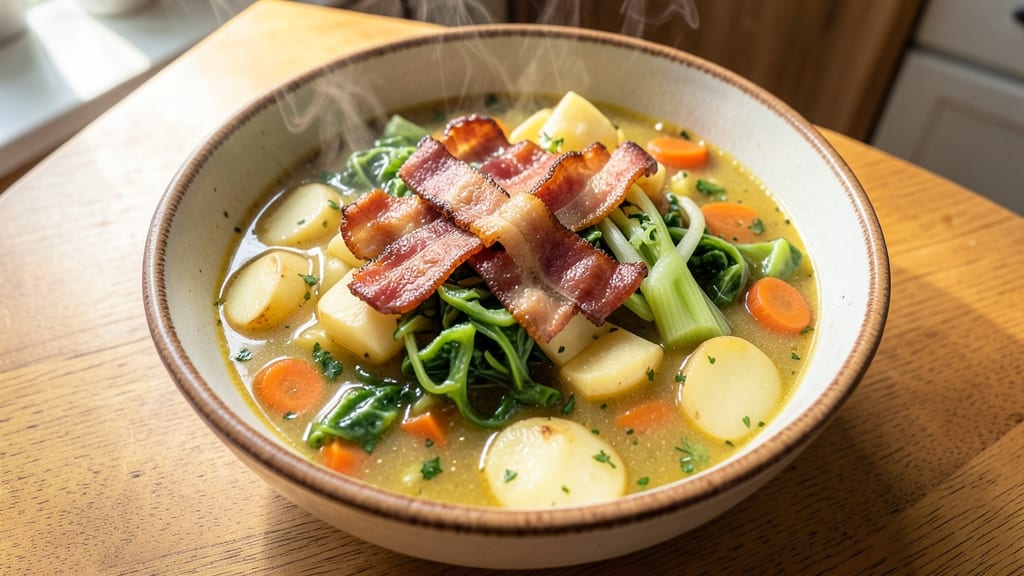
This bacon cabbage and potato soup recipe delivers the ultimate in cozy, smoky comfort—where crispy bacon meets tender cabbage and hearty potatoes in a rich, savory broth. 🔥 The secret lies in slow-cooked bacon that infuses the soup with deep, smoky flavor while keeping the vegetables perfectly tender.
This isn’t just soup; it’s a one-pot meal that warms you from the inside out, perfect for chilly evenings or lazy weekends when you crave something substantial yet simple.
The beauty of this recipe is in its balance: crisp edges from the bacon, sweet caramelization from the cabbage, and the satisfying bite of potatoes.
I’ve perfected it to be foolproof, using just a handful of pantry staples and a simple technique that ensures every spoonful is packed with flavor. The broth simmers long enough to develop depth, while the bacon adds a satisfying crunch that makes it impossible to stop at one bowl.
What makes this soup truly special is how it transforms humble ingredients into something extraordinary. The cabbage softens just enough to melt in your mouth, the potatoes absorb the rich broth, and the bacon—crisped to perfection—brings a smoky contrast that elevates every bite.
It’s the kind of dish that tastes even better the next day, making it ideal for meal prep or feeding a crowd.
Ready in under an hour, this soup is designed for home cooks who want restaurant-quality results without the fuss. Whether you’re serving it as a main dish or pairing it with crusty bread, it’s a comforting classic that never fails to impress. Let’s get cooking!
Ingredients for bacon cabbage and potato soup
Pantry staples plus bacon for that smoky crunch you can't resist.
| Ingredient | Amount | Notes |
|---|---|---|
| Thick-Cut Bacon 🥓 | 12 oz | Cut into 1/2-inch pieces |
| Green Cabbage 🧅 | 1 small head | Shredded, outer leaves removed |
| Yukon Gold Potatoes 🥔 | 2 lb | Peeled, cut into 1-inch cubes |
| Yellow Onion 🧅 | 1 whole | Diced, medium size |
| Carrots 🥕 | 3 medium | Peeled, sliced into 1/4-inch rounds |
| Celery Stalks 🧅 | 3 whole | Diced, with leaves |
| Garlic Cloves 🧄 | 4 cloves | Minced, fresh preferred |
| Chicken Broth 💧 | 6 cups | Low-sodium preferred |
| Heavy Cream 🥛 | ½ cup | Full-fat for richness |
| Apple Cider Vinegar 🍎 | 1 tbsp | For tangy depth |
| Dried Thyme 🌿 | 1 tsp | Or 1 tbsp fresh |
| Bay Leaves 🍃 | 2 whole | Removed before serving |
| Salt 🧂 | 1 ½ tsp | Kosher or sea salt |
| Black Pepper 🌶️ | ½ tsp | Freshly ground |
The bacon is non-negotiable here—thick-cut gives the best crunch, and you want it crispy by the end. Costco or Trader Joe's usually have the best deals on thick-cut, and it keeps well in the freezer. For the cabbage, green is best (no red or purple), and a small head is perfect—just remove the outer leaves and shred the rest. Yukon Gold potatoes are ideal for their buttery texture, but any yellow or red potato works. The secret to tender veggies? Don't overcrowd the pot when cooking—keep it snug but not packed.
No thick-cut bacon? Regular bacon cut into 1/2-inch pieces works, but it won't crisp as well. Swapping chicken broth? Vegetable broth works too, but add a splash of Worcestershire for depth. Fresh thyme is ideal, but dried at one-third the amount gets you close. The carrots and celery can be prepped ahead—store them in a sealed container in the fridge for up to 3 days. If you're short on time, baby carrots or pre-diced celery from the store are totally fine (just rinse them well).
This soup tastes even better the next day—3-4 days in the fridge, no problem. For freezing, portion it into containers and leave 1 inch of headspace—it expands as it cools. Reheat gently on the stove, stirring occasionally. The bacon will soften but still add flavor. Leftovers? Double the batch and freeze half—perfect for lazy weeknights. Store the broth separately if you want to reheat it without the veggies getting mushy.
Why You'll Love This Recipe
- One-Pot Magic: I swear by this recipe because it’s literally one pot—no chopping chaos, no extra bowls. Toss in the bacon first, let those crispy bits render, then dump everything else in. Done. (Yes, even on a Tuesday night when you’re exhausted.)
- Smoky Sweet Crunch: That thick-cut bacon? It’s the star—salty, smoky, and crispy in all the right places. The cabbage gets tender but still holds a satisfying bite, and the Yukon Golds? Creamy perfection. Between us, it’s the kind of soup that makes you take a second bowl.
- Leftovers That Beg: Honestly, this soup only gets better the next day. The flavors meld overnight, and reheating it is a no-brainer—just stir in a splash of water if it’s too thick. I make a double batch on Sundays because it’s my go-to for lunches all week.
- Budget-Friendly Feast: You’re getting hearty, filling meals for next to nothing. Cabbage and potatoes stretch into endless bowls, and bacon adds that luxurious touch without breaking the bank. Plus, it’s the kind of dish that feels fancy but won’t drain your wallet. (My college self would’ve loved this.)
Step-by-step instructions for bacon cabbage and potato soup
Here's how to make this ultimate comfort food with crispy bacon and tender vegetables.
🔥 Step 1: Cook the Bacon Until Crispy
Heat a large Dutch oven over medium heat and add the 12 oz thick-cut bacon cut into ½-inch pieces. Cook for 8-10 minutes, stirring occasionally, until the bacon is golden brown and crispy. You'll see the fat rendering out—this is your flavor foundation.
Here's the thing—don't rush this step. The bacon needs time to render its fat and develop that perfect crunch. Once it's done, use a slotted spoon to remove the bacon from the pot and set it aside on a paper towel-lined plate. Leave the rendered bacon fat in the pot—it's pure flavor gold.
🍳 Step 2: Sauté the Vegetable Base
In the same Dutch oven (with all that bacon fat), add the diced yellow onion, diced celery stalks, and sliced carrots. Cook over medium heat for 5-6 minutes until the vegetables soften slightly and the onion becomes translucent. You'll smell that sweet, savory aroma—this is where the soup's depth starts.
Stir in the minced garlic cloves and cook for another 30 seconds until fragrant. Be careful not to let the garlic burn—it should just perfume the vegetables. Add the shredded green cabbage and stir to combine. Cook for 2 minutes to help soften the cabbage slightly before adding liquids.
🥘 Step 3: Build the Soup Base
Pour in the 6 cups chicken broth and bring everything to a gentle boil. Add the 1-inch cubed Yukon Gold potatoes, 1 tbsp apple cider vinegar, 1 tsp dried thyme, 2 whole bay leaves, 1.5 tsp salt, and ½ tsp black pepper. Stir well to combine all ingredients.
Reduce heat to low and let it simmer for 20-25 minutes until the potatoes are fork-tender. You'll know they're done when a knife slides in easily and the soup has thickened slightly. The cabbage should be tender but still hold its shape—overcooking makes it mushy.
🍽️ Step 4: Finish with Cream and Crispy Bacon
Stir in the ½ cup heavy cream and simmer for another 2-3 minutes just to warm through. The cream will make the soup rich and velvety. Remove the bay leaves before serving—no one wants a leaf in their soup.
Taste and adjust seasoning if needed. I like to add a pinch more salt or a crack of black pepper to taste. Ladle the soup into bowls and top each serving with the crispy bacon you set aside earlier. That smoky, crunchy bacon on top takes this soup from good to amazing.
Pro Tips For Making Bacon Cabbage And Potato Soup
- CRISP THE BACON LOW: Thick-cut bacon needs patience—cook it at 275°F (135°C) for 15-20 minutes until fully rendered but still pliable. I used to blast it on high and end up with chewy, uneven edges. That fat? Save every drop—it’s the soup’s flavor backbone.
- CHOP CABBAGE UNIFORM: Quarter the cabbage, then slice into ½-inch strips (not shredded). Too fine, and it turns to mush; too thick, and it stays crunchy when everything else softens. My grandmother called it "the Goldilocks rule"—not too small, not too big.
- POTATOES FIRST, NOT LAST: Add diced Yukon Golds 10 minutes before the cabbage so they absorb the broth without falling apart. I learned this after a soup where the potatoes dissolved into a starchy sludge. If they’re still firm when the cabbage’s tender, they’ll finish in the bowl.
- SALT THE BROTH LATE: Hold off on final seasoning until 5 minutes before serving—the bacon’s saltiness and cabbage’s bitterness mellow over time. I used to taste-test early and end up with a flat, one-note broth. Trust the process; the soup’s depth builds as it sits.
Common mistakes when making perfect results
Skipping the Bacon
If you're avoiding bacon for dietary reasons, don't just omit it entirely—replace it with smoked paprika (1 tsp) and liquid smoke (½ tsp) to mimic that smoky depth. I also recommend adding ½ cup cooked sausage (like kielbasa) or ½ cup crispy roasted chickpeas for texture.
The key is maintaining that satisfying crunch and savory flavor profile. 🥓
Overcooking the Cabbage
The biggest mistake I see is letting the cabbage turn to mush. Once you add the broth, simmer for only 20-25 minutes total—the potatoes will be done by then. If your cabbage looks too soft, it's because it was in the pot too long.
For extra tenderness without mushiness, add the cabbage 10 minutes after the potatoes go in. 🧅
Underseasoning the Broth
Many cooks hold back on salt, thinking they can adjust later, but this soup needs bold flavor. Start with the full 1.5 tsp salt and ½ tsp pepper, then taste before serving.
If it needs more, add a splash of apple cider vinegar (another ½ tsp) for brightness and acidity. The bacon fat already adds saltiness, so don't be shy with seasoning. 🧂
Ignoring the Bacon Fat
That rendered bacon fat is your flavor foundation—don't drain it! It carries the smoky essence that makes this soup special. If you're concerned about excess fat, skim it off after cooking the bacon but leave 2-3 tablespoons in the pot.
This small amount adds richness without making the soup greasy. 🔥
Rushing the Simmer
Low and slow is the name of the game here. If you boil the soup vigorously, the potatoes will turn to mush and the cabbage will disintegrate. Keep the heat at a gentle simmer—you should see small bubbles but no rolling boil. This ensures tender vegetables without losing texture. ⏰
Forgetting the Cream Timing
Adding the heavy cream too early will make the soup split or curdle. Always stir it in during the last 2-3 minutes of cooking, just to warm through.
For a lighter option, substitute with ½ cup coconut milk or ¼ cup sour cream at the end. The cream should melt into the soup, not separate. 🥛
Nutrition facts
Frequently asked questions
Can I make this soup without heavy cream for a lighter version?
Swap the ½ cup heavy cream with ½ cup coconut milk for a dairy-free option or ¼ cup sour cream stirred in at the end for tangy richness. For extra creaminess without dairy, blend in ½ cup cooked potatoes separately and mix back in. The soup will still be velvety but with fewer calories.
How do I store leftovers to keep the bacon crispy?
Store the soup in an airtight container in the fridge for up to 4 days. To reheat, warm on the stove over low heat and add the crispy bacon fresh from the oven (toss it with a little oil and bake at 400°F for 5 minutes) just before serving. This keeps that satisfying crunch intact.
What's the best way to thicken this soup if it's too thin?
For a quick fix, stir in 1 tablespoon cornstarch mixed with 2 tablespoons cold water and simmer for 2 minutes. For a heartier texture, mash ½ cup cooked potatoes and blend into the soup. Avoid over-thickening—this soup should have a comfortable, brothy consistency with visible chunks.
Can I use frozen cabbage instead of fresh?
Yes, but thaw it first and drain well to avoid watery soup. Use 10 oz frozen chopped cabbage (about 1 head fresh) and add it 10 minutes before the potatoes are done. Frozen cabbage works best when cooked this way—it won't turn mushy like fresh if added too early.
What's the secret to getting the bacon extra crispy?
Cook the bacon on medium-low heat for 12-15 minutes instead of rushing it. Spread the pieces in a single layer and avoid stirring too often. For maximum crunch, finish under a broiler for 2-3 minutes right before serving. The key is patience—slow cooking renders more fat while keeping the edges crisp.