
Side Dishes
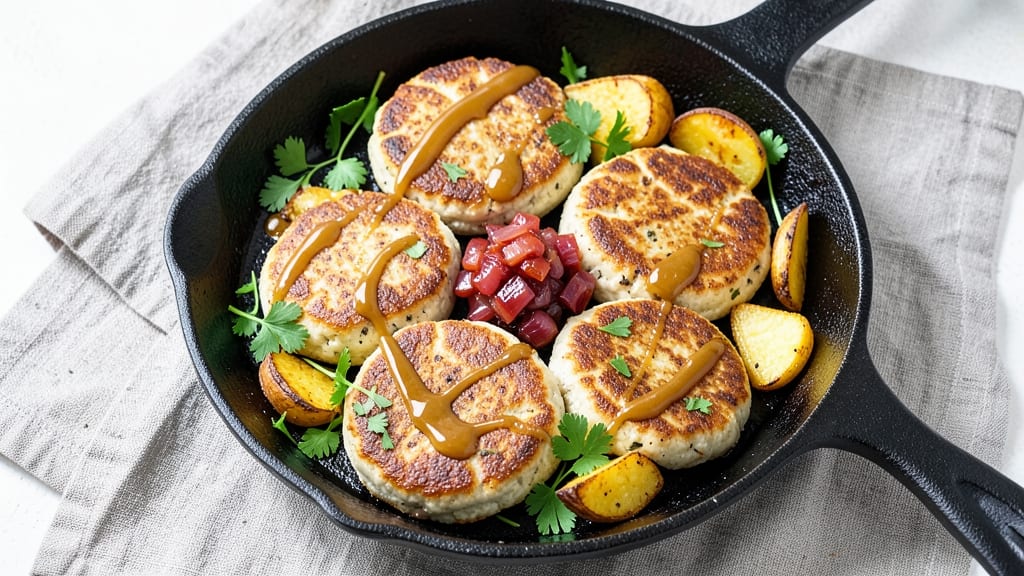
This baked potato patties recipe transforms humble spuds into golden, crispy-edged bites with tender centers that beg for another forkful. The secret lies in perfectly mashed potatoes—fluffy yet sturdy enough to hold shape—bound with just enough egg and flour to create patties that crisp beautifully in the oven.
I’ve perfected this recipe over years of trial and error, ensuring every bite delivers that satisfying contrast between a crisp exterior and a warm, fluffy interior.
The process is simpler than you’d think: boil potatoes until fork-tender, mash them smooth, then mix in egg, flour, and seasonings before shaping into even patties. A quick bake at 400°F for 20-25 minutes yields patties with crispy edges that stay crispy even after resting.
The key is baking them on a wire rack over a baking sheet—this allows air to circulate underneath, preventing sogginess and ensuring that perfect texture we all crave.
Serve these patties warm with classic toppings like sour cream, chives, and a drizzle of homemade gravy for the ultimate comfort food experience. They’re hearty enough to stand alone but pair beautifully with salads, roasted vegetables, or even as a side to grilled meats.
The aroma alone—warm, buttery, and just slightly crispy—will have everyone at the table asking for seconds before the last patty even hits the plate.
What makes these patties truly special is their versatility. Use them as a side for holiday dinners, pack them for lunches, or serve them as an appetizer with a side of ranch or cheese sauce.
The recipe scales easily, so you can make a single batch for two or double it for a crowd. Once you try these, store-bought potato patties won’t stand a chance—your taste buds (and leftovers) will thank you.
Ingredients for baked potato patties
Humble potatoes, eggs, and flour transform into golden, crispy-edged patties with fluffy centers.
| Ingredient | Amount | Notes |
|---|---|---|
| Russet Potatoes 🥔 | 2 lb | Medium size, peeled and cubed |
| Large Eggs 🥚 | 2 whole | Room temperature for best binding |
| All-Purpose Flour 🌾 | ½ cup | For structure and crispiness |
| Unsalted Butter 🧈 | 2 tbsp | Melted, full-fat for richness |
| Milk 🥛 | ¼ cup | Whole milk for creaminess |
| Onion Powder 🧅 | 1 tsp | For subtle depth of flavor |
| Garlic Powder 🧄 | ½ tsp | Freshly ground preferred |
| Salt 🧂 | 1 tsp | Diamond Crystal preferred |
| Black Pepper 🌶️ | ½ tsp | Freshly cracked for best flavor |
| Vegetable Oil 🫒 | 1 tbsp | For greasing baking sheet |
| Fresh Chives 🌿 | 2 tbsp | Chopped, for garnish |
Russet potatoes are your best bet here—their high starch content makes them ideal for mashing smooth yet sturdy patties. Buy them fresh (they should feel firm and heavy for their size) and peel them before boiling. I always grab mine from Trader Joe's or the local grocery store's organic section, where they're less likely to be pre-sprouted. For the butter, Land O'Lakes or Plugrá work perfectly—just melt it gently so it doesn't scorch. The milk can be whole or 2% if you prefer, but whole gives that extra richness that makes these patties feel indulgent.
No eggs on hand? Flax eggs (2 tbsp ground flaxseed + 6 tbsp water) work in a pinch, though texture might be slightly denser. Short on flour? Panko breadcrumbs at half the amount add crunch without binding too much. The chives are optional but add that fresh pop of color—frozen works fine if fresh isn't available. For extra crispiness, I like to add a sprinkle of cornstarch (1 tbsp) to the flour mix. And if you're feeling fancy, swap the onion powder for 1 tsp onion flakes for a more pronounced flavor.
These patties reheat beautifully—just pop them in a 350°F oven for 5-7 minutes to revive that crispy edge. Store leftovers in an airtight container for up to 3 days, or freeze them raw (before baking) for up to 3 months. I like to portion them into single-serving bags so I can grab one straight from the freezer. The secret to keeping them crispy when reheating? Bake on a wire rack over a baking sheet—no soggy bottoms guaranteed.
Why You'll Love This Recipe
- Fewer Ingredients, Bigger Payoff: I swear by this recipe—just potatoes, eggs, flour, butter, and milk. That’s it. No fancy pantry staples, no hunting for obscure spices. The secret’s in the baking: those crispy edges? Pure magic from the butter and milk mixture, no deep-frying required.
- Creamy-Crisp Contrast: Here’s what sold me—the outside gets golden and shatteringly crisp, while the inside stays fluffy and buttery. It’s like a loaded baked potato’s best traits, all in one handheld bite. My kids fight over them, and honestly? I don’t blame them.
- Meals Made Easy: Freezer-friendly, crowd-pleasing, and ready in 30 minutes. I make a double batch on Sundays, freeze half, and pull them out for lazy dinners or game days. They reheat like a dream—no soggy patties here.
- Budget Breakthrough: Russets are cheap, eggs are cheap, and you’re using basic pantry stuff. For the cost of one takeout order, I feed my family four solid meals. Between us, this is my go-to when I’m broke but still want something that tastes like it cost more.
Step-by-step instructions for crispy-edged, fluffy-centered bites
Here's how to make golden, crispy potato patties with tender centers that'll fool anyone who thinks they're diner classics.
Prepare the Potato Mixture for Maximum Texture
Start by microwaving the 2 lb Russet Potatoes on high for 8-10 minutes, cutting them into 1-inch cubes first. They should be fork-tender but still hold their shape when pierced. Let them cool completely before handling—this prevents the patties from becoming gummy.
Transfer the potatoes to a clean kitchen towel and squeeze out every last bit of moisture. I press down firmly with another towel to get them bone-dry. Moisture is the enemy of crispy patties—it creates steam instead of that perfect golden crust. While they're still warm, add 1 tsp onion powder, 0.5 tsp garlic powder, 1 tsp salt, and 0.5 tsp black pepper and toss until evenly coated.
Create the Binding Mixture for Structure
In a large bowl, whisk together the 2 whole Large Eggs and 0.25 cup Milk until fully combined. This mixture serves two purposes: it binds the potatoes together and adds moisture for that fluffy interior. Add the 0.5 cup All-Purpose Flour and mix until just incorporated—you're looking for a thick batter that coats the back of your spoon.
Gently fold in the prepared potatoes using a silicone spatula. Be careful not to overmix; just combine until everything is evenly distributed. The batter should cling to the potatoes without making them soggy. If the mixture feels too wet, add 1-2 tablespoons more flour to absorb excess moisture. This step is where you build the foundation for those crispy edges and tender centers.
Shape and Chill the Patties
Form the potato mixture into 4 equal patties, about ½-inch thick each. I use my hands lightly dampened with water to prevent sticking—this gives me better control when shaping. Place them on a plate and smooth the tops with the back of a spoon. The patties should hold their shape without falling apart, but still feel soft enough to compress slightly.
Cover the patties with plastic wrap and refrigerate for at least 30 minutes (up to 2 hours). Chilling firms up the mixture, making it easier to handle and preventing the patties from spreading too much in the oven. This step also helps develop that perfect crispy crust by allowing the surface to dry out slightly before baking.
Bake to Golden Perfection
Preheat your oven to 400°F and line a baking sheet with parchment paper. Lightly brush the parchment with 1 tbsp Vegetable Oil—this prevents sticking and helps create that crispy texture. Arrange the chilled patties on the prepared sheet, spacing them about 1 inch apart to allow for even browning.
Bake for 25-30 minutes, flipping once halfway through at the 15-minute mark. You'll know they're done when the edges are deep golden brown and a toothpick inserted into the center comes out clean. The internal temperature should reach 200°F—this ensures they're fully cooked through while maintaining that fluffy texture. Don't overbake or they'll dry out; the residual heat will continue cooking them slightly after removal.
Finish and Serve with Flavor
Transfer the baked patties to a wire rack and let them cool for 5 minutes. This resting period allows any excess moisture to evaporate, intensifying that crispy texture. While they're cooling, melt the 2 tbsp Unsalted Butter in a small saucepan over low heat until just melted but not browned.
Brush the melted butter generously over the tops of the patties and sprinkle with the 2 tbsp Fresh Chives. The butter adds richness while the chives bring a fresh, oniony brightness that cuts through the richness. Serve immediately while the patties are still crispy—these are best enjoyed fresh out of the oven with your favorite dipping sauce or a simple side salad.
Pro Tips For Making Baked Potato Patties
- GRATE THE POTATOES COLD: Skip the microwave shortcut—rubbing a raw Russet against a box grater works best when the potato’s still cool. Warm potatoes turn to mush instantly, and you’ll end up with a gluey mess instead of a crispy patty. (I learned this after one particularly sticky batch.)
- PRESS OUT ALL THE MOISTURE: After grating, wrap the potatoes in a clean kitchen towel and squeeze like you’re wringing out a sponge. No one likes a soggy patty, and this step guarantees they’ll hold together in the pan. (Yes, even if you’re impatient—give it 30 seconds.)
- USE A LITTLE MORE FLOUR: The recipe might call for ½ cup flour, but trust me: add 2 extra tablespoons. The grated potato soaks up more than you think, and that extra binder keeps the patties from falling apart when flipping. (I used to skip this—now I don’t.)
- BAKE THEM TWICE: First, pan-fry until golden on both sides, then transfer to a 400°F oven for 10–12 minutes. The oven finishes cooking the centers while keeping the crust crisp. (Sounds weird, but it works—your patties won’t be greasy or underdone.)
Troubleshooting this dish
Soggy Patties Fix
If your patties turn out soggy inside, it’s almost always a moisture issue.
I’ve found the most common culprits are either not drying the potatoes thoroughly enough or overmixing the batter. Squeeze every last drop of moisture from the cooked potatoes using a clean kitchen towel—this is non-negotiable for crispy results.
Also, avoid overmixing after adding the flour and egg; just combine until evenly distributed. If your mixture feels too wet, add 1-2 extra tablespoons of flour to absorb excess moisture before shaping. 🥔
Uneven Baking
Uneven browning or undercooked centers usually means your oven isn’t hot enough or the patties aren’t spaced properly. Always preheat your oven to 400°F for at least 10 minutes before baking.
Arrange patties 1 inch apart on the baking sheet to allow air circulation—crowding them causes steam buildup, which prevents crispiness. If one side browns faster, flip them midway through baking (after 15 minutes) to ensure even cooking.
A wire rack over the baking sheet also helps with even browning by allowing heat to circulate underneath. 🔥
Patties Falling Apart
If your patties crumble when flipping or serving, the binding mixture likely wasn’t strong enough. The key is chilling the patties for at least 30 minutes before baking—this firms up the structure. If you’re short on time, pop them in the freezer for 15 minutes instead.
Another trick? Add 1 extra tablespoon of flour to your binding mixture if the potatoes feel too wet. For extra hold, I sometimes add 1 tablespoon of cornstarch to the flour for a firmer texture. Also, don’t overhandle the mixture when shaping—gently press it together without compacting too tightly. ✨
Dry or Hard Centers
Overbaking is the usual suspect here, but it can also happen if the patties are too thick or the oven runs hot. Aim for 25-30 minutes total, flipping once at 15 minutes. Use a toothpick or instant-read thermometer to check doneness—the center should reach 200°F (not boiling hot).
If your oven runs hot, reduce the temperature to 375°F and bake for 35-40 minutes. For extra moisture, brush the tops with melted butter during the last 5 minutes of baking. This keeps the centers tender while maintaining that crispy exterior. 💫
Sticking to the Pan
Patties sticking to the baking sheet is a classic rookie mistake, but it’s easily fixed. Always line your baking sheet with parchment paper and lightly brush it with vegetable oil before arranging the patties. If you’re using a wire rack, oil it too—this prevents sticking and ensures a crispy bottom.
For extra insurance, chill the patties for at least 30 minutes before baking; this reduces surface moisture that causes sticking. If they still stick, your parchment isn’t oiled enough—next time, use more oil or nonstick spray. 🧈
Nutrition facts
Frequently asked questions
Can I use sweet potatoes instead of Russets?
Sweet potatoes will work, but the texture and flavor will differ significantly. Sweet potatoes are denser and naturally sweeter, which can make the patties less crispy and more moist. If you must use them, boil until very tender (they take longer than Russets), drain thoroughly, and add 1 extra tablespoon of flour to the binding mixture to help with crispiness.
How do I make these patties gluten-free?
Replace the all-purpose flour with a 1:1 gluten-free baking flour blend (like Bob's Red Mill). For extra binding, add 1 tablespoon of cornstarch or 1 egg white to the mixture. Chill the patties for 45 minutes instead of 30 to help them hold together better.
Why do my patties spread too much in the oven?
This usually happens when the patties aren't chilled long enough before baking. Always refrigerate them for at least 30 minutes (or 15 minutes in the freezer) to firm up the mixture. Also, avoid overmixing—just combine ingredients until evenly distributed. If they still spread, try shaping them slightly thicker (⅜-inch instead of ½-inch).
Can I bake these ahead of time and reheat?
Yes! Bake them as directed, then cool completely. Store in an airtight container at room temperature for 2 days or freeze for 3 months. To reheat, bake at 350°F for 5-7 minutes on a wire rack to revive crispiness. For microwave reheating, cover with a damp paper towel and heat for 20-30 seconds—but expect slightly softer edges.
What's the best way to serve these patties?
These patties shine as a hearty side dish! Serve with classic toppings like sour cream, chopped chives, or homemade gravy. For a complete meal, pair with a simple green salad or roasted Brussels sprouts. They also make great appetizers with a side of ranch or cheese sauce, or as a protein-packed lunch with avocado slices.