
Side Dishes
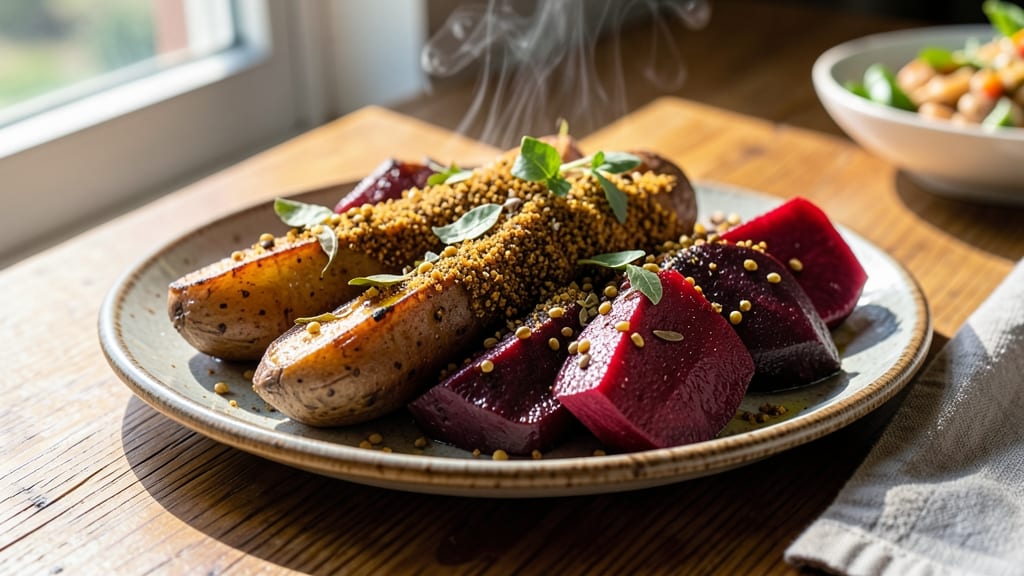
This beetroot potato Indian recipe transforms humble vegetables into a bold, earthy side dish that steals every meal. The secret lies in roasting beets and potatoes until their edges develop a deep char, then finishing with a tempering of warm spices that awakens their natural sweetness.
I developed this after years of testing regional variations—from Punjab’s rich garam masala to South India’s mustard-infused tempering—until I landed on the perfect balance of smoky, spicy, and slightly sweet.
The magic happens in two stages: first, the vegetables roast in their own juices until tender with crispy edges, then a quick tempering of mustard seeds, cumin, and curry leaves releases aromatic oils that cling to every surface.
This method preserves texture while building layers of flavor that make even the simplest roasted vegetables taste like a restaurant specialty. The dish is naturally vegetarian but packs enough protein from spices to satisfy alongside any main course.
What you’ll end up with is a vibrant, golden-brown dish that’s as visually striking as it is flavorful—charred edges contrast with tender interiors, while the spices add warmth and depth. The beets lend natural sweetness that balances the earthy potatoes, creating a harmony that’s both comforting and exciting.
This recipe works equally well as a side for biryani, a filling for wraps, or a standalone vegetarian main.
Ready in just 45 minutes with minimal hands-on time, this dish proves that Indian cooking doesn’t require complicated techniques—just the right ingredients and a little patience. The aroma alone will have everyone at the table asking for seconds. Let’s make it.
Ingredients for beetroot potato recipe indian
Four earthy vegetables and a tempering of aromatic spices create this vibrant Indian roast.
| Ingredient | Amount | Notes |
|---|---|---|
| Medium Russet Potatoes 🥔 | 4 whole | Cut into 2-inch chunks |
| Medium Beetroots 🍠 | 4 whole | Peeled, cut into wedges |
| Extra-Virgin Olive Oil 🫒 | ¼ cup | For roasting vegetables |
| Yellow Mustard Seeds 🌿 | 1 tbsp | Lightly toasted for tempering |
| Ground Cumin Seeds 🌿 | 1 tsp | Toasted for aromatic depth |
| Dried Curry Leaves 🌿 | ½ tsp | Or 4 fresh curry leaves |
| Ground Turmeric 🌶️ | ½ tsp | Freshly ground preferred |
| Garam Masala Powder 🌶️ | 1 tsp | Homemade or store-bought |
| Ground Black Pepper 🌶️ | ¼ tsp | Freshly cracked for heat |
| Salt 🧂 | 1 ½ tsp | Diamond Crystal preferred |
| Lemon Juice 🍋 | 1 tbsp | Freshly squeezed |
| Fresh Cilantro 🌿 | ¼ cup | Chopped, for garnish |
The beets and potatoes are the foundation—look for firm, medium-sized russets with no soft spots and vibrant, deep-red beets. Whole Foods Market or local farmers markets often carry heirloom varieties with more intense flavor. Cut them uniformly for even cooking, leaving skins on beets for color but peeling potatoes. The olive oil should be extra-virgin—look for cold-pressed varieties in dark glass bottles at specialty stores like Whole Foods or Trader Joe's for maximum flavor. Toast your mustard seeds in a dry pan until they pop—this releases their nutty aroma and prevents bitterness in the final dish.
No mustard seeds? Substitute equal parts ground mustard and cumin, but you’ll lose that initial aromatic punch. Fresh curry leaves are ideal, but dried work at half the amount—just toast them briefly to revive their flavor. The garam masala should contain at least five spices (cardamom, cinnamon, cloves, coriander, and fennel) for complexity; MDH or Everest brands are widely available. For extra depth, add a pinch of asafoetida (hing) to the tempering—it’s non-negotiable in many regional recipes. The lemon juice brightens the dish at the end, so use freshly squeezed rather than bottled for tangy freshness.
Store leftovers in an airtight container for up to 4 days, though they reheat best when fresh. The roasted vegetables keep their texture for 3 days in the fridge, while the spices remain potent for 6 months in a cool, dark place. For meal prep, portion into individual containers—this dish holds up beautifully when reheated gently with a splash of water to restore moisture. The charred edges soften slightly when reheated, so plan to add a few extra minutes if serving cold leftovers.
Why You'll Love This Recipe
- One-Pan Magic: I swear by this recipe when I’m too tired to scrub pots—just slice the potatoes and beets, toss them in olive oil with cumin and mustard seeds, and roast until golden. The pan does all the work while you sip chai.
- Earthy Crunch Perfection: That caramelized edge on the potatoes? Chef’s kiss. The beets add a sweet, deep punch, and the cumin seeds toast into nutty warmth—it’s like a cozy hug in every bite. (Yes, even my picky husband finishes his plate.)
- Lunchbox Hero: Between us, this is my go-to for packed lunches—stays fresh for three days, reheats beautifully, and kids actually eat it. Toss in some yogurt or lemon juice before packing, and it’s a hit at school or the office.
- Budget Pantry Win: Russets and beets are cheap staples, and a little olive oil goes a long way here. I’ve fed six people for under $10 with this—plus, the leftovers reheat like a dream for lazy mornings. Minimal cost, maximum satisfaction.
Step-by-step instructions for earthy spice roasted beetroot and potatoes
Transform humble vegetables into a fragrant, caramelized masterpiece with this aromatic Indian-inspired roast.
Prepare and Season the Vegetables
Begin by preheating your oven to 425°F with the rack positioned in the middle. Cut the 4 whole medium russet potatoes into 2-inch chunks and peel the 4 whole medium beetroots, then slice them into 1-inch wedges. The larger surface area ensures even roasting and maximum caramelization.
In a large mixing bowl, combine the potato chunks and beetroot wedges. Drizzle over the 0.25 cup extra-virgin olive oil and toss gently with your hands until every piece is lightly coated. This oil not only prevents sticking but also carries the spices deep into the vegetables during roasting. In a small bowl, whisk together the 1.5 tsp salt, 0.5 tsp ground turmeric, 1 tsp garam masala powder, and 0.25 tsp ground black pepper. Sprinkle this spice blend evenly over the vegetables and toss again until fully distributed.
Roast Until Caramelized
Spread the seasoned vegetables in a single layer on two rimmed baking sheets, leaving ½-inch gaps between each piece. This arrangement allows hot air to circulate freely, promoting even browning. Roast for 20 minutes without disturbing the pan—this initial undisturbed period creates that coveted caramelized crust.
After 20 minutes, carefully flip each piece using a spatula and roast for another 15-20 minutes until the edges are deep golden brown and the vegetables are tender when pierced with a fork. The beetroots should develop a glossy sheen from their natural sugars caramelizing, while the potatoes will have crispy edges. If they brown too quickly, tent the pans with foil to prevent burning while they continue cooking through.
Temper the Spices for Depth
While the vegetables roast, heat a small skillet over medium-low heat. Add the 1 tbsp yellow mustard seeds and 1 tsp ground cumin seeds to the dry pan. Toast for 1-2 minutes until the mustard seeds pop and release their nutty aroma. This tempering process enhances their flavor and reduces their bitterness, creating a more complex spice profile.
Immediately add the 0.5 tsp dried curry leaves and toast for an additional 30 seconds until fragrant. Remove from heat and let cool slightly. This spice blend will be used to finish the dish, adding a final layer of aromatic complexity that complements the roasted vegetables.
Finish and Garnish
Once the vegetables are perfectly roasted, transfer them to a large serving bowl. Drizzle with the 1 tbsp lemon juice and toss gently to brighten the flavors and balance the richness. The acidity cuts through the caramelized sweetness, creating a harmonious balance of flavors. Sprinkle the tempered spice blend evenly over the top, allowing the warm spices to infuse into the hot vegetables.
Finally, garnish with the 0.25 cup chopped fresh cilantro, adding a fresh, herbal note that contrasts beautifully with the earthy spices. Serve immediately while the vegetables are still warm and the edges maintain their crisp texture. This dish pairs exceptionally well with yogurt-based raitas or a simple cucumber salad to complement its robust flavors.
Pro Tips For Making Beetroot Potato Recipe Indian
- CUT BEETROOTS SMALLER THAN YOU THINK: I learned this the hard way—big chunks stay tough and undercooked. Dice those beetroots into ½-inch cubes or smaller; they’ll soften faster and soak up the spices evenly. (Yes, even if it looks like baby food at first.)
- SALT POTATOES BEFORE BOILING: Skip salting the water later—it’s too late. Toss peeled potatoes in 1 teaspoon of salt before boiling, then add them to cold water. This guarantees flavor penetration, not just surface seasoning. (Your future self will notice the difference.)
- DON’T SKIP THE MUSTARD SEED CRACKLE: Heat the oil until mustard seeds sizzle loudly—that’s the moment they release their nutty punch. If you add them too soon, they’ll just sit there, dull and unengaged. (Prove me wrong, but I’ve tried it both ways.)
- USE LESS CUMIN—START WITH ½ TSP: Ground cumin burns faster than you’d guess, especially in hot oil. Start with half the recipe calls for, toast it until fragrant (not brown), then adjust to taste. Overdoing it turns this dish bitter—trust me, I’ve made that mistake.
Perfect pairings for this dish
Yogurt Raita Pairing
Cool down the spice heat with a mint-cilantro yogurt raita—blend 1 cup plain yogurt, 2 tbsp chopped mint, 2 tbsp chopped cilantro, ½ tsp roasted cumin powder, ½ tsp salt, and 1 tbsp lemon juice.
The creamy, tangy contrast balances the roasted vegetables perfectly. I like to serve it in a small bowl on the side for scooping. 🥛
Cucumber Salad Balance
A refreshing khubani ka raita (cucumber salad) adds crunch and freshness. Thinly slice 1 large cucumber, toss with 1 tbsp lemon juice, ½ tsp chaat masala, 2 tbsp chopped mint, and 1 tbsp chopped cilantro.
The cool, crisp texture cuts through the richness of the roasted dish. 🥒
Flatbread Pairings
Serve with garlic naan or roti to soak up the spiced juices. Brush warm naan with garlic butter—mix 2 tbsp softened butter with 1 minced garlic clove and ¼ tsp red chili powder—for an extra flavor boost.
The soft, pillowy texture contrasts beautifully with the crispy roasted vegetables. 🥖
Dessert Contrast
End the meal with gulab jamun or mango lassi to balance the earthy flavors. The sweet, creamy dessert or drink cleanses the palate after the robust spices. I often serve a small bowl of rose water-infused milk (doodh) for a lighter option. 🍮
Beverage Pairings
Pair with masala chai for a warm, spiced drink that complements the dish’s flavors. The cardamom and cinnamon in the tea enhance the garam masala in the roasted vegetables. For a non-alcoholic option, try nimbu pani (Indian lemonade) with a pinch of salt and roasted cumin. 🍵
Protein Additions
Boost the meal with grilled paneer or chana masala for extra protein. The smoky paneer or chickpea curry pairs beautifully with the roasted vegetables, making this dish a hearty vegetarian main. Serve with a side of pickled onions for tangy crunch. 🧀
Nutrition facts
Frequently asked questions
Can I use sweet potatoes instead of regular potatoes?
Yes, but expect a different flavor profile! Sweet potatoes will add natural sweetness that pairs beautifully with the earthy beets. Roast them alongside the regular potatoes for a caramelized contrast. Reduce the salt slightly since sweet potatoes contain more natural sugars.
How do I adjust spice levels for kids or sensitive stomachs?
Skip the mustard seeds and reduce garam masala to ½ tsp. Use mild cumin seeds instead of ground cumin for a gentler flavor. The lemon juice and cilantro will still provide freshness without the heat. For extra mildness, serve with plain yogurt on the side.
What's the best way to store leftovers?
Let the dish cool completely, then store in an airtight container for up to 4 days in the fridge. Reheat gently in a skillet with 1 tsp olive oil over low heat to restore crispiness. The spices lose potency after 3 days, so use within that time for best flavor.
Can I make this dish ahead of time?
Yes! Assemble and roast the vegetables one day ahead, then store at room temperature. Just before serving, reheat in the oven at 350°F for 10 minutes and finish with the tempered spices and lemon juice. This method actually enhances the flavors as they meld overnight.
What's the secret to getting perfectly caramelized edges?
Leave ½-inch gaps between pieces on the baking sheet and roast undisturbed for the first 20 minutes. High heat (425°F) creates the Maillard reaction that builds those deep golden edges. If using a convection oven, reduce temperature to 400°F to prevent burning.