
Side Dishes
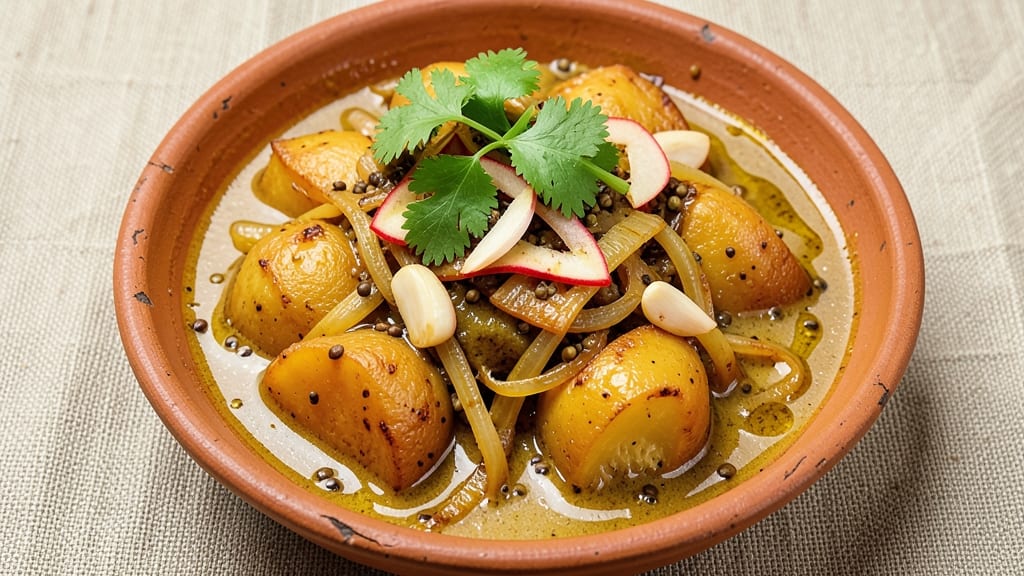
This Bengali potato curry recipe brings the aromatic heart of West Bengal to your kitchen with its signature spiced tomato gravy and tender golden potatoes. The dish balances earthy spices like mustard seeds and cumin with the bright acidity of tomatoes, creating a curry that's both comforting and vibrant. What makes it special is how the spices bloom in hot oil, releasing their full flavor before the potatoes absorb the rich, tangy sauce.
The secret lies in the tempering—those first few minutes of sizzling spices transform this into something restaurant-worthy. Turmeric lends its golden hue, while red chili powder adds just the right kick. The potatoes cook until they're tender but still hold their shape, soaking up all that fragrant gravy.
This is a vegetarian dish that pairs perfectly with steamed rice or warm roti, making it a complete meal.
By the time you're done, your kitchen will smell like home, and every bite will deliver that perfect balance of spice, tang, and creaminess. The dish is simple yet impressive, with just a handful of ingredients working together to create something deeply satisfying.
Serve it with a sprinkle of fresh cilantro or fried onions for extra texture and brightness.
This curry is more than just a side—it's a flavor experience that transports you to the streets of Kolkata. Whether you're serving it at a family gathering or enjoying a quiet weeknight dinner, it's the kind of dish that brings people together. Let's get cooking!
Ingredients for bengali potato curry
Just 14 ingredients transform simple potatoes into aromatic Bengali magic.
| Ingredient | Amount | Notes |
|---|---|---|
| Yellow Onions 🧅 | 1 whole | Finely chopped for base |
| Garlic Cloves 🧄 | 6 cloves | Minced for aromatic base |
| Ginger Root 🌿 | 1 ½ tbsp | Freshly grated for zing |
| Vegetable Oil 🫒 | ½ cup | For tempering spices |
| Mustard Seeds 🌶️ | 1 tbsp | Whole seeds for tempering |
| Cumin Seeds 🌶️ | 1 tbsp | Toasted for earthy flavor |
| Turmeric Powder 🌿 | 1 tsp | For golden color |
| Red Chili Powder 🔥 | 1 ½ tsp | Adjust for heat preference |
| Ground Coriander 🌿 | 1 tsp | For citrusy depth |
| Tomatoes 🍅 | 2 cups | Pureed or finely chopped |
| Russet Potatoes 🥔 | 2 lbs | Cut into even chunks |
| Fresh Cilantro 🌿 | ¼ cup | Chopped for garnish |
| Garam Masala 🌶️ | 1 tsp | For aromatic finish |
| Salt 🧂 | 1 ½ tsp | Adjust to taste |
The spices make or break this curry. Mustard seeds and cumin need to sizzle in hot oil until they pop—that's where the real flavor happens. Penzeys Spices has great whole spices if you want to splurge, but the grocery store bulk bins work too. Look for bright yellow turmeric (dull means old) and red chili powder that's not clumpy. Fresh ginger and garlic are non-negotiable here—they're the soul of the dish. I always grab extra ginger since it's used in so many dishes.
No mustard seeds? Swap for 1 tsp ground mustard, but you'll lose that signature crackle. Running low on tomatoes? Tomato paste works at half the amount—just thin it with water. The potatoes should be even-sized chunks so they cook uniformly. Baby potatoes work great too if you're in a hurry. Want more richness? Stir in 2 tbsp coconut milk at the end. And trust me on the garam masala—it's worth hunting down the MTR brand if you can find it in your Indian grocery store.
This curry tastes even better the next day as flavors meld. Keeps 4-5 days in the fridge, freezes for 3 months. I always make extra because it reheats beautifully—just add a splash of water to prevent drying out. Store the gravy separately if you want to reheat just the potatoes. The cilantro wilts fast, so add it fresh when serving. Double the batch if you're feeding a crowd—it disappears quickly!
Why You'll Love This Recipe
- One-Pot Magic: I swear by this recipe—just chop onions, potatoes, and garlic, then let the spices do the work. No extra bowls, no fuss, and the mustard seeds sizzling in oil? That’s my favorite part.
- Spice Bomb Flavor: The ginger and garlic caramelize into something ridiculously good, while the mustard seeds add that deep, nutty crack. It’s the kind of taste that makes you want to eat it straight from the pan.
- Lunchbox Hero: Between us, this curry reheats like a dream for packed lunches. Toss it with rice or naan, and it’s a solid weeknight meal—no one complains, and my kids actually finish their portions.
- Budget Win: Potatoes and onions stretch a long way, and the spices go even further. I’ve made this for 6 people for under $10, and honestly? It’s the kind of dish that makes grocery bills feel less scary.
Step-by-step instructions for Bengali potato curry
Here's how to create a rich, aromatic potato curry with perfectly spiced gravy and tender golden potatoes.
Prepare the Spiced Base
Heat the 0.5 cup vegetable oil in a heavy-bottomed pot over medium heat. Add the 1 tbsp mustard seeds and 1 tbsp cumin seeds, stirring constantly until they begin to sizzle and pop—this should take about 30 seconds. Here's the thing: don't walk away, or you'll miss that magical moment when they start to turn golden.
Immediately add the 1 whole yellow onions (finely chopped) and let them cook for 5-6 minutes until softened and golden brown. Stir in the 6 cloves garlic cloves (minced) and 1.5 tbsp ginger root (freshly grated), cooking for another 2 minutes until fragrant. This aromatic base is the foundation of your curry, so take your time here—rushing leads to raw flavors.
Build the Spice Blend
Reduce heat to medium-low and add the 1 tsp turmeric powder, 1.5 tsp red chili powder, and 1 tsp ground coriander. Stir continuously for 1 minute to toast the spices gently—you'll notice the oil become vibrant and fragrant. This step develops the complex flavors that define Bengali cooking.
Pour in the 2 cups tomatoes (pureed or finely chopped) and cook for 8-10 minutes until the mixture thickens and the raw tomato taste disappears. Add 1.5 tsp salt and stir well. The curry should now have a rich, deep color and a thick, velvety consistency—this is your base sauce, ready for the potatoes.
Cook the Potatoes to Perfection
Peel and cut the 2 lbs russet potatoes into 1-inch chunks for even cooking. Add them to the pot and gently stir to coat in the spiced tomato mixture. Increase heat to medium-high and bring to a gentle boil. Once boiling, reduce heat to medium-low and simmer uncovered for 20-25 minutes, stirring occasionally.
You'll know the potatoes are done when they're tender but not mushy—a fork should slide in easily, but they should still hold their shape. The curry should have thickened into a luscious gravy that clings to the potatoes. If it's too thick, add ¼ cup water to reach your desired consistency. This is where patience pays off—undercooked potatoes will be chalky, overcooked ones will fall apart.
Finish with Aromatics
Stir in the 1 tsp garam masala and cook for 2-3 minutes to let the spices bloom and infuse the curry with their warm, earthy notes. Taste and adjust seasoning with additional salt if needed. The curry should be balanced—spicy but not overwhelming, with a perfect harmony of flavors.
Remove from heat and let it sit for 5 minutes to allow the flavors to meld. Garnish with 0.25 cup fresh cilantro (chopped) just before serving. The curry will continue to thicken slightly as it rests, so don't worry if it looks a bit loose right now. Serve hot with steamed rice or roti for the full Bengali experience.
Pro Tips For Making Bengali Potato Curry
- Bloom the Onions Slow: Let those yellow onions cook until they’re soft and translucent—about 8-10 minutes—before adding anything else. I used to rush this, and the curry would taste raw and sharp. Low heat here means deeper flavor later.
- Grate Ginger Like You Mean It: Skip the chopping—fresh ginger should be finely grated (or minced) so it melts into the oil with the garlic. My grandmother swore by this, and it works: no lingering chunks, just smooth warmth.
- Temper Mustard Seeds Properly: Heat the oil until it shimmers but not smoking—then add mustard seeds. If you drop them in cold oil, they’ll splutter and burn. A quick 30-second wait between oil and seeds saves the dish from bitterness.
- Parboil Potatoes First: Boil the potatoes for 5 minutes before adding them to the curry. This keeps them from turning mushy—especially if you’re using waxy varieties. (Yes, even if you’re impatient like me.)
Common mistakes when making your bengali potato curry
Skipping the Tempering
This is the biggest flavor killer in Bengali curries. Those mustard seeds and cumin need to sizzle and pop in hot oil for 30 seconds—skipping this step means you're missing the nutty, earthy depth that defines the dish.
I've made this mistake too, and the result was flat, one-dimensional flavor. Use a heavy-bottomed pot to maintain even heat distribution while tempering. 🔥
Using Old Spices
Dull turmeric or clumpy red chili powder will ruin your curry. Always check for freshness—bright yellow turmeric and finely ground red chili are non-negotiable. I keep a small jar of Penzeys Spices in my pantry because their whole spices stay potent longer.
For red chili powder, look for brands like MTR that are finely ground and free of clumps. Store spices in airtight containers away from light and moisture.
Overcooking the Potatoes
Potatoes that turn to mush mean you've lost the perfect texture this curry needs. The goal is tender but firm—they should hold their shape when pierced with a fork.
I've seen people simmer for 40+ minutes, thinking more time equals better flavor, but that just creates a gluey mess. After 20-25 minutes of simmering, check for doneness. If they're still firm, cook 5 more minutes—no more!
Ignoring the Resting Time
Letting the curry rest for 5 minutes after cooking allows the flavors to settle and meld. Skipping this step means serving something that's still "processing" its flavors. I've rushed this before and regretted it—the curry tasted disjointed.
Use this time to prep your rice or roti while the curry finishes developing its complex, aromatic profile. ✨
Adding Water Too Late
If your curry is too thick, adding water after the potatoes are cooked will dilute the flavors and make the dish watery. Instead, thin the sauce before adding potatoes or add small amounts of water during the simmering process if needed.
I've had to salvage thick curries by reducing heat and simmering uncovered to evaporate excess liquid naturally. Patience is key here!
Skipping the Garam Masala
This final spice is what ties all the flavors together. Adding it too early burns its delicate notes, while skipping it entirely leaves your curry lacking depth. Stir it in just before serving or during the last 2-3 minutes of cooking.
I always keep a small jar of MTR garam masala on hand—it's worth the extra step for that warm, earthy finish that makes the dish sing. 🌶️
Nutrition facts
Frequently asked questions
Can I make this potato curry without mustard seeds?
Yes, but you'll lose that signature crackle and depth. Replace 1 tbsp mustard seeds with 1 tsp ground mustard powder—it won't pop, but will add warmth. For extra flavor, add ½ tsp asafoetida (hing) with the spices. The curry will still taste great, just slightly different in texture.
How do I adjust the spice level for kids?
Reduce the red chili powder to ½ tsp and add ¼ tsp sugar to balance flavors. For a milder kick, use ½ tsp mild paprika instead. Always let the curry sit for 5 minutes before serving—this helps mellow any remaining heat. Kids love the creamy potatoes and aromatic spices!
Can I use baby potatoes instead of russets?
Baby potatoes cook faster and hold their shape beautifully. Use 2 lbs whole baby potatoes (about 20-25 small ones) and reduce simmering time to 15-20 minutes. Their thin skins add nice texture—just don't peel them. The curry will have even more bite-sized appeal for kids or parties.
What's the best way to store leftovers?
Let the curry cool completely, then store in an airtight container in the fridge for up to 5 days. For longer storage, freeze portions for 3 months. Reheat gently on low heat with 1-2 tbsp water to restore moisture. The flavors actually improve overnight as spices meld!
Why does my curry taste bland after reheating?
Reheating too quickly or without moisture evaporates the aromatic oils. Always reheat on low heat with 1-2 tbsp water covered for 5-7 minutes. Add a pinch of salt and ½ tsp lemon juice to brighten flavors. For extra depth, stir in ¼ tsp garam masala while reheating. Patience is key—don't rush it!