
Side Dishes
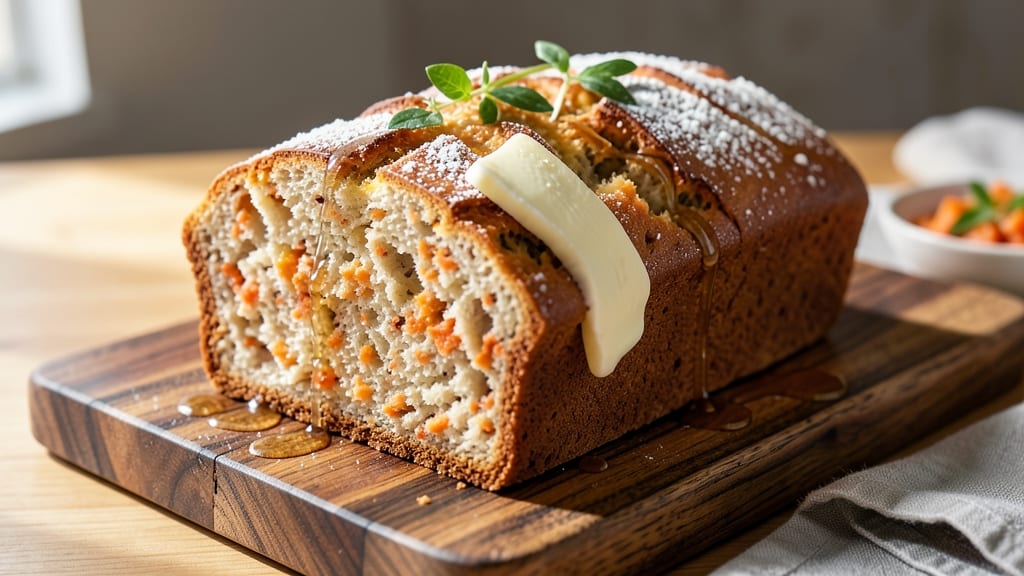
This sweet potato yeast bread transforms humble ingredients into a fragrant, moist loaf that smells like autumn in every slice. 🍂 The secret lies in blending sweet potato purée with warm spices—cinnamon, nutmeg, and ginger—while maintaining the perfect yeast ratio for a tender crumb.
I developed this recipe after years of baking dense, dry sweet potato breads, and this version finally delivers the light, airy texture you’d expect from a classic yeast loaf.
The dough comes together in just 15 minutes of mixing, with a 1.5-hour rise that develops deep flavor. The sweet potato adds natural moisture without overpowering the bread’s structure, while the spices create a comforting warmth that pairs perfectly with butter.
Unlike quick breads, this yeast version has a satisfying chew and golden crust that makes it ideal for sandwiches or toast.
What sets this apart is the balance of sweetness and savory depth—the crust stays crisp while the interior remains moist for days, thanks to the potato’s natural sugars. It’s the kind of bread that disappears quickly, whether served warm with soup or sliced for breakfast toast.
The recipe includes troubleshooting tips for yeast activation and proofing, ensuring even home bakers achieve perfect results.
For extra flair, brush the baked loaf with melted butter and sprinkle with coarse sugar or flaky salt. This bread freezes beautifully for up to 3 months, making it a perfect make-ahead project. Let’s get started on creating your own fragrant, spiced loaf.
Ingredients for sweet potato bread recipe yeast
Sweet potato purée meets warm spices and yeast magic for this fragrant, moist loaf that smells like autumn in your kitchen.
| Ingredient | Amount | Notes |
|---|---|---|
| Sweet Potato Purée 🍠 | 1 cup | Unsweetened, room temperature |
| All-Purpose Flour 🌾 | 3 ½ cups | King Arthur or similar |
| Granulated Sugar 🍚 | ¼ cup | Light brown preferred |
| Active Dry Yeast 🍞 | 2 ¼ tsp | Instant yeast works too |
| Warm Water 💧 | ¾ cup | 110°F for yeast activation |
| Unsalted Butter 🧈 | ½ cup | Melted, cooled slightly |
| Large Egg 🥚 | 1 whole | Room temperature |
| Ground Cinnamon 🌿 | 1 ½ tsp | Freshly ground preferred |
| Ground Nutmeg 🌿 | ½ tsp | Freshly grated nutmeg |
| Ground Ginger 🌿 | 1 tsp | Freshly grated preferred |
| Diamond Crystal Kosher Salt 🧂 | 1 ½ tsp | Adjust to taste |
| Milk 🥛 | ¼ cup | Warm, any variety |
| Vegetable Oil 🫒 | 1 tbsp | For greasing bowl |
The sweet potato purée is your secret weapon here—canned unsweetened works, but homemade purée from roasted sweet potatoes adds deeper flavor. Look for organic sweet potatoes at Whole Foods or your local farmers market for the best quality. The spices are non-negotiable: Penzeys or McCormick ground spices give the most consistent results, but freshly grated nutmeg and ginger make all the difference. For the yeast, King Arthur brand is my go-to—it activates reliably even in cooler kitchens.
No sweet potato purée? Roast and mash 1 medium sweet potato—it’s worth the extra 10 minutes. Short on spices? Pumpkin pie spice blend at half the amount works in a pinch. The butter must be unsalted—salted throws off the delicate balance we’re going for. For a dairy-free version, substitute vegan butter or coconut oil. The milk can be any kind, but whole milk gives the best texture. If you’re gluten-sensitive, substitute 1 cup gluten-free 1:1 flour blend and add 0.25 cup extra starch like tapioca or potato starch.
This dough needs time to develop flavor—don’t rush the rise. Store any unused sweet potato purée in an airtight container in the fridge for up to 5 days. The baked loaf stays moist for 4-5 days wrapped in a bread bag, but it reheats beautifully—just 10 seconds in the microwave with a damp paper towel. For longer storage, freeze the loaf 3 months max. Wrap tightly in plastic wrap, then foil, and thaw at room temperature before toasting. The crust gets extra crispy if you brush it with melted butter right after baking—worth the extra minute.
Why You'll Love This Recipe
- No Purée Waste: I roast a whole sweet potato for this—no extra prep, no food scraps. That purée? It’s the secret to that moist, slightly sweet crumb that makes you forget it’s actually bread.
- Yeast Magic: Honestly, the yeast does most of the work here. Mix, let it rise, bake—no fancy techniques, just that warm, pillowy texture you’d pay for at a bakery. (Yes, even on a Tuesday night.)
- Breakfast to Snack: This bread’s so versatile I keep a loaf in the freezer. Toast it for breakfast, pack slices for lunches, or tear it into chunks for a quick snack—no judgment if you eat it straight from the bag.
- Budget-Friendly Staple: Sweet potatoes and flour are cheap, and this recipe stretches far. Double the batch, freeze half, and you’ve got a week’s worth of bread without breaking the bank. My wallet thanks me.
Step-by-step instructions for sweet potato yeast bread
This spiced loaf delivers a moist crumb and aromatic warmth—every bite will remind you of autumn mornings.
👨🍳 Step 1: Activate the Yeast with Sweet Potato Purée
In a small bowl, whisk together the 1 cup sweet potato purée, 0.75 cup warm water (about 110°F), and 0.25 cup granulated sugar. Sprinkle the 2.25 tsp active dry yeast on top and let sit for 5-10 minutes until it becomes frothy and bubbly.
This step is non-negotiable—proper yeast activation ensures a light, airy crumb. If it doesn't foam after 10 minutes, your yeast may be dead. I've learned the hard way that rushing this step leads to dense bread. The sweet potato purée adds natural moisture and subtle sweetness while feeding the yeast.
🍳 Step 2: Mix Wet Ingredients and Combine with Dry Components
In a stand mixer fitted with the dough hook attachment, combine the yeast mixture with the 0.5 cup melted unsalted butter (cooled slightly), 1 whole large egg, and 0.25 cup warm milk. Mix on medium speed for 2 minutes until fully incorporated.
In a separate large bowl, whisk together the 3.5 cups all-purpose flour, 1.5 tsp ground cinnamon, 0.5 tsp ground nutmeg, 1 tsp ground ginger, and 1.5 tsp diamond crystal kosher salt. Gradually add the dry mixture to the wet ingredients while mixing on low speed until combined. The dough will be sticky—this is normal.
🥘 Step 3: Knead Until Elastic and Smooth
Knead the dough for 5-7 minutes on medium speed until it becomes smooth and elastic, pulling away from the sides of the bowl. You'll know it's ready when it forms a windowpane—press your thumb into the dough and gently pull. If it stretches into a thin sheet without tearing, you're good to go.
This kneading time develops gluten, which gives the bread structure. If the dough feels too sticky, wet your hands slightly while handling it. Don't over-knead, or you'll develop too much gluten and end up with a tough loaf. The dough should be soft but not wet.
⏰ Step 4: First Rise Until Doubled in Size
Lightly grease a large bowl with 1 tbsp vegetable oil and place the dough inside. Cover with a clean kitchen towel and let rise in a warm place for 1-1.5 hours, or until it has doubled in size. The dough should be puffy and jiggly when gently pressed with your finger.
I like to place the bowl on top of my turned-off oven with the light on for consistent warmth. This first rise is crucial for developing flavor and texture. If your kitchen is cold, you might need to extend this to 2 hours. Patience here pays off with a lighter loaf.
🔥 Step 5: Shape, Proof, and Bake to Golden Perfection
Punch down the dough to release air, then shape it into a round loaf on a parchment-lined baking sheet. Cover again and let proof for another 30-45 minutes until it rises slightly. Preheat your oven to 375°F while the dough proofs.
Bake for 30-35 minutes until the bread is deep golden brown and sounds hollow when tapped on the bottom. The internal temperature should reach 190-200°F. For extra shine, brush the top with a bit of melted butter after 20 minutes of baking. Let cool on a wire rack for at least 30 minutes before slicing—this ensures clean cuts and prevents a gummy crumb.
Pro Tips For Making Sweet Potato Bread Recipe Yeast
- Strain the Purée: Sweet potato purée is your bread’s soul, but lumps of skin or fiber can turn your dough into a gummy mess. Run it through a fine-mesh sieve or cheesecloth—yes, even if it feels like overkill. I learned this the hard way after kneading a dough that felt like chewing on a wet sock.
- Bloom the Yeast First: Skip mixing yeast directly into the dough—it’s a rookie move. Dissolve it in warm water (110°F, not boiling) with a pinch of sugar first, then let it sit for 5–10 minutes until frothy. This guarantees your bread rises instead of sitting flat like a pancake. (Your future self will notice the difference.)
- Don’t Overmix the Dough: Once you add flour, stop stirring the second the dough pulls away from the bowl. Overworking it makes sweet potato bread dense and chewy—like eating a brick with frosting. Use a dough scraper to fold gently, and resist the urge to punch it down like you’re mad at it.
- Proof Until Puffy, Not Just Doubled: Yeast loves sweet potato purée, but it’s also a party pooper—it’ll rise fast at first, then slow down. Give it 1–1.5 hours (or until it jiggles slightly when you shake the bowl) to ensure a light crumb. Cover it loosely with a towel; plastic traps steam and turns your bread into a soggy science experiment.
Best sauces and condiments for this recipe
Honey Butter Glaze
This simple glaze elevates your sweet potato bread to bakery-quality perfection. Warm 2 tablespoons unsalted butter with 1 tablespoon honey and ½ teaspoon cinnamon in a small saucepan over low heat.
Brush onto the loaf immediately after baking while still warm—it’ll soak in beautifully. For extra richness, add 1 teaspoon vanilla extract to the mixture. 🍯
Cream Cheese Frosting
A tangy cream cheese frosting balances the sweetness perfectly. Beat 4 ounces cream cheese (softened) with 2 tablespoons softened butter, ½ cup powdered sugar, and ½ teaspoon vanilla extract until smooth.
Spread a thin layer on cooled slices for breakfast pastries or sandwiches. For a festive touch, dust with powdered sugar before serving.
Maple Cream Cheese Spread
Combine 3 ounces cream cheese with 1 tablespoon maple syrup and 1 teaspoon lemon juice for a sophisticated spread. This works wonderfully on toasted sweet potato bread slices, especially with a sprinkle of flaky sea salt.
The maple adds depth while cutting through the bread’s natural sweetness. Store leftovers in an airtight container for up to 5 days.
Spiced Whipped Cream
Whip ½ cup heavy cream with 1 tablespoon powdered sugar and ½ teaspoon pumpkin pie spice until soft peaks form. Pipe or dollop onto slices for a light, aromatic topping.
This pairs beautifully with the warm spices in the bread and adds a festive touch for holiday gatherings. Keep chilled until ready to serve.
Caramelized Onion Jam
For a savory-sweet contrast, make a quick onion jam by caramelizing 1 cup thinly sliced yellow onions in 1 tablespoon butter until golden. Add 1 tablespoon balsamic vinegar and 1 teaspoon brown sugar, then simmer until thickened.
Spread on warm bread slices with a pat of herb butter. The jam’s depth complements the bread’s natural sweetness beautifully. ✨
Chocolate Ganache Drizzle
Melt 4 ounces dark chocolate (70% cocoa) with 2 tablespoons heavy cream in a heatproof bowl over simmering water. Let cool slightly, then drizzle over cooled bread slices.
Finish with crushed hazelnuts or sea salt flakes for a decadent dessert option. This works especially well with the bread’s warm spices for a sophisticated dessert loaf.
Nutrition facts
Frequently asked questions about sweet potato yeast bread
Why does my dough feel too sticky?
The dough should be soft but manageable—this is normal with sweet potato purée. If it's excessively sticky, try wetting your hands slightly when handling it. For extra insurance, dust your work surface with 1 tablespoon flour only if needed. The stickiness comes from the purée's moisture, which actually helps create a tender crumb.
Can I substitute regular potatoes for sweet potatoes?
No, this recipe depends on sweet potatoes' natural sugars and moisture. Regular potatoes will make the bread too dense and dry. If you must substitute, use 1 cup canned pumpkin purée instead—it has similar moisture content. The flavor will be slightly different but still delicious.
What if my yeast doesn't activate?
Check your water temperature—it should be 110°F (like warm bathwater). If the yeast doesn't bubble after 10 minutes, your yeast may be dead. Replace it with 1 packet instant yeast and try again. Always store yeast in the fridge or freezer for freshness.
How do I know when the bread is fully baked?
Look for three signs: deep golden brown crust, hollow sound when tapped on the bottom, and internal temperature of 190-200°F. The edges should pull away from the pan slightly. For extra certainty, use an instant-read thermometer—this prevents overbaking, which makes the bread dry.
Can I make this bread without a stand mixer?
Mix the wet ingredients in a large bowl, then gradually add dry ingredients by hand using a wooden spoon. Knead by hand for 8-10 minutes on a floured surface until smooth. The dough will be more labor-intensive but still yield great results. For sticky dough, wet your hands frequently.