
Side Dishes
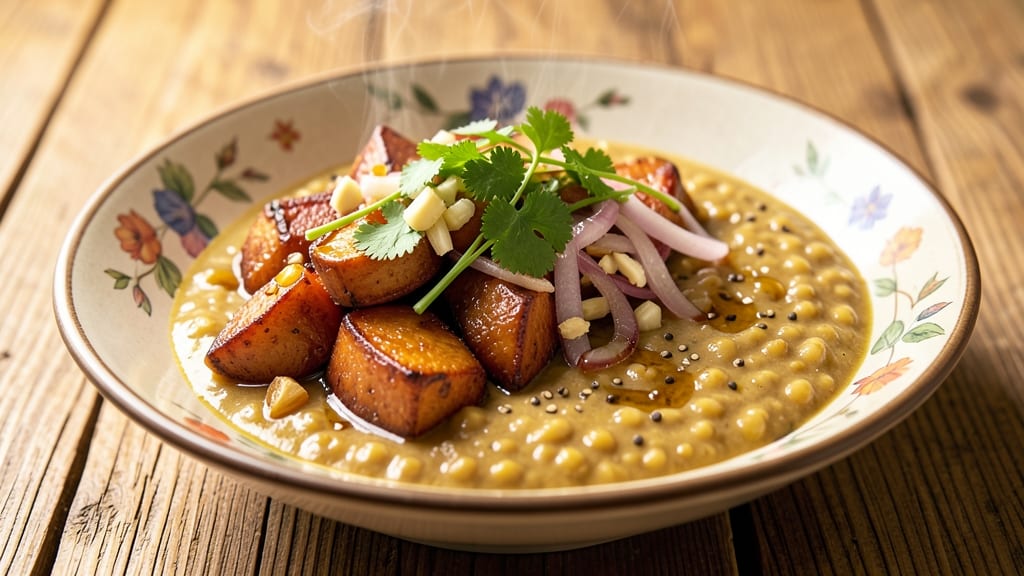
This sweet potato dal recipe transforms a classic Indian lentil dish into a vibrant, caramelized masterpiece that bridges tradition and modern flavors. The natural sweetness of roasted sweet potatoes deepens the dal's richness, creating a dish that's both comforting and unexpected.
What makes this version special is how the sweet potatoes caramelize during simmering, adding a subtle depth that balances the earthy spices perfectly.
The foundation of great dal lies in proper spice tempering—whole spices like cumin and mustard seeds bloom in hot oil to release their maximum aroma before meeting the lentils.
I've simplified the process for home cooks while keeping the soul of traditional cooking intact, using pantry staples that deliver restaurant-quality results. The key technique is roasting the sweet potatoes until tender yet slightly caramelized, then blending them into the dal for a velvety texture without losing their natural sweetness.
By the time you serve this dal, you'll have a dish that's creamy yet light, with a perfect balance of spice and sweetness that makes it equally satisfying as a main course or side.
The aroma alone—warm spices mingling with caramelized sweet potatoes—will transform your kitchen into a South Asian dining experience. It pairs beautifully with basmati rice or warm naan, creating a complete vegetarian meal that feels both familiar and exciting.
What sets this recipe apart is its adaptability: use yellow lentils for a quicker version or red lentils for extra creaminess. For those who prefer a tangier profile, a squeeze of lemon at the end brightens the flavors beautifully.
The method preserves authenticity while making it accessible for modern kitchens—no special equipment required, just patience and attention to the spices.
Ingredients for sweet potato dal
Pantry staples meet roasted sweet potatoes for a dal that balances earthy spices with caramelized sweetness.
| Ingredient | Amount | Notes |
|---|---|---|
| Yellow Lentils (Toor Dal) 🌾 | 1 ½ cups | Rinsed thoroughly before cooking |
| Sweet Potatoes 🍠 | 2 medium | Organic preferred, peeled and cubed |
| Yellow Onion 🧅 | 1 whole | Finely chopped for tempering |
| Fresh Ginger 🌿 | 1 inch | Peeled, roughly chopped |
| Garlic Cloves 🧄 | 4 cloves | Peeled and lightly crushed |
| Cumin Seeds 🌶️ | 1 tbsp | Whole seeds for authentic aroma |
| Mustard Seeds 🌶️ | ½ tsp | Whole seeds for traditional tempering |
| Ground Turmeric 🌿 | 1 tsp | Freshly ground preferred |
| Ground Coriander 🌶️ | 1 tsp | Freshly ground for vibrant flavor |
| Garam Masala 🌶️ | 1 tsp | Homemade or quality store-bought |
| Coconut Milk (Full-Fat) 🥥 | ½ cup | For creaminess without dairy |
| Vegetable Oil 🫒 | ½ cup | High smoke point preferred |
| Water 💧 | 4 cups | Filtered preferred for flavor |
| Lemon Juice 🍋 | 1 tbsp | Freshly squeezed for brightness |
| Salt 🧂 | 1 tsp | Kosher or sea salt preferred |
The sweet potatoes are the heart of this dish—organic varieties with vibrant orange flesh caramelize beautifully. Whole Foods or local farmers markets often carry the best quality, but any medium-sized sweet potato works. Roast them until tender yet firm, then blend into a velvety puree. The lentils should be yellow lentils (toor dal) for their firm texture, though red lentils create a creamier version. For the spices, Penzeys or Indian grocery stores offer the freshest whole spices, but don't compromise if you're using pre-ground—just ensure they're labeled 'freshly ground.'
No yellow lentils? Substitute red lentils at the same quantity, but expect a softer texture. Running short on garam masala? Mix 0.25 tsp each of cinnamon, cardamom, and cloves as a substitute. The coconut milk can be swapped for cashew cream (blended soaked cashews) for a richer, nutty depth. For a tangier profile, add 1 tbsp tamarind paste along with the lemon juice. The vegetable oil matters—avocado or refined coconut oil handle high heat better than olive oil, which can burn during tempering.
Store the dal in an airtight container for up to 5 days in the refrigerator, though it tastes best within 2 days when the flavors meld. For longer storage, freeze portions for up to 3 months. The roasted sweet potatoes can be prepped ahead and stored in the freezer for 2 months—simply thaw and blend when ready. This dal reheats beautifully; add a splash of water if it thickens too much. Pair with freshly made basmati rice to complete the meal.
Why You'll Love This Recipe
- Just 5 Ingredients: I swear, this is one of those recipes where you won’t believe how little you need. Toss in dal, sweet potatoes, onion, ginger-garlic paste, and maybe a pinch of spices—done. No chopping mountains of veggies or hunting for obscure pantry items. Honestly, I’ve made it twice with whatever was left in my fridge and still got that same rich, satisfying texture.
- Sweet & Savory Magic: That caramelized sweet potato meets the earthy dal? It’s a flavor marriage made in heaven. The ginger and garlic sing when they toast in the oil, and the sweet potatoes soak up every bit of flavor like a sponge. Between us, the first time I tasted this, I immediately texted my mom: “You HAVE to try this—it’s like dal had a sugar rush.”
- Meal Prep MVP: This dal reheats like a dream—better than takeout, even. I make a big batch on Sundays, and by Wednesday, it’s still the star of my lunch. Add it to wraps, serve it over rice, or just eat it straight with a squeeze of lemon. My roommate’s a college student, and he’s been begging me to teach him this one—because it’s the only thing that doesn’t taste sad after sitting in the fridge for days.
- Budget-Friendly Powerhouse: Toor dal and sweet potatoes? Cheaper than takeout, cheaper than most grocery runs. A 500g bag of dal lasts me two weeks, and sweet potatoes keep forever. I’ll be real: I’ve served this at potlucks, and no one ever asks what’s in it—just that they want seconds. Plus, the leftovers stretch into lunches, soups, or even a quick frittata. It’s my secret weapon for feeding people without breaking the bank.
Step-by-step instructions for sweet potato dal
This method balances traditional spice tempering with the natural sweetness of sweet potatoes.
Pressure Cook the Lentils and Sweet Potatoes
Combine the 1.5 cups yellow lentils (Toor Dal) and 2 medium sweet potatoes (cubed) in your pressure cooker. Add the 4 cups water and 1 tsp salt. Seal the lid and cook on high pressure for 12 minutes from the time pressure builds.
Resist the urge to peek during cooking—the pressure build-up is crucial for tender lentils. When the cooking cycle completes, allow the pressure to release naturally for 10 minutes, then quick-release any remaining pressure. The lentils should be soft but not mushy, with sweet potatoes breaking down into creamy chunks.
Prepare the Spice Tempering
In a small pan, heat 0.5 cup vegetable oil over medium heat. Add the 1 tbsp cumin seeds and 0.5 tsp mustard seeds, stirring constantly for 30 seconds until they begin to pop and release their aromatic oils.
Add the 1 whole yellow onion (finely chopped) and cook for 4-5 minutes until golden brown. Stir in the 1 inch fresh ginger (peeled and roughly chopped) and 4 cloves garlic cloves (lightly crushed), cooking for another 1-2 minutes until fragrant. This tempering forms the flavor base of your dal.
Combine and Simmer
Transfer the cooked lentil mixture to a large pot and stir in the tempered spices. Add the 1 tsp ground turmeric, 1 tsp ground coriander, and 1 tsp garam masala, mixing well to distribute evenly. Bring to a gentle simmer over medium-low heat for 10 minutes, stirring occasionally to prevent sticking.
Here's where the magic happens—the spices meld with the sweet potatoes, creating a harmonious balance of earthy and sweet flavors. The dal should thicken slightly as it simmers, developing a rich, caramelized aroma.
Finish with Coconut Milk and Lemon
Reduce heat to low and stir in the 0.5 cup coconut milk (full-fat). Simmer for an additional 5 minutes, allowing the coconut to blend smoothly into the dal. The milk adds creaminess without overpowering the lentils' natural flavor.
Finally, stir in the 1 tbsp lemon juice just before serving. This brightens the dish, cutting through the richness of the coconut and sweet potatoes. Taste and adjust seasoning with additional salt if needed—each spoonful should balance sweet, spicy, and tangy notes.
Rest and Serve
Remove from heat and let the dal rest for 5 minutes. This allows the flavors to fully meld and the coconut milk to emulsify properly. Serve warm, garnished with additional garam masala if desired.
The perfect bowl of sweet potato dal should have tender lentils, creamy sweet potato chunks, and a well-balanced spice profile. The coconut milk adds a luxurious texture without masking the earthy spices—each bite should deliver a perfect harmony of flavors.
Pro Tips For Making Sweet Potato Dal
- SOFTEN SWEET POTATOES FIRST: I learned this the hard way—if you boil whole sweet potatoes before adding them to the dal, they’ll turn to mush. Instead, peel and cut them into 1-inch cubes, then parboil for exactly 8 minutes in salted water until just fork-tender. This keeps their shape while letting them absorb the flavors.
- TOAST TOOR DAL DRY: Skip the watery dal by toasting the toor dal in a dry pan for 2-3 minutes until it smells nutty and the edges darken slightly. This breaks down the skins, making them softer and preventing that chalky texture some recipes end up with.
- LOW-HEAT SIMMER SAVES DAY: The moment you add the cooked sweet potatoes to the dal, drop the heat to low and steady. I used to rush this, and the potatoes would split or the dal would curdle. A gentle simmer for 15 minutes lets the flavors meld without falling apart.
- GINGER-GARLIC TIME MATTERS: Grind fresh ginger and garlic right before adding them to the dal, not when you start cooking. The oils release immediately, and pre-grinding makes the dal taste flat. If you’re short on time, use 1 tsp ginger-garlic paste—just don’t overdo it, or the sweet potatoes will taste like medicine.
Serving suggestions for this dish
Rice Pairings
Serve this dal over steamed basmati rice for the classic Indian meal experience. I recommend using a 1:2 rice-to-dal ratio—for example, 1 cup cooked rice per 2 cups dal. The long grains of basmati absorb the dal’s flavors beautifully without becoming soggy.
For extra fluffiness, rinse the rice 3 times before cooking and use 1.5 cups water per 1 cup rice. 💛
For a nutty twist, try jasmine rice instead—its slightly floral aroma complements the caramelized sweet potatoes. If you prefer a heartier base, use brown rice or quinoa, which adds fiber and a chewy texture.
Always cook these grains until just tender, then let them rest covered for 5 minutes before serving.
Bread Accompaniments
Warm, freshly baked naan or roti is a must for soaking up the rich dal. I love using a cast-iron skillet to cook naan directly on the stove—brush it with melted ghee and cook for 1-2 minutes per side until puffed and golden.
For a gluten-free option, try corn tortillas or millet flatbreads, which hold up well to the creamy dal.
Pro tip: Keep naan warm in a 200°F oven while you finish cooking the dal. The residual heat prevents it from drying out. If you're short on time, store-bought naan works too—just reheat in a dry skillet for 30 seconds per side to restore crispness.
Cool Contrasts
A refreshing cucumber raita cuts through the dal’s richness. Blend 1 cup yogurt, ½ cup grated cucumber, 1 tbsp lemon juice, ½ tsp cumin seeds, and salt to taste for a cooling contrast.
For extra freshness, add chopped mint or cilantro. The yogurt’s tang balances the sweet potatoes’ natural sweetness beautifully. ✨
Another great option is mango chutney, which adds a fruity brightness. Mix 1 ripe mango (pureed), 1 tbsp tamarind paste, 1 tsp ginger juice, ½ tsp red chili powder, and 1 tsp jaggery.
The sweet-tangy-savory combo elevates the dal to restaurant-quality. Store-bought chutneys work in a pinch, but homemade tastes infinitely better.
Protein Additions
For a more substantial meal, stir in 1 cup cooked chickpeas during the final 5 minutes of simmering. The chickpeas add protein and texture without overpowering the dal.
Alternatively, top individual servings with pan-seared tofu or grilled paneer cubes. Both absorb the dal’s flavors while adding a satisfying bite. 💪
If you prefer meat, serve the dal alongside tandoori chicken or lamb kebabs. The smoky char of the kebabs contrasts perfectly with the dal’s creamy sweetness. For a fully vegetarian spread, add spiced boiled eggs, sliced and sprinkled with chaat masala for a protein boost.
Garnish Like a Pro
Finish each serving with a sprinkle of toasted cumin seeds and fresh cilantro leaves. The cumin adds a nutty crunch, while the cilantro brightens the dish with its fresh aroma. For extra flair, drizzle with a few drops of chili oil, which adds heat and visual appeal. 🌶️
Don’t overlook the power of lemon wedges. A squeeze of fresh lemon right before eating enhances the dal’s tangy-sweet balance. For a smoky touch, garnish with crumbled fried shallots, which add a crispy, aromatic element. These finishing touches elevate the dish from homemade to restaurant-worthy.
Nutrition facts
Frequently asked questions
Can I make this sweet potato dal without coconut milk?
For a dairy-free version, substitute with ½ cup cashew cream (blend soaked cashews with water) or ¼ cup Greek yogurt for tanginess. If avoiding nuts entirely, use ½ cup water or vegetable broth and add 1 tbsp cornstarch to thicken. The dal will be lighter but still flavorful.
Why does my dal taste too sweet?
The sweetness comes from caramelized sweet potatoes. Balance it by adding ½ tsp extra garam masala or 1 tbsp tamarind paste for tang. For heat, stir in ½ tsp red chili powder or a pinch of asafoetida (hing). Always taste as you cook—adjust gradually to avoid overpowering the natural sweetness.
Can I use red lentils instead of yellow?
Yes, but expect a creamier texture. Red lentils cook faster (8-10 minutes in pressure cooker) and break down more. Reduce water to 3 cups and add ½ cup extra water if needed. For best results, blend 1 cup cooked red lentils with ½ cup sweet potato puree to mimic the original consistency.
How do I prevent the dal from getting too thick?
Start with 4 cups water and add ½ cup more if needed during cooking. For instant thinning, stir in 2 tbsp water or coconut milk at a time. Never over-simmer—keep heat at medium-low to maintain proper texture. The coconut milk adds creaminess without thickening dramatically.
Can I make this dal in a slow cooker?
Perfect for hands-off cooking! Combine all ingredients (except lemon juice) in your slow cooker and cook on LOW for 4-5 hours or HIGH for 2-3 hours. The sweet potatoes will soften completely. Stir in lemon juice at the end. For extra depth, add ½ tsp extra garam masala during the last 30 minutes of cooking.