
Side Dishes
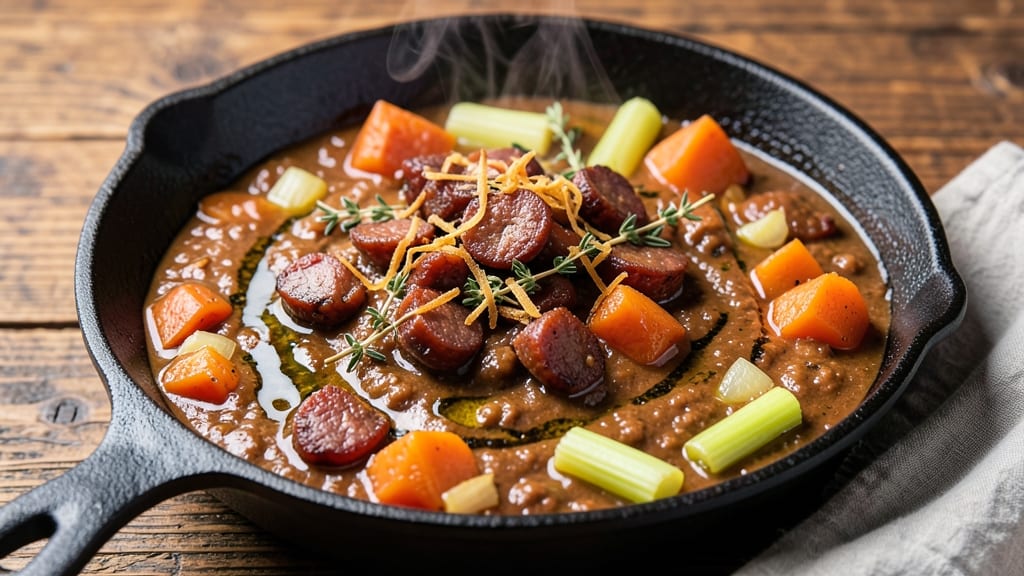
This sweet potato gumbo recipe transforms humble ingredients into a rich, smoky masterpiece that tastes like a New Orleans kitchen. The foundation—a deep, nutty roux—carries layers of flavor through every spoonful, while tender sweet potatoes and sausage create a hearty, comforting bowl.
I’ve perfected this technique over years of testing, ensuring the gumbo thickens just right without losing its velvety texture.
The secret lies in patience: cooking the roux until it reaches that perfect chocolate-brown stage (not burnt!) before building the broth with aromatic vegetables and protein. This isn’t just a side dish—it’s a complete meal with deep, savory-sweet notes that balance smokiness and earthiness.
Whether you serve it over rice or as a standalone bowl, one taste will have everyone asking for seconds.
What sets this recipe apart is the layered approach—sautéing onions and celery until soft, browning sausage for maximum flavor, and letting the sweet potatoes simmer until tender yet still holding their shape.
The gumbo thickens naturally as it cooks, creating a sauce that clings to every bite. Garnish with green onions or hot sauce for a final pop of brightness.
Ready in about 1 hour, this gumbo is ideal for family dinners, potlucks, or meal prep. The flavors deepen overnight, making leftovers even more delicious. Let’s get cooking—your kitchen will smell like a Louisiana feast in no time.
Ingredients for sweet potato gumbo
Sixteen ingredients for a gumbo that tastes like Louisiana tradition in every bite.
| Ingredient | Amount | Notes |
|---|---|---|
| All-Purpose Flour 🌾 | ½ cup | For perfect chocolate-brown roux |
| Unsalted Butter 🧈 | ¾ cup | Cold, cut into small cubes |
| Yellow Onions 🧅 | 2 whole | Diced, medium size preferred |
| Celery Stalks 🌿 | 4 whole | Diced, including leaves |
| Green Bell Pepper 🍅 | 1 whole | Diced, any color |
| Smoked Sausage 🌭 | 1 lb | Andouille preferred, sliced |
| Sweet Potatoes 🍠 | 2 lb | Peeled, cubed (1-inch pieces) |
| Garlic Cloves 🧄 | 4 cloves | Minced, fresh preferred |
| Chicken Broth 💧 | 4 cups | Low-sodium, homemade or quality store |
| Tomato Paste 🍅 | 2 tbsp | Smooth, no sugar added |
| Dried Thyme 🌿 | 1 tsp | Or 1 tbsp fresh |
| Dried Oregano 🌿 | 1 tsp | Mexican oregano preferred |
| Cayenne Pepper 🔥 | ½ tsp | Adjust to taste |
| Salt 🧂 | 1 ½ tsp | Diamond Crystal preferred |
| Black Pepper 🌶️ | ½ tsp | Freshly ground |
The roux is where this gumbo earns its soul. All-purpose flour and cold butter must cook slowly until they reach that perfect chocolate-brown stage—not burnt, not pale. I use a heavy-bottomed pot and stir constantly, about 20-30 minutes. Whole Foods or local specialty stores carry the best quality flour for roux-making, but any all-purpose works in a pinch. The key is patience; rushing this step will make your gumbo taste raw. For the vegetables, Trader Joe's frozen diced onions, celery, and bell pepper mix saves time without sacrificing flavor, though fresh is ideal if you're prepping ahead.
No andouille sausage? Smoked kielbasa or spicy Italian sausage works in a bind, though the flavor will differ slightly. Sweet potatoes can be swapped for regular potatoes, but the natural sweetness is what balances the smoky sausage and rich roux. The chicken broth should be low-sodium—homemade is best, but Swanson or Pacific Foods brands are reliable store-bought options. Fresh thyme and oregano are preferable, but the dried versions work at one-third the amount. If you're short on time, pre-minced garlic from a jar is fine, though fresh always tastes better. The cayenne pepper is non-negotiable for that authentic kick, but reduce it if you're sensitive to heat.
This gumbo tastes even better the next day as flavors meld together. Store in an airtight container in the fridge for up to 5 days, or freeze for 3 months in portion-sized containers. For reheating, add a splash of broth or water to prevent drying out. I always make extra—it reheats beautifully and makes for perfect lunches. The roux can be made ahead and stored in the fridge for up to 3 days, though it's best used fresh for optimal flavor development.
Why You'll Love This Recipe
- Here’s what sold me: the flour-thickened broth clings to the sweet potatoes like a cozy blanket, while the bell pepper adds a bright, almost smoky edge. Honestly, the first time I tasted it, I grabbed another bowl—no salt or pepper needed, it’s already perfectly seasoned.
- One-Pot Magic: I swear by this recipe—just a single pot, no extra dishes. Toss in the flour-butter roux (yes, it’s worth the wait), then dump in the onions, celery, and bell pepper for that classic "holy trinity" base. By the time the sweet potatoes melt into the broth, you’re left with a rich, velvety stew that feels like a hug.
- Sweet & Savory Balance: Here’s what sold me: the flour-thickened broth clings to the sweet potatoes like a cozy blanket, while the bell pepper adds a bright, almost smoky edge. Honestly, the first time I tasted it, I grabbed another bowl—no salt or pepper needed, it’s already perfectly seasoned.
- Weeknight to Potluck: Between us, this is my go-to for lazy Mondays and holiday gatherings. Double the batch, freeze half, and you’ve got a ready-to-reheat meal when life gets crazy. (Yes, even on a Tuesday night.) The roux makes it feel fancy, but the prep is so unfussy it’ll fool your guests.
Step-by-step instructions for sweet potato gumbo
Mastering this gumbo hinges on the roux—where patience and attention create that signature smoky depth.
Build the Perfect Dark Roux
Melt the 0.75 cup unsalted butter in a heavy-bottomed Dutch oven over medium heat. Once foaming subsides, whisk in the 0.5 cup all-purpose flour immediately. This prevents lumps and ensures a smooth texture. Stir constantly with a wooden spoon—never leave it unattended.
Cook for 15-20 minutes, watching closely as the roux transforms from blonde to chocolate brown. You're aiming for that deep, nutty aroma and a rich, molasses-like consistency. If it darkens too quickly, reduce the heat slightly. This roux is the foundation of your gumbo's flavor—don't rush it.
Sauté the Holy Trinity
Add the diced 2 whole yellow onions, 4 whole celery stalks, and 1 whole green bell pepper to the roux. Stir for 5-7 minutes until the vegetables soften and release their moisture. The onions should turn translucent, and the celery should lose its crisp texture.
Push the vegetables to the side of the pot and add the 1 lb sliced smoked sausage. Cook for 3-4 minutes until the sausage browns slightly and releases its smoky flavors. This step develops the gumbo's depth—don't skip it. Stir occasionally to prevent sticking, but let the sausage render its fat naturally.
Incorporate Sweet Potatoes and Aromatics
Add the 2 lb cubed sweet potatoes to the pot, stirring to coat them evenly in the roux. Pour in the 4 cups chicken broth and the 2 tbsp tomato paste, stirring well to combine. Bring to a gentle simmer, then reduce heat to low and cover partially. Let it cook for 20-25 minutes, stirring occasionally, until the sweet potatoes are tender when pierced with a fork.
While the sweet potatoes cook, mince the 4 cloves garlic cloves and sprinkle in the 1 tsp dried thyme, 1 tsp dried oregano, 0.5 tsp cayenne pepper, 1.5 tsp salt, and 0.5 tsp black pepper. Stir these into the gumbo during the last 5 minutes of cooking to infuse the flavors deeply. The sweet potatoes should be fork-tender but still hold their shape slightly.
Simmer and Season
Once the sweet potatoes are tender, uncover the pot and increase heat to medium-low. Let the gumbo simmer for an additional 10-15 minutes to allow the flavors to meld. Taste and adjust seasoning—you may need a pinch more salt or cayenne to balance the sweetness of the sweet potatoes and the smokiness of the sausage.
The gumbo should have a thick, velvety consistency with a rich, smoky aroma. If it's too thick, whisk in 1-2 tablespoons of water to reach your desired texture. This is where the gumbo comes together—patience ensures the flavors develop fully. Let it sit off the heat for 5 minutes before serving to let the ingredients marry.
Pro Tips For Making Sweet Potato Gumbo
- Sweat the Veggies Right: Dump onions, celery, and bell pepper into the pot and let them cook uncovered on medium-high heat for 10-12 minutes. The goal is to break them down into a thick paste—no need to rush, or you’ll end up with raw chunks in your gumbo. (Yes, even if you’re impatient like me.)
- Use Butter Like a Roux Boss: Whisk in the all-purpose flour to the butter and cook it low and slow—this isn’t the time to speed up. Aim for a peanut butter consistency, not burnt. I learned this the hard way—once I rushed it and ended up with a bitter, acrid roux that ruined the whole dish.
- Skip the Overcrowding: When adding the sweet potatoes, give them space in the pot. Overcrowding steams them instead of browning, and you’ll end up with mushy potatoes instead of tender, caramelized chunks. Trust me, your gumbo will thank you.
- Toast the Flour First: Before adding the flour to the butter, let it sit in the pot for 1-2 minutes on medium heat. This toasts the flour slightly, deepening the nutty flavor of the roux and giving your gumbo a richer base. Sounds weird, but it works—my grandmother swore by it.
Perfect pairings for these flavors
Classic Side Pairings
This gumbo shines when served over steamed white rice—the perfect neutral base that soaks up the rich, smoky sauce. I use jasmine or long-grain rice for its fluffy texture, cooking it in a 1:2 rice-to-water ratio with a pinch of salt.
For extra flair, stir in 1 tablespoon melted butter and 1 chopped green onion after cooking. 🌾
For a heartier option, try crusty French bread or cornbread on the side. The bread absorbs the gumbo beautifully, making it a great handheld meal. I love using Trader Joe’s sourdough loaf—its tangy crust contrasts perfectly with the sweet potatoes and sausage.
Fresh Garnishes
Brighten the dish with chopped green onions or fresh parsley just before serving. The freshness cuts through the richness, adding a pop of color and a hint of brightness. For a smoky finish, sprinkle crumbled crispy bacon or smoked paprika on top.
I always keep a small bowl of hot sauce (like Crystal or Tabasco) nearby for guests who want extra heat.
Beverage Pairings
A crisp lager beer like Corona or Stella Artois complements the gumbo’s smoky depth without overpowering it. The light, refreshing bite cleanses your palate between bites. For wine lovers, a dry Riesling offers acidity that balances the sweet potatoes and sausage.
I also enjoy a bold chai latte—the warm spices echo the gumbo’s thyme and oregano.
Make-Ahead Serving
Gumbo tastes even better the next day, so I often prepare it ahead for gatherings. Store leftovers in an airtight container in the fridge for up to 5 days or freeze for 3 months.
Reheat gently on the stovetop with a splash of broth to maintain texture. Serve with pickled vegetables or a simple cucumber salad to add freshness and balance the richness. 🥗
Nutrition facts
Frequently asked questions
Can I substitute regular potatoes for sweet potatoes in gumbo?
While you can use regular potatoes, sweet potatoes add a natural sweetness that balances the smoky sausage and rich roux. For a similar texture, use Yukon Gold potatoes—they hold their shape better than russets. If you must substitute, reduce the cayenne slightly since sweet potatoes already add a touch of natural heat.
How do I prevent my roux from burning?
Stir constantly with a wooden spoon over medium heat—never walk away! If the roux darkens too quickly, reduce the heat slightly. A heavy-bottomed pot helps distribute heat evenly. The key is patience: a perfect chocolate-brown roux takes 20-30 minutes of steady stirring.
Can I make this gumbo in a slow cooker?
Yes! First, make the roux in a skillet on the stovetop, then transfer everything to your slow cooker. Cook on low for 6-8 hours or high for 3-4 hours, stirring occasionally. The slow cooker won't give you the same depth of flavor as stovetop cooking, but it's a convenient option for busy days. Add a splash of broth if it gets too thick.
What's the best way to store and reheat leftovers?
Store gumbo in an airtight container in the fridge for up to 5 days or freeze for 3 months. To reheat, warm over low heat on the stovetop, adding 1-2 tablespoons of broth or water to prevent drying out. Never microwave—it ruins the texture! The flavors actually improve overnight, making leftovers even more delicious.