
Side Dishes
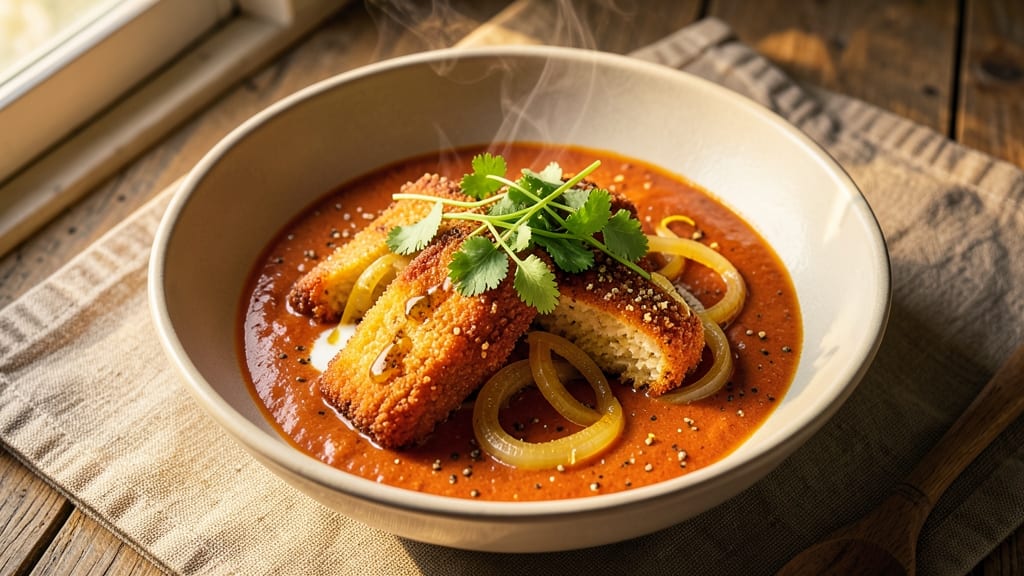
This sweet potato katsu curry recipe transforms humble sweet potatoes into crispy, golden cutlets that pair perfectly with a velvety curry sauce.
The secret lies in a light, airy panko crust that stays crunchy even after dipping, while the curry simmers into a rich, aromatic sauce with just the right balance of sweetness and spice.
What makes this dish truly special is the combination of textures—crispy katsu that shatters with each bite and tender sweet potatoes inside, all smothered in a sauce that’s both comforting and complex.
The recipe breaks down into two main components: the katsu preparation, where proper breading and frying are key, and the curry sauce, which builds depth through gradual simmering.
By the time you plate this dish with steamed rice and quick-pickled vegetables, you’ll have a meal that’s restaurant-quality yet simple enough for weeknight cooking. The sweetness of the potatoes complements the curry’s warmth, creating a harmony that’s impossible to resist. Let’s get started on making this comforting favorite.
This recipe delivers on every promise—crispy katsu that hold their shape, a sauce with layers of flavor, and a complete meal that feels indulgent without being complicated. The technique is straightforward, but the result is undeniably satisfying, making it perfect for both casual dinners and special occasions.
Ingredients for sweet potato katsu curry
Sweet potatoes and crispy panko meet rich curry sauce in this restaurant-quality dish.
| Ingredient | Amount | Notes |
|---|---|---|
| Sweet Potatoes 🍠 | 2 large | Peeled, cut into 1-inch thick slices |
| All-Purpose Flour 🌾 | 1 cup | For dredging katsu |
| Japanese Panko Breadcrumbs 🍞 | 2 cups | For crispy crust |
| Large Eggs 🥚 | 2 whole | Beaten for egg wash |
| Vegetable Oil 🫒 | 3 cups | For deep frying |
| Yellow Onion 🧅 | 1 medium | Diced, for curry base |
| Garlic Cloves 🧄 | 4 cloves | Minced for curry |
| Fresh Ginger 🌿 | 1 inch | Grated, for curry |
| Curry Powder 🌶️ | 2 tbsp | For aromatic base |
| Tomato Paste 🍅 | 2 tbsp | For sauce depth |
| Coconut Milk 🥥 | 1 can (13.5 oz) | Full-fat for creaminess |
| Chicken Broth 💧 | 1 cup | Low-sodium preferred |
| Honey 🍯 | 1 tbsp | For sweetness balance |
| Soy Sauce 🍶 | 2 tbsp | For umami depth |
| Salt 🧂 | 1 tsp | Kosher or sea salt |
The sweet potatoes are the star—Japanese sweet potatoes have a drier texture that crisps beautifully, but regular orange ones work too. Peeled and sliced uniformly ensures even cooking. For the panko, Japanese brands like Shiga or Koyo give that signature light, airy texture, but any high-quality panko will do. If you can't find Japanese panko, regular breadcrumbs toasted in a dry pan work in a pinch. The key is keeping everything cold until frying—no soggy katsu here.
No Japanese curry powder? Mix 1 tbsp each of turmeric, cumin, coriander, and a pinch of cayenne for a close substitute. The coconut milk matters—full-fat gives the best creaminess, but light works if that's all you have. Fresh ginger and garlic should be bright and pungent—if they smell dull, toast them lightly to wake up the flavors. For the honey, agave or maple syrup are good swaps. The tomato paste can be thinned with broth if it feels too thick, but Trader Joe's squeeze tubes are perfect for this recipe—no waste, no mess.
Fry the katsu in small batches to maintain oil temperature—325°F to 350°F is ideal. The curry sauce thickens as it simmers, so start with less broth if you prefer it richer. Leftovers keep for 4-5 days in the fridge, and the katsu reheat beautifully in a skillet with a splash of oil. For extra crispiness, broil for 2-3 minutes before serving. The sauce freezes well, so make a double batch—it's even better the next day as flavors meld.
Why You'll Love This Recipe
- Crispy in Minutes: I swear, the panko crust on these sweet potatoes turns golden in just 8 minutes—no flipping, no fuss. That crunch with the tender inside? It’s the kind of shortcut that makes you feel like a pro.
- Curry Comfort Bomb: The rich, spiced sauce clings to the katsu like it’s been hugging it for days. Honestly, the first bite makes me forget it’s a weeknight—it’s that good.
- Lunchbox Hero: Pack the leftovers cold or reheat them, and they’re still perfect for work lunches. My kids actually eat their veggies when they’re disguised as these crispy bites—no complaints.
- Budget Crunch Winner: Sweet potatoes are cheap, panko lasts forever, and eggs stretch a long way. I’ve fed four people for under $10, and no one’s ever questioned the value. (Yes, even on a Tuesday night.)
Step-by-step instructions for sweet potato katsu curry
Here's how to create crispy golden sweet potato katsu with a rich, aromatic curry sauce.
Prepare the Sweet Potato Katsu
Begin by peeling the 2 large sweet potatoes and cutting them into 1-inch thick slices. I like to use a mandoline for even slices, but a sharp knife works too. Pat each slice completely dry with paper towels—this ensures a crispy crust rather than a soggy one.
Set up a breading station with three shallow bowls. Place the 1 cup all-purpose flour in the first bowl, beat the 2 whole eggs with 1 teaspoon salt in the second, and put the 2 cups Japanese panko breadcrumbs in the third. Working quickly, dredge each sweet potato slice first in flour, shaking off any excess, then in the beaten egg, and finally in the panko, pressing gently to adhere. Let the breaded slices rest for 5 minutes before frying.
Deep Fry the Katsu to Golden Perfection
Heat the 3 cups vegetable oil in a deep skillet or Dutch oven to 350°F using a thermometer for accuracy. Fry the breaded sweet potato slices in batches—don't overcrowd the pan—to maintain even heat. Fry for 3-4 minutes per side until they reach a deep golden brown color. The interior should register 185°F when tested with an instant-read thermometer.
Transfer the fried katsu to a paper towel-lined plate to drain excess oil. Keep them warm in a 200°F oven while you prepare the curry sauce. If the oil temperature drops below 340°F, let it recover before adding more katsu—this ensures maximum crispiness.
Build the Curry Base
In a large pot, sauté the diced 1 medium yellow onion over medium heat for 5 minutes until softened. Add the minced 4 cloves garlic and grated 1-inch fresh ginger, cooking for another 1 minute until fragrant. Stir in the 2 tablespoons curry powder and cook for 30 seconds to toast the spices and deepen their flavor.
Add the 2 tablespoons tomato paste and cook for 2 minutes, stirring constantly. This step develops the sauce's rich, complex flavor. Pour in the 1 cup chicken broth and scrape up any browned bits from the bottom of the pot—these contain concentrated flavor.
Simmer the Curry Sauce
Add the 1 can (13.5 oz) coconut milk, 1 tablespoon honey, and 2 tablespoons soy sauce to the pot. Bring to a gentle simmer and reduce heat to low. Let the curry cook uncovered for 15-20 minutes, stirring occasionally, until it thickens to your desired consistency. The sauce should coat the back of a spoon but still be smooth.
Taste and adjust seasoning—add more salt if needed, or a pinch of curry powder for extra depth. The sauce should balance sweet, savory, and slightly spicy notes. Keep the sauce warm while you prepare to serve.
Serve the Katsu Curry
Return the fried sweet potato katsu to the pot with the curry sauce and gently toss to coat. Let them simmer together for 2-3 minutes to absorb the sauce's flavors. Serve immediately with steamed rice to soak up the rich curry.
The result should be crispy, golden katsu with a tender sweet potato interior paired with a velvety curry sauce that swirls around each bite. The contrast of textures and flavors makes this dish truly special—crunchy crust meets creamy, aromatic curry in perfect harmony.
Pro Tips For Making Sweet Potato Katsu Curry
- Dry the Sweet Potatoes Thoroughly: I learned this the hard way—skipping this step means soggy, greasy katsu that won’t crisp. After boiling, pat them dry with a kitchen towel, then let them air-dry on a wire rack for 10 minutes. The extra effort guarantees that golden crust instead of a sad, limp coating.
- Use Room-Temp Eggs: Cold eggs make for uneven coating and weak adhesion to the panko. Crack them into a bowl 15 minutes before breading and give them a quick whisk. The slight warmth helps the flour and egg mix bind better to the sweet potato, so your katsu stays together during frying.
- Fry in Batches at 350°F: Overcrowding the pan drops the oil temperature, leading to greasy instead of crispy katsu. Keep it tight with 2-3 pieces per batch, and maintain that 350°F heat—any lower, and you’ll end up with a mushy center. A candy thermometer takes the guesswork out of it.
- Double-Coat the Panko: One layer of panko won’t cut it for sweet potatoes—they’re denser than chicken. After the first flour-egg dip, press the panko on firmly, then do a second dip in beaten egg and another panko layer. Sounds extra, but it’s the difference between a crumbly bite and a shatteringly crisp one.
Flavor customization for these flavors
Spice Level Control
Adjust the heat to your preference by modifying the curry powder and adding optional ingredients. For a mild version, reduce the curry powder to 1 tbsp and add ½ tsp ground turmeric for warmth without heat.
For medium heat, use the full 2 tbsp curry powder plus ¼ tsp cayenne pepper. For a fiery kick, boost to 3 tbsp curry powder and add 1 tsp fresh red chili flakes, then finish with a squeeze of lime. 🌶️
Sweetness Balance
Customize the sauce's sweetness by swapping or adjusting the honey. For a deeper caramel note, replace the honey with 1 tbsp brown sugar and add ½ tsp vanilla extract. If you prefer a fruitier profile, stir in 1 tbsp apricot jam during the final simmer.
For a tangy twist, add 1 tsp rice vinegar at the end—it brightens the sauce beautifully.
Umami Depth
Enhance the savory complexity by incorporating extra umami boosters. Add 1 tbsp fish sauce or 1 tsp Worcestershire sauce for a deeper, more complex flavor. For a vegetarian option, stir in 1 tbsp soy sauce plus ½ tsp miso paste during the simmer.
If you love mushrooms, sauté ½ cup finely chopped shiitake with the onions for an earthy richness.
Creamy Variations
Experiment with different dairy or dairy-free additions to alter the sauce's creaminess. For a richer texture, stir in ¼ cup heavy cream at the end. For a lighter option, replace ¼ cup coconut milk with ¼ cup Greek yogurt during the final simmer.
For a nutty twist, add 1 tbsp tahini and a splash of lemon juice—it adds a subtle bitterness that balances the sweetness perfectly.
Herbaceous Finish
Fresh herbs elevate the dish with brightness and aroma. Garnish with 2 tbsp chopped cilantro or 1 tbsp fresh Thai basil for a citrusy note. For a more sophisticated touch, add 1 tsp finely chopped lemongrass (steeped in the broth) or ½ tsp ground cardamom during the simmer.
A sprinkle of toasted sesame seeds adds crunch and a nutty depth that pairs wonderfully with the sweet potatoes.
Regional Twists
Inspired by Japanese curry, this dish adapts beautifully to other cuisines. For a Thai-inspired version, add 1 tbsp red curry paste and 1 tsp fish sauce, then finish with lime zest.
For a British-style twist, replace the coconut milk with ½ cup evaporated milk and add 1 tsp curry leaves during cooking. A Mexican fusion version swaps coconut milk for ½ cup tomato sauce and adds 1 tsp cumin and ½ tsp smoked paprika for a smoky kick.
Nutrition facts
Frequently asked questions
Can I use regular potatoes instead of sweet potatoes?
While you can substitute regular potatoes, the flavor and texture won't be the same. Sweet potatoes add natural sweetness that balances the curry sauce beautifully, while their lower moisture content helps maintain crispiness in the breading. If you must use regular potatoes, choose waxy varieties like Yukon Gold and pat them extra dry to prevent sogginess.
How do I keep the katsu from getting soggy?
The secret is keeping everything cold until frying and maintaining proper oil temperature. Pat sweet potato slices completely dry before breading, and let them rest 5 minutes after breading. Fry in batches at 350°F oil—never overcrowd the pan. Keep fried katsu warm in a 200°F oven while preparing the sauce, not on a warm surface.
Can I make this recipe without deep frying?
Yes! For a healthier version, bake the breaded katsu at 400°F for 18-20 minutes, flipping halfway. Use an oven-safe skillet with a wire rack to allow oil to drain. The texture will be lighter but still crispy. For air frying, cook at 375°F for 10-12 minutes, shaking the basket halfway through.
What's the best way to reheat leftovers?
Reheat katsu in a skillet over medium heat with a splash of oil for 2-3 minutes per side to restore crispiness. For the sauce, warm it gently on the stove—never microwave it directly. If reheating both together, add the katsu to the sauce just before serving to prevent sogginess. The sauce actually tastes better the next day as flavors meld!
How can I make this dish vegetarian?
Replace chicken broth with vegetable broth and use 1 tbsp soy sauce + ½ tsp miso paste for umami. For extra protein, add ½ cup chickpeas** to the curry sauce. The sweet potatoes provide natural sweetness that works perfectly with the vegetarian version. Just ensure your curry powder is vegetarian-friendly (some contain anchovies).