
Side Dishes
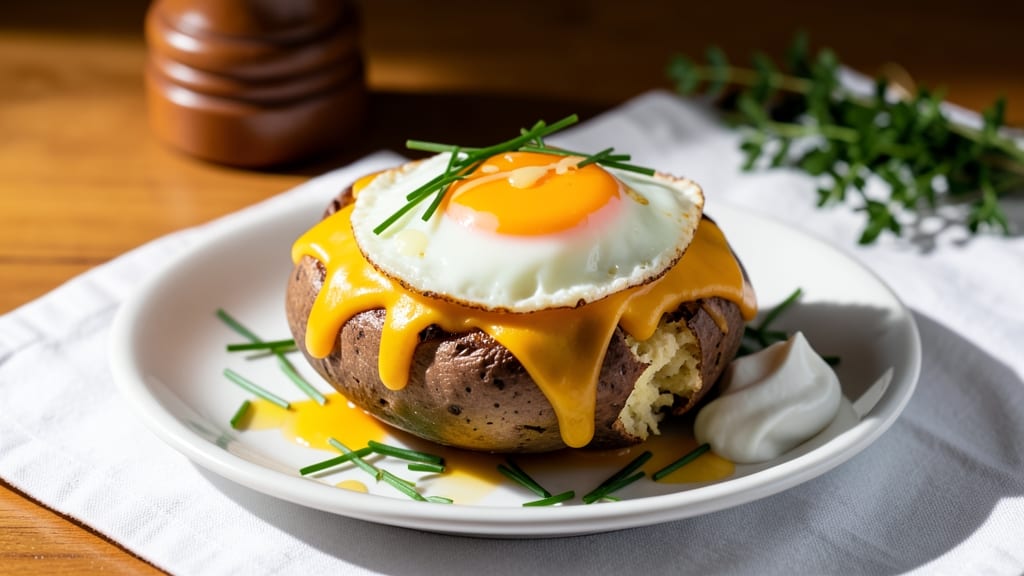
This twice baked potato with egg recipe transforms a simple side into a hearty, restaurant-worthy dish with crispy edges and a runny yolk center. The secret lies in baking the potatoes twice—once to cook through, then again after assembling with creamy filling and eggs.
I developed this recipe after years of perfecting the balance between fluffy interiors and golden crusts, ensuring every bite delivers that perfect texture contrast.
The magic happens in the assembly: fluffy potato flesh mixed with cheddar, sour cream, and chives, then topped with a perfectly cooked egg. The first bake ensures the potatoes are tender, while the second bake melts the cheese and cooks the egg to that ideal runny yolk stage.
This method works for both dinner parties and weeknight meals, delivering a dish that feels indulgent without requiring hours in the kitchen.
What you’ll end up with is a dish that’s crispy on the outside, creamy and cheesy inside, and crowned with a perfectly runny yolk that pools into golden perfection.
The aroma alone will have everyone gathering around the table, and the first bite delivers that satisfying mix of textures and flavors. This recipe is the ultimate way to elevate a classic comfort food into something special.
Whether you're serving a crowd or treating yourself to a cozy meal, these twice-baked potatoes are a guaranteed crowd-pleaser. The technique is straightforward, but the results are anything but basic—think of it as a gourmet twist on a childhood favorite. Let’s get baking!
Ingredients for twice baked potato with egg
Four hearty potatoes start this gourmet twist on a classic comfort dish.
| Ingredient | Amount | Notes |
|---|---|---|
| Russet Potatoes 🥔 | 4 whole | Medium-large size for even baking |
| Shredded Cheddar Cheese 🧀 | 1 ½ cups | Sharp cheddar preferred for flavor |
| Sour Cream 🥛 | ½ cup | Full-fat for creaminess |
| Fresh Chives 🌿 | ¼ cup | Finely chopped for garnish |
| Large Eggs 🥚 | 4 whole | Room temperature for even cooking |
| Butter 🧈 | ¼ cup | Melted, unsalted preferred |
| Milk 🥛 | ¼ cup | Whole milk for creaminess |
| Salt 🧂 | 1 tsp | Kosher or sea salt |
| Black Pepper 🌶️ | ½ tsp | Freshly ground preferred |
| Garlic Powder 🧄 | ½ tsp | For subtle garlic flavor |
| Breadcrumbs 🍞 | ¼ cup | Panko for extra crunch |
| Olive Oil 🫒 | 1 tbsp | For brushing potato tops |
The potatoes are the foundation, so pick Russets—they're the starchy, fluffy kind that bakes perfectly. Costco or Walmart usually have them in bulk for great prices, but any grocery store's produce section will work. Aim for medium-large potatoes (about 1.5 lbs each)—small ones dry out, and giant ones take forever to bake. If you can't find Russets, Yukon Golds work in a pinch, but they'll be slightly waxier. The secret to even baking is scoring the tops with a fork before roasting—it helps steam escape so you don't end up with soggy centers.
No sharp cheddar? Pepper Jack or Monterey Jack both work well, though they add their own flavor profiles. The sour cream should be full-fat—low-fat versions get watery when baked. Fresh chives are ideal, but dried chives at one-third the amount will do in a bind. For the egg topping, I always use room-temperature eggs—they slide right into the center without breaking. The butter and milk mixture creates the perfect creamy base, but if you're watching calories, Greek yogurt mixed with a splash of milk gives similar texture. The breadcrumbs should be toasted lightly before mixing to add extra crunch to those golden crusts.
Potatoes keep 5 days in the fridge if stored in a cool, dark place—wrap them in foil to prevent drying. The filling ingredients (cheese, sour cream, etc.) can be prepped a day ahead and stored in the fridge. For the final assembly, I like to make these 2 hours before baking so the flavors meld properly. Once baked, they reheat beautifully—just 10 minutes at 375°F to restore that crispy crust. These are perfect for meal prep too—portion into individual ramekins and bake straight from the fridge for easy weeknight dinners.
Why You'll Love This Recipe
- One-Pan Magic: I swear by this trick—just bake, mash, stuff, and bake again. No chopping boards, no extra pans, just a single sheet pan that does all the work. The eggs poach right into the creamy potato center while the cheese gets that golden, bubbly crust.
- Creamy-Cheesy Crunch: That first bite? The outside’s crispy from the broiler, the inside melts like butter with the egg yolk oozing out. The chives add this fresh little kick that cuts through the richness—like a hug for your taste buds.
- Game for Any Meal: Honestly, I make this for breakfast when I’m lazy, as a hearty lunch with a salad, or even for dinner when I’m craving something indulgent but not heavy. The sour cream keeps it light enough for daytime, but the cheese and egg make it feel like a treat.
- Leftovers? No Problem: Between us, these reheat like a dream—just pop them in the oven for 10 minutes, and they’re just as good as fresh. Plus, the potatoes last forever in the fridge, so I can make a big batch on Sunday and not stress about leftovers all week. Budget-friendly and foolproof.
Step-by-step instructions for twice-baked potatoes with perfect crusts
Master this classic technique for creamy centers, crispy tops, and silky egg yolks every time.
🍳 Step 1: Bake and Fluff the Potatoes
Preheat your oven to 400°F and place the 4 whole Russet Potatoes directly on the middle rack. Bake for 60-75 minutes until a knife slides in easily with minimal resistance. The potatoes should feel light when lifted—they're done when the skin is crisp and the flesh fluffs when pierced.
Let the potatoes cool for 10 minutes before handling. I like to test doneness by gently squeezing—I'm looking for just enough resistance to keep their shape but still yield slightly. Cut each potato lengthwise, then scoop out the insides, leaving a ¼-inch thick shell. Mash the flesh in a large bowl until smooth, then stir in the 1.5 cups shredded cheddar cheese, 0.5 cup sour cream, 0.25 cup milk, 0.25 cup melted butter, 1 tsp salt, 0.5 tsp black pepper, and 0.5 tsp garlic powder.
🥘 Step 2: Assemble and Bake the First Layer
Spoon the mashed potato mixture back into the potato shells, pressing down gently to fill completely. Place them on a parchment-lined baking sheet and bake at 375°F for 25 minutes until the tops are lightly golden. This first baking ensures the filling is heated through and ready for the egg topping.
While the potatoes bake, prepare the egg mixture by whisking the 4 whole large eggs until frothy. The eggs should be at room temperature for even cooking—this prevents them from curdling when they hit the hot potatoes. Keep them covered until ready to use to maintain their temperature.
🍳 Step 3: Top and Bake to Golden Perfection
Remove the potatoes from the oven and brush the tops with the 1 tbsp olive oil. Sprinkle evenly with the 0.25 cup breadcrumbs, then pour the whisked eggs over the top, letting them flow into the crevices. Return to the oven and bake for another 20-25 minutes until the tops are deep golden brown and the eggs are set but still slightly jiggly in the center.
Here's the thing—don't overbake. You want the egg to be just set at the edges but still runny in the middle. The residual heat will finish cooking it as it rests. If the tops brown too quickly, tent them loosely with foil for the last few minutes to prevent burning.
🔪 Step 4: Garnish and Serve Immediately
Let the potatoes rest for 5 minutes before garnishing with the 0.25 cup finely chopped fresh chives. The resting period allows the filling to set slightly, making it easier to slice. Cut each potato in half lengthwise and serve immediately—this is when the magic happens with that perfect runny yolk.
For the best experience, serve with a side of steamed green beans or a simple garden salad. The contrast of the crispy crust, creamy filling, and silky egg creates a perfect balance of textures and temperatures. Each bite delivers that golden crust, rich cheddar, and that first run of warm yolk—worth every step of the process.
Pro Tips For Making Twice Baked Potato With Egg
- Poke Holes in Potatoes: I learned this the hard way—skipping this step means soggy, waterlogged potatoes. Use a fork or skewer to make 6-8 holes in each potato before baking. This lets steam escape and keeps the texture light and fluffy, not gummy.
- Preheat Oven to 400°F: Sounds basic, but I used to rush this and end up with uneven baking. A hot oven (400°F) guarantees a crispy crust while keeping the inside tender. If your oven runs cool, add 5 minutes to the bake time—no one wants a sad, limp potato.
- Use Sharp Cheese: Pre-shredded cheese has anti-caking agents that make it clump and turn into a paste when melted. Sharp cheddar shreds cleanly and melts smoothly—buy a block, grate it yourself, and save the dish from looking (and tasting) like a science experiment gone wrong.
- Wait for Eggs to Set: I was skeptical until I tried it: let the egg mixture sit for 2-3 minutes after cracking it into the potato before baking. This gives the egg time to start binding, so it doesn’t leak out and make your potato watery. Cover with foil for the first 15 minutes if you’re worried about overcooking.
Best sauces and condiments for this recipe
Classic Cheese Sauce
My go-to sauce is a simple cheddar-beer blend that adds depth without overpowering the dish. Melt ½ cup sharp cheddar with ¼ cup whole milk and 2 tbsp butter over low heat, then stir in 2 tbsp dark beer (like Guinness or stout) for richness.
This sauce pairs perfectly with the creamy filling and adds a subtle malty note that complements the egg. 🧀
Spicy Sour Cream
For those who love heat, mix ¼ cup sour cream with 1 tsp smoked paprika and ½ tsp cayenne pepper before adding it to the potato mixture. The smoky-spicy contrast cuts through the richness of the cheese and egg, adding a bold kick.
I like to dollop this on top after baking for extra drama.
Garlic-Herb Butter
Infuse ¼ cup melted butter with 1 minced garlic clove, 1 tbsp chopped parsley, and a pinch of salt. Drizzle this over the baked potatoes right before serving—it adds a fresh, herby brightness that balances the richness.
This is my secret weapon for elevating the dish without extra effort.
Bacon Jam Glaze
For a decadent twist, make a quick bacon jam by cooking 4 strips bacon until crisp, then simmering with 2 tbsp maple syrup and 1 tbsp apple cider vinegar for 5 minutes**.
Drizzle this sticky-sweet glaze over the top of the baked potatoes before serving. The smoky-sweet contrast is pure indulgence. 🥓
Creamy Dill Sauce
Whisk together ½ cup sour cream, 1 tbsp chopped fresh dill, 1 tsp lemon juice, and a pinch of salt for a bright, herby sauce. This works beautifully as a dip for the potato halves or as a garnish.
The tangy freshness cuts through the richness, making each bite feel lighter and more vibrant.
Nutrition facts
Frequently asked questions
Why do I need to bake the potatoes twice?
The first bake cooks the potatoes through completely and creates a sturdy shell to hold the filling. The second bake melts the cheese, cooks the egg to perfection, and develops that golden crust. Skipping the first bake risks a soggy center, while the second bake ensures the egg stays runny and the breadcrumbs get crispy.
Can I make these ahead of time?
Assemble the potatoes with filling up to 24 hours ahead and refrigerate. Bake straight from the fridge (add 5-10 extra minutes to the second bake time). For the egg topping, add it 30 minutes before baking to ensure perfect doneness. Keep them warm in a 200°F oven until serving.
What if my egg gets fully cooked?
Remove the potatoes from the oven as soon as the edges look set but the center still jiggles slightly. The residual heat will finish cooking the egg while keeping the center runny. If they overbake, tent with foil for the last 5 minutes next time. A thermometer reading 160°F at the center ensures perfect doneness.
Can I use Yukon Gold potatoes instead of Russets?
Yukon Golds work but won't be as fluffy or crispy. Their waxier texture holds up better to scooping but may not develop the same golden crust. If using them, reduce baking time by 10-15 minutes and brush with extra olive oil for browning. For best results, stick with Russets—they're designed for this technique.
How do I make these vegetarian?
Replace the eggs with 4 vegan egg substitutes (like tofu-based or chickpea flour mixtures) or use 4 oz vegan cheese and ¼ cup cashew cream instead of the egg topping. For protein, add ½ cup cooked lentils or ½ cup crumbled tempeh to the filling. The texture will be slightly different but still delicious!