
Side Dishes
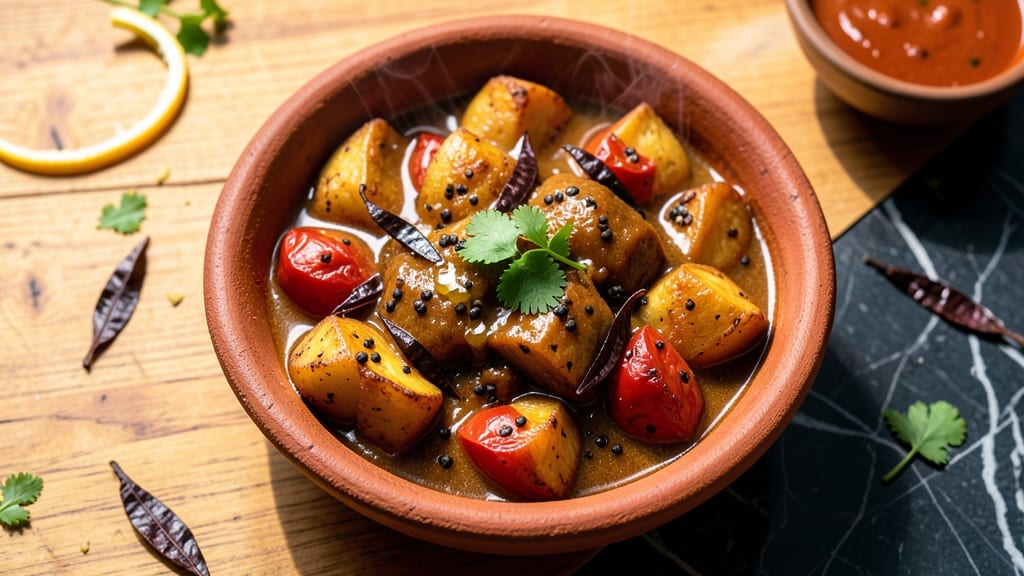
This Andhra potato curry delivers the bold, tangy-spicy flavors of South India in every bite, transforming simple potatoes into a restaurant-worthy side dish. The secret lies in the layered spices—red chili powder, mustard seeds, and curry leaves—simmered with tamarind to create that signature tangy kick that defines Andhra cuisine.
I first discovered this recipe during a visit to a family-run restaurant in Hyderabad, where the curry's complex heat and depth left a lasting impression.
The recipe begins with tempering whole spices in hot oil until they release their aromatic magic, then builds flavor through a slow simmer with tomatoes, onions, and Andhra red chili powder.
The tamarind adds that signature tang that balances the heat, while coconut and fresh coriander bring brightness at the end. What makes this curry special is how the potatoes absorb all these flavors, emerging tender yet firm with a glossy sheen.
This vegetarian dish pairs beautifully with rice, dosas, or even as a filling for parathas, making it versatile enough for weeknight dinners or special occasions. The spices are toasted to perfection, creating a fragrant base that transforms humble potatoes into a flavor-packed centerpiece.
Once you taste the balance of heat, tang, and earthy spices, you'll understand why this curry is a staple in Andhra homes.
Ready in just 30 minutes, this curry requires no special equipment—just a sturdy pot and patience for the spices to develop their depth. The result is a dish that's both comforting and exciting, with every spoonful offering a taste of South India's vibrant culinary traditions. Let's get cooking!
Ingredients for andhra potato curry
Potatoes, spices, and tamarind transform into a restaurant-worthy curry in 30 minutes.
| Ingredient | Amount | Notes |
|---|---|---|
| Russet Potatoes 🥔 | 2 lb | Cut into 1-inch chunks |
| Vegetable Oil 🫒 | ½ cup | For tempering spices |
| Mustard Seeds 🌿 | 1 tsp | Whole, for tempering |
| Dried Curry Leaves 🌿 | 1 tbsp | Or 10 fresh leaves |
| Andhra Red Chili Powder 🌶️ | 2 tbsp | Adjust for heat preference |
| Ground Cumin 🌿 | 1 tsp | Toasted for depth |
| Ground Coriander 🌿 | 1 tsp | Freshly ground preferred |
| Ripe Tomatoes 🍅 | 2 medium | Or 1 cup chopped |
| Yellow Onions 🧅 | 1 medium | Finely chopped |
| Tamarind Paste 🍋 | 1 tbsp | Adjust for tanginess |
| Fresh Coconut 🥥 | ¼ cup | Shredded, unsweetened |
| Fresh Cilantro 🌿 | ¼ cup | Chopped, for garnish |
| Salt 🧂 | 1 ½ tsp | Adjust to taste |
| Turmeric Powder 🌿 | ½ tsp | For color and flavor |
| Asafoetida (Hing) 🌿 | ⅛ tsp | Optional, for aroma |
The spices are everything here. Andhra red chili powder gives that signature heat—grab it at an Indian grocery or online if your local store doesn't carry it. Mustard seeds and curry leaves are non-negotiable; they're what makes this curry smell like home. For the tamarind, Trader Joe's has a great paste, but if you can find fresh tamarind pods, soak and blend them yourself—game changer. The potatoes should be firm, not waxy, so Russet or Yukon Gold work best. I always double-check the heat level of the chili powder by tasting it first—adjust the recipe if you want more or less kick.
No Andhra red chili powder? Kashmiri red chili powder at half the amount gets you close, but it's milder. Fresh curry leaves are ideal, but dried leaves at one-third the amount work in a pinch. Short on tamarind? Lemon juice plus a pinch of sugar mimics the tang, though it won't be identical. The tomatoes can be canned (drained well) if fresh aren't in season. For the coconut, unsweetened shredded is key—sweetened will throw off the balance. The asafoetida (hing) is optional but adds that unmistakable umami depth that defines Andhra cooking.
This curry tastes even better the next day as the flavors meld. Store in an airtight container in the fridge for up to 5 days. The spices keep their punch for 3 months in a cool, dark place. I always make extra—it reheats beautifully and makes fantastic lunches. For a quick fix, freeze portions in single-serving containers. Just thaw and warm through on the stove, adding a splash of water if it's too dry.
Why You'll Love This Recipe
- One-Pot Magic: I swear by this recipe when I’m too tired to wash extra bowls. The potatoes soften right in the oil with the spices—no boiling, no straining, just golden, fragrant perfection in one pot.
- Spice Bomb Alert: That Andhra red chili powder? It’s not just heat—it’s a smoky, earthy punch that lingers. The mustard seeds crackle like fireworks, and the curry leaves add a floral depth that makes every bite unforgettable.
- Leftover Legend: This curry tastes even better the next day. I double the batch on Sundays because it reheats like a dream—creamy, not soggy—and pairs with rice or roti for days. My lunchbox’s best friend.
- Budget Hero: Russet potatoes and basic spices? This recipe costs pennies per serving. Yet it feels like a restaurant dish—rich, complex, and satisfying without breaking the bank. (Yes, even on a Tuesday night.)
Step-by-step instructions for Andhra potato curry
This curry delivers bold Andhra flavors with a perfect balance of spice and tang.
Temper the Spices in Oil
Heat the 0.5 cup vegetable oil in a heavy-bottomed pot over medium heat. Add the 1 tsp mustard seeds and let them sizzle for 30 seconds until they pop—this is your signal they're ready. Next, add the 1 tbsp dried curry leaves and 0.125 tsp asafoetida (hing). The curry leaves will darken slightly and release their aromatic oils.
Immediately stir in the 2 tbsp Andhra red chili powder, 1 tsp ground cumin, and 1 tsp ground coriander. Cook for 1 minute, stirring constantly, until the spices release their deep, earthy fragrance. The oil should turn a rich reddish color—this is when the spices are fully activated and ready to infuse the curry with their bold flavors.
Sauté Onions and Tomatoes
Add the 1 medium yellow onion, finely chopped, to the pot. Sauté for 4-5 minutes over medium heat until the onions turn golden brown and caramelize slightly at the edges. This step builds depth of flavor—don't rush it. If the onions stick, add a splash of water and scrape the bottom to release any browned bits.
Now add the 2 medium ripe tomatoes, chopped, along with the 0.5 tsp turmeric powder. Cook for 5-6 minutes, stirring occasionally, until the tomatoes soften and the mixture turns into a thick, glossy paste. The tomatoes should break down completely, releasing their juices and blending seamlessly with the spices. This is the foundation of your curry's rich, tangy base.
Cook the Potatoes and Build the Curry
Add the 2 lb russet potatoes, cut into 1-inch chunks, to the pot. Stir well to coat the potatoes evenly with the spiced tomato mixture. Pour in 1 cup water and sprinkle with 1.5 tsp salt. Bring the mixture to a gentle boil, then reduce the heat to low and let it simmer uncovered for 15 minutes, stirring occasionally.
After 15 minutes, the potatoes should be tender but still hold their shape. If they're not quite soft enough, add another ½ cup water and continue simmering for another 5-10 minutes. The curry should thicken slightly as the potatoes release starch, creating a velvety texture. Taste and adjust the salt if needed—this is where you fine-tune the seasoning.
Finish with Tamarind and Coconut
Stir in the 1 tbsp tamarind paste and 0.25 cup shredded fresh coconut. Simmer for an additional 5 minutes over low heat, allowing the tamarind to dissolve and the coconut to soften slightly. The curry should now have a tangy-sweet balance with a rich, creamy texture from the coconut. If the curry is too thick, add 2-3 tablespoons water to reach your desired consistency.
Remove the pot from heat and let the curry rest for 5 minutes. This resting period allows the flavors to meld together, giving you a cohesive, well-balanced dish. Garnish with the 0.25 cup chopped fresh cilantro just before serving. The cilantro adds a bright, fresh finish that cuts through the richness of the spices.
Serve Hot with Steamed Rice
Serve the Andhra potato curry immediately while it's still hot. The curry should be spicy, tangy, and deeply aromatic, with potatoes that are tender yet hold their shape. Pair it with steamed basmati rice to soak up the flavorful sauce. For extra heat, serve with a side of raita or yogurt to balance the spice.
This curry is best enjoyed fresh, so don't let it sit too long before serving. The flavors continue to develop as it cools, but the texture and heat are at their peak when served hot. If you have leftovers, store them in an airtight container in the refrigerator for up to 3 days, but reheat gently to preserve the texture.
Pro Tips For Making Andhra Potato Curry
- Boil Potatoes Halfway: Cut Russets into 1-inch chunks, then parboil them for 6-7 minutes until just fork-tender—not mushy. This keeps them from turning to paste later when simmered in the curry. (I learned this the hard way after making a gluey mess.)
- Toast Mustard Seeds Low: Start mustard seeds on medium-low heat with oil—if you crank it too high, they’ll burn before popping. Once they splutter, add curry leaves immediately to stop them from darkening. (Yes, even if you’re impatient like me.)
- Skip Raw Chili Powder: Bloom Andhra red chili powder in the oil for 30 seconds after onions (if using) to mellow its raw heat. Raw powder tastes bitter and overpowers the dish. (My grandmother swore by this, and she was right.)
- Simmer, Don’t Boil: After adding potatoes, keep the curry at a gentle simmer—not a rolling boil—to prevent the potatoes from disintegrating. A low flame for 15-20 minutes gives them time to soak up the flavors without falling apart. (Does it look weird? Yes. Does it work? Every single time.)
Pro cooking tips for this dish
Spice Tempering Mastery
This is where the magic happens—the mustard seeds must pop audibly before adding curry leaves. Use a heavy-bottomed pot (like a Lodge cast iron) to prevent scorching. If your mustard seeds don't pop within 30 seconds, they're old—replace them with fresh.
The curry leaves should darken slightly and release their aroma within 10 seconds—this signals they're ready to combine with the chili powder. 🔥
Tomato Reduction Secrets
For that signature glossy texture, cook the tomatoes until they break down into a thick paste (about 5-6 minutes). If they're watery, increase heat slightly to evaporate excess moisture. The paste should coat the back of a spoon—this ensures your curry has body.
I like to mash the tomatoes lightly with a wooden spoon to speed up the process. 🍅
Potato Texture Control
Potatoes should be tender but not mushy—cut them into 1-inch chunks for even cooking. If they're undercooked, add ½ cup water and simmer another 5 minutes.
Overcooking turns them to mush, so test with a fork after 15 minutes. The starch released during cooking thickens the curry naturally—no need for cornstarch. ✨
Tamarind Integration
Tamarind paste can be gritty—strain it through a fine-mesh sieve if needed. Add it gradually while simmering to dissolve completely. The curry should taste tangy but not sour—balance with a pinch of sugar if needed.
Fresh tamarind pods (soaked and blended) give the best results, but Trader Joe's tamarind paste works in a pinch. 🍋
Coconut Finishing Touch
Use unsweetened shredded coconut—sweetened versions will throw off the balance. Toast the coconut lightly in a dry pan for 1 minute before adding to enhance its flavor. Stir it in during the final 5 minutes of cooking so it softens slightly but doesn't turn to mush.
The coconut adds a subtle sweetness that rounds out the spice. 🥥
Resting for Flavor Fusion
Never skip the 5-minute rest after cooking—this lets the tamarind dissolve fully and the spices meld. The curry will thicken slightly as it cools, so adjust consistency before serving. Garnish with cilantro just before eating to preserve its freshness.
For extra depth, add a pinch of asafoetida (hing) to the oil at the start—it’s the secret umami booster in Andhra cooking. 💫
Nutrition facts
Frequently asked questions
What makes Andhra potato curry different from other South Indian potato dishes?
The signature tangy-spicy balance comes from Andhra red chili powder and tamarind, which create a unique sour-heat profile. Unlike milder potato dishes, this curry uses a spice tempering technique with mustard seeds and curry leaves that gives it that distinct aromatic punch. The coconut finish also sets it apart from other regional potato preparations.
Can I make this curry less spicy for kids?
Reduce the Andhra red chili powder to 1 tbsp instead of 2 tbsp, and omit the raw chili powder at the end. For extra mildness, replace it with ½ tsp Kashmiri red chili powder (which has color without much heat). The tamarind and coconut will still provide that signature tangy flavor without the spice.
How do I store and reheat leftovers?
Store in an airtight container in the fridge for up to 5 days. For reheating, warm gently on low heat with 2-3 tablespoons water to restore moisture. Microwaving works too, but add a splash of water first to prevent drying. The flavors actually deepen overnight, making leftovers taste even better!
What can I serve with Andhra potato curry?
This curry pairs perfectly with steamed basmati rice, appam, or dosa. For a complete meal, add a cooling side like cucumber raita or yogurt to balance the heat. It also works as a filling for parathas or puri for a hearty breakfast.
Why did my curry turn out too dry?
This usually happens if the potatoes release too much starch or the curry simmers too long. Next time, add ½ cup water during cooking if needed, and adjust the final consistency with 1-2 tbsp water before serving. The coconut and tamarind should be added toward the end to prevent drying out the curry.