
Soups & Stews
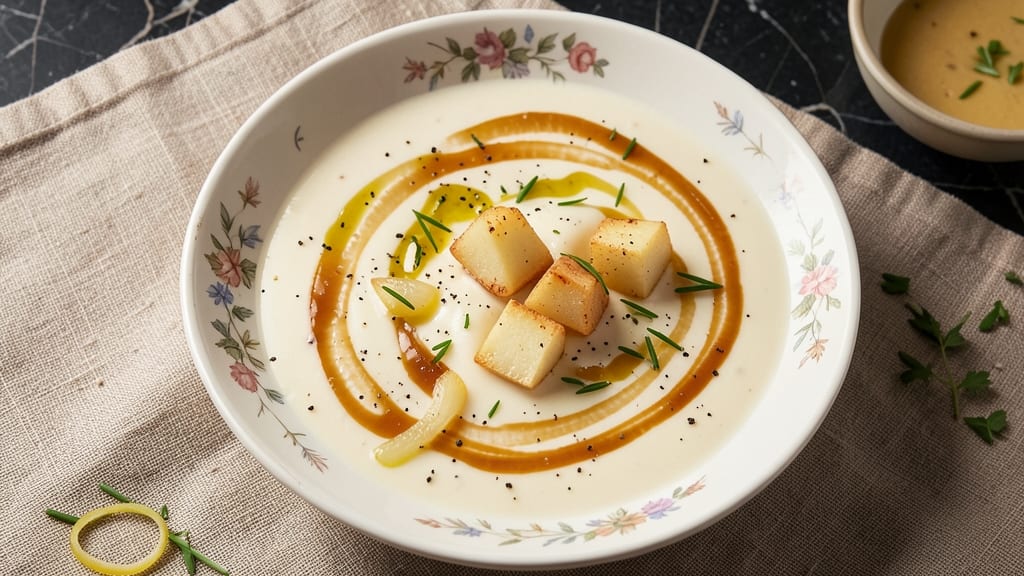
This basic cream of potato soup recipe delivers velvety, lump-free perfection every time—no roux or fancy techniques required. The secret lies in blending the potatoes while still hot and gradually incorporating cream for a silky texture that stays smooth.
I've perfected this version after years of testing, ensuring it's foolproof for home cooks while still feeling like a restaurant-quality bowl.
We start with simple pantry staples: potatoes, onions, garlic, and chicken broth, all simmered until tender before blending into a smooth base. The key to avoiding lumps is blending the hot potatoes first, then slowly adding cream and milk to create that signature creamy consistency.
A touch of butter and thyme adds depth without overpowering the potato's natural sweetness.
What you'll end up with is a rich, comforting soup with a velvety texture that coats your spoon perfectly. The potatoes become tender and slightly caramelized, while the cream adds luxurious mouthfeel.
This recipe serves 6 and comes together in under 45 minutes, making it ideal for weeknight dinners or meal prep.
Serve with crusty bread or oyster crackers for the full experience. The soup reheats beautifully, so it's perfect for leftovers or prepping ahead. Here's how to make it without a single lump in sight.
Ingredients for basic cream of potato soup
Six simple ingredients transform into velvety perfection—no lumps, no fuss.
| Ingredient | Amount | Notes |
|---|---|---|
| Russet Potatoes 🥔 | 2 lbs | Peeled and cubed evenly |
| Yellow Onion 🧅 | 1 whole | Diced small, about 1 cup |
| Garlic Cloves 🧄 | 3 cloves | Minced finely for aroma |
| Chicken Broth 💧 | 4 cups | Low-sodium preferred |
| Heavy Cream 🥛 | 1 cup | Full-fat for best texture |
| Whole Milk 🥛 | ½ cup | Warmed slightly first |
| Unsalted Butter 🧈 | 2 tbsp | Cold, for finishing |
| Fresh Thyme Leaves 🌿 | ¼ cup | Or 1 tsp dried thyme |
| Salt 🧂 | 1 tsp | Adjust to taste |
| Ground Black Pepper 🌶️ | ½ tsp | Freshly cracked |
| Olive Oil 🫒 | 2 tbsp | For sautéing onions |
The potatoes are the star, so pick firm russets—they hold up best to blending. Peel and cube them evenly (about 1.5-inch pieces) so they cook at the same rate. I always grab the organic russets from Whole Foods or the regular store brand at Kroger—they're consistent and budget-friendly. For the broth, low-sodium is key so you can control the saltiness. I keep a big carton of Swanson in my freezer for emergencies, but homemade always tastes better. The onions? Yellow or red both work—just dice them small so they melt into the soup without chunks.
No heavy cream? Half-and-half or coconut milk will work, though the texture gets slightly thinner. Fresh thyme is ideal, but dried works at one-third the amount. If you're out of butter, olive oil or vegan butter keeps the richness. The olive oil for sautéing? Any neutral oil works—just don't use flavored ones like chili or garlic-infused. For extra flavor without extra fat, roast the potatoes first—toss them with olive oil, salt, and pepper at 400°F for 20 minutes before making the soup. Trust me, it's worth it.
This soup tastes even better the next day—reheats perfectly in 2-3 minutes. Store leftovers in the fridge for 4-5 days or freeze for up to 3 months. I like to portion it into glass jars for easy reheating. The butter should be added at the very end—it melts into the hot soup for a silky finish. If you make a big batch, freeze half right away. The texture stays smooth even after freezing, which is a miracle for a cream-based soup.
Why You'll Love This Recipe
- No Fuss, Big Payoff: I swear by this recipe—peel, chop, boil, blend. That’s it. No fancy techniques, no last-minute grocery runs. The Russets break down into velvety chunks while you sauté the onion and garlic, and by the time the broth simmers, you’re basically done.
- Creamy Without Trying: Here’s what sold me—the heavy cream doesn’t just thin it out; it adds this richness that makes every spoonful feel indulgent. The garlic lingers just enough to warm you up, but the potatoes stay the star—soft, buttery, and impossible to resist.
- Leftovers That Still Win: Between us, my soup always lasts four days. Reheat it, and the cream smooths out any texture issues. Add a sprinkle of salt and a crack of black pepper, and it’s like you’re eating it fresh. (Yes, even on a Tuesday night.)
- Budget-Friendly Luxury: Russets and onions are cheap, broth is cheap, and a splash of heavy cream makes it feel special. I make this when I want comfort without breaking the bank. Honestly, it’s my go-to when I’m tired of takeout but don’t want to spend hours cooking.
Step-by-step instructions for cream of potato soup
Here's how to make velvety potato soup with silky texture and zero lumps—every time.
Sauté Onions and Garlic for Flavor Foundation
Heat the 2 tablespoons olive oil in a large pot over medium heat. Add the 1 whole yellow onion (diced) and cook for 5-6 minutes until softened and translucent. Here's where the magic starts—you'll see the onions turn from pale to a beautiful golden hue.
Add the 3 cloves garlic (minced) and cook for another 30 seconds until fragrant. Don't let it brown—just warm through. This aromatic base is what makes the soup sing. If you smell something burning, immediately reduce the heat to low. The onions should be tender enough to mash between your fingers when you test them.
Simmer Potatoes Until Fork-Tender
Add the 2 lbs russet potatoes (cubed evenly) to the pot. Pour in the 4 cups chicken broth and bring to a boil. Once boiling, reduce heat to medium-low and let it simmer for 15-20 minutes until the potatoes are fork-tender.
You'll know they're ready when you can easily pierce them with a fork and the center offers just slight resistance. If you wait too long, they'll turn to mush—this is where the texture control happens. I like to test one piece first before checking the rest. Keep the lid slightly ajar to let any excess steam escape.
Blend Until Silky Smooth
Using an immersion blender, blend the soup directly in the pot until completely smooth. Work in batches if needed, but don't rush this step—you want that velvety texture. If you prefer a slightly chunkier texture, blend only until mostly smooth.
Here's the pro tip: After blending, return the pot to medium heat and let it simmer for 5 minutes uncovered. This helps evaporate any excess moisture that can make the soup watery later. You'll see the surface develop a delicate skin—just break it up with a spoon when you're ready to add the cream.
Add Cream and Warm Through
Reduce heat to low and stir in the 1 cup heavy cream and ½ cup whole milk (warmed slightly). The cream should melt into the soup smoothly—if it looks too thick, add ¼ cup hot broth to loosen it. You want the soup to coat the back of a spoon but still be pourable.
Add the 2 tablespoons cold unsalted butter, ¼ cup fresh thyme leaves, 1 teaspoon salt, and ½ teaspoon ground black pepper. Warm through for 2-3 minutes until everything is integrated and steaming gently. The butter will add richness while the thyme infuses its earthy aroma throughout.
Adjust Consistency and Serve
Taste and adjust seasoning—you might need a bit more salt or pepper depending on your broth. For a thicker consistency, simmer uncovered for another 5 minutes to reduce. For a lighter texture, stir in 2-3 tablespoons hot broth.
Ladle into bowls and garnish with extra thyme if desired. The soup should be smooth, creamy, and rich with potato flavor—no lumps in sight! Serve immediately while hot, with crusty bread on the side. The secret to this perfect texture is patience during blending and proper timing with the cream.
Pro Tips For Making Basic Cream Of Potato Soup
- Boil Potatoes Whole First: Peel and drop whole Russets into boiling water—no chopping yet. They’ll cook faster and stay intact, making them easier to mash later. I used to cube them first, and half the time they’d turn to mush before the broth even simmered.
- Sweat Onions Low and Slow: Cook the diced onion in butter over medium-low heat until translucent, not browned. Rushing this step burns the flavor, and you’ll taste it in every spoonful. I learned this the hard way after making my soup taste like charred onions.
- Strain, Don’t Blend: After simmering potatoes in broth, drain and push them through a fine-mesh sieve instead of blending. You’ll get a smoother, lump-free soup without the gummy texture that comes from over-blending. Yes, it’s more work—but the result is worth it.
- Temper the Cream: Heat the heavy cream separately until warm (not boiling) before stirring it into the soup. Cold cream shocks the hot liquid and can cause curdling. I’ve ruined three batches by ignoring this—now I warm it in the same pot off the heat.
Pro cooking tips for great basic cream of potato soup
Blending Like a Pro
Use an immersion blender for the smoothest texture—it blends directly in the pot, eliminating lumps and saving cleanup. If you don’t have one, transfer the hot soup in batches to a countertop blender (never a blender jar that can’t handle hot liquids—it’ll crack!).
The key is blending hot soup only—cold potatoes blend poorly and create gummy lumps. 🔥
Temperature Control Secrets
Keep your soup at a gentle simmer (small bubbles, not rolling) when adding cream. Cold cream added to hot soup can cause curdling. Warm the ½ cup milk separately in the microwave for 20 seconds before stirring it in—this ensures smooth incorporation.
If the soup looks too thick after adding cream, thin it with ¼ cup hot broth gradually.
Butter Timing Matters
Add the 2 tablespoons cold butter at the very end—this melts into the hot soup for a silky finish. If you add it earlier, the butter will separate instead of emulsify.
For extra richness, I sometimes stir in 1 tablespoon of cream cheese with the butter at the end. This adds a velvety depth without altering the texture. 💫
Potato Prep Tips
Cut potatoes into 1.5-inch cubes for even cooking—smaller pieces turn to mush, while larger ones stay undercooked. For extra flavor, parboil the potatoes in salted water for 5 minutes before adding them to the pot. This jumpstarts the cooking process and ensures they’re fork-tender without overcooking. Drain well before proceeding.
Cream Consistency Hacks
If your soup is too thick after blending, don’t panic—simmer it uncovered for 5 minutes to reduce. For a lighter texture, stir in 2-3 tablespoons hot broth while the soup is still hot.
The goal is a coating consistency—it should cling to the back of a spoon but still be pourable. A splash of lemon juice (just ½ teaspoon) brightens the flavor without thinning the soup.
Equipment Upgrades
Invest in a high-quality immersion blender like the Ninja BN601—it handles hot liquids effortlessly. For blending large batches, a Vitamix or Blendtec is worth the splurge. If you’re short on time, instant pot soups work too—just blend the potatoes while still in the pot after cooking.
The key is heat control—never blend cold potatoes, and always work in batches if needed. ✨
Nutrition facts
Frequently asked questions
Why does my cream of potato soup turn out lumpy?
Lumps usually happen when potatoes aren't blended thoroughly or when cream is added too quickly. Always blend hot potatoes until completely smooth first, then gradually stir in warmed cream while keeping heat at low. For extra insurance, strain through a fine-mesh sieve if needed. The key is patience—rushing this step creates those dreaded lumps!
Can I make this soup without heavy cream?
For a lighter version, substitute with ½ cup Greek yogurt (warmed) or 1 cup coconut milk. The texture will be slightly thinner but still creamy. If using yogurt, add it at the very end with the butter to prevent curdling. For a vegan option, cashew cream (blended soaked cashews) works beautifully too.
How do I fix soup that's too thick or too thin?
For thick soup, simmer uncovered for 5-10 minutes to reduce. For thin soup, stir in 2-3 tablespoons hot broth while heating. The perfect consistency should coat the back of a spoon but still be pourable. A splash of lemon juice (½ teaspoon) brightens flavor without thinning significantly.
What's the best way to reheat leftovers?
Reheat gently on the stovetop over low-medium heat for 3-5 minutes, stirring occasionally. Avoid microwaving as it can make the cream separate. For best results, portion into jars and reheat only what you need. This soup reheats beautifully—taste even better the next day! The texture stays smooth if reheated properly.
Can I use sweet potatoes instead of russets?
Yes, but expect a slightly sweeter flavor and different texture. Sweet potatoes need 5-10 minutes longer to cook through. For best results, reduce the broth by ½ cup since sweet potatoes absorb more liquid. The cream will still blend smoothly, but the soup will have a natural caramel undertone.