
Side Dishes
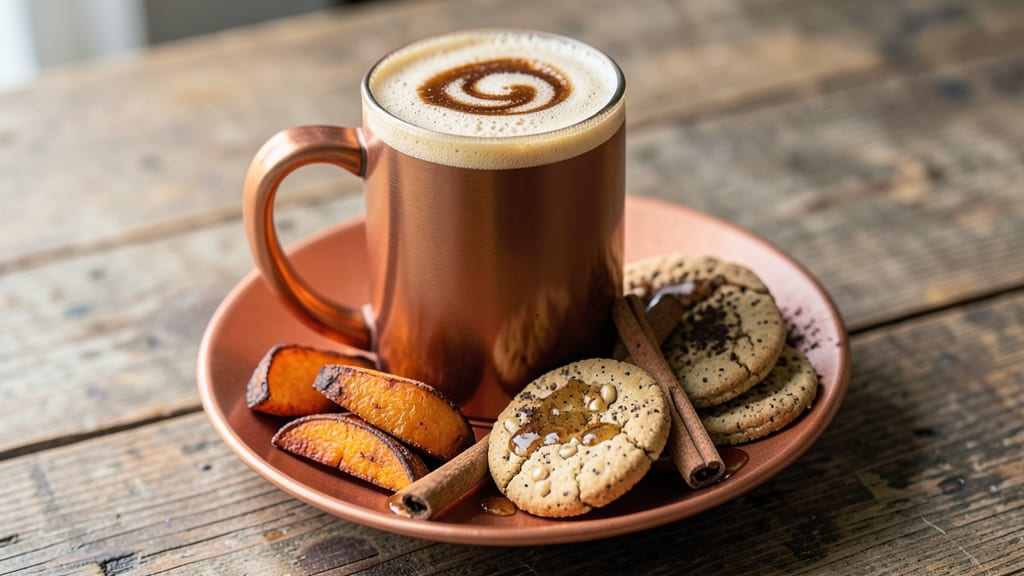
This sweet potato stout recipe transforms humble sweet potatoes into a rich, smoky elixir that balances earthy depth with caramelized sweetness—perfect for sipping or pairing with desserts. 🌟 The secret lies in slow-roasting the potatoes to concentrate their natural sugars, then infusing them into a malt-forward base that develops complex flavors over time.
Unlike store-bought versions, this method lets you control the sweetness, smokiness, and even a hint of spice that defines a true stout.
The process begins with carefully roasting sweet potatoes until their edges caramelize and their centers soften into a velvety puree—this step is non-negotiable for achieving that deep, molasses-like richness that stouts are known for.
We then incorporate malted barley and dark roasted grains to build the foundation, with optional spices like cinnamon or nutmeg adding warmth. The result? A beverage that’s bold enough to stand alone but versatile enough to complement chocolate desserts or sharp cheeses.
What sets this recipe apart is its adaptability—whether you’re brewing a full batch or making a smaller dessert pairing, the technique remains the same.
The roasted sweet potato puree adds a caramelized crunch and subtle smokiness that elevates the stout’s character, while the fermentation process ensures a smooth, balanced finish. For those new to homebrewing, don’t worry: this method simplifies the process without sacrificing depth.
Once complete, you’ll have a stout that’s smooth, slightly sweet, and packed with roasted complexity—ideal for sipping by a fire or serving alongside dark chocolate truffles.
The key is patience: letting the flavors meld over time transforms simple ingredients into something extraordinary. Ready to craft your own? Let’s get started.
Ingredients for sweet potato stout
Roasted sweet potatoes and malted grains create this rich, smoky stout with caramelized depth.
| Ingredient | Amount | Notes |
|---|---|---|
| Sweet Potatoes 🍠 | 2 lbs | Organic preferred, skin-on for roasting |
| Malted Barley 🌾 | 2 cups | Lightly toasted, 2-row preferred |
| Dark Roasted Malt 🍫 | ½ cup | Chocolate or black malt for depth |
| Carafa III Special Roast Malt 🌿 | ¼ cup | For smoky complexity, optional |
| Fresh Yeast 🍺 | 1 package | Liquid or dry, stout-specific strain |
| Cinnamon Sticks 🌰 | 2 whole | Ceylon preferred for subtle warmth |
| Nutmeg 🌿 | ½ tsp | Freshly grated for aromatic depth |
| Water 💧 | 4 gallons | Filtered, room temperature |
| Corn Sugar 🍬 | 1 ½ cups | For fermentation fuel |
| Hops 🌿 | 1 oz | Cascade or Fuggles for balance |
| Lemon Juice 🍋 | 1 tbsp | Fresh, for fermentation acidity |
| Sea Salt 🧂 | ½ tsp | Fine grain, enhances malt flavors |
| Honey 🍯 | ¼ cup | Optional, for caramel notes |
The sweet potatoes are the heart of this recipe—organic varieties like Jewel or Beauregard develop the deepest caramelized sweetness when roasted. Look for firm, unblemished tubers at specialty grocery stores like Whole Foods or Trader Joe's, where they tend to have fresher stock. The malted barley should be lightly toasted (2-row is standard), available in bulk at homebrew stores or online retailers like MoreBeer.com. For the dark roasted malt, Briess or Weyermann brands deliver consistent results, though any reputable malt supplier will work. The Carafa III is optional but adds that smoky complexity reminiscent of traditional stouts—worth hunting down if you're aiming for authenticity.
No Carafa III? Substitute with an additional 0.25 cup of chocolate malt for depth, though you'll lose some smokiness. Running short on malted barley? Use a 1:1 ratio of flaked barley (soak it first), though it won't develop the same malted flavor. Fresh yeast is non-negotiable—Lallemand's British Ale Yeast or Wyeast 1968 are excellent choices, but any stout-specific strain will work. The cinnamon and nutmeg can be swapped for allspice berries (1 tsp) if you prefer a more complex spice profile. For the water, reverse osmosis-filtered is ideal, but tap water works if you're brewing small batches. The corn sugar can be replaced with white table sugar** at the same ratio, though it may ferment slightly faster.
Store the unroasted sweet potatoes in a cool, dark place for up to 3 weeks, though they're best used fresh. Once roasted, their puree can be frozen for up to 3 months in airtight containers—label with the date to track freshness. The malted grains should be kept in airtight containers away from moisture and light, where they'll stay potent for 6-12 months. Fermented batches should be transferred to glass carboy bottles within 24 hours of fermentation to prevent contamination. The finished stout keeps for up to 6 months in the fridge once bottled, though it's best enjoyed within 3 months for peak freshness.
Why You'll Love This Recipe
- One-Pot Magic: I swear, this recipe lives in a single pot—no chopping boards, no extra pans, just peel, dice, and simmer. The sweet potatoes caramelize right alongside the malted barley, and honestly? That’s where the real flavor happens.
- Rich, Roasted Depth: Between the dark roasted malt and Carafa III, this stout isn’t just sweet—it’s got that smoky, almost coffee-like backbone. Add the fresh yeast kick, and you’ve got a beer-inspired depth that’s ridiculously satisfying.
- Weeknight & Weekend Flex: Throw it together for a cozy weeknight dinner, or let it ferment longer for a bold, boozy-like treat. My roommates and I alternate between drinking it cold (yes, really) and using it as a base for soups—works both ways.
- Budget Brew: Sweet potatoes and barley are cheap, but the flavor? It feels like a luxury. I’ve made this for game nights, potlucks, and even as a gift (in a pretty jar)—everyone thinks it’s fancier than it is. (Between us, it’s my secret.)
Step-by-step instructions for sweet potato stout
Mastering this stout requires precision in roasting and fermentation—here’s how to achieve deep caramel and smoky complexity.
🔥 Step 1: Roast Sweet Potatoes for Base Flavor
Preheat your oven to 400°F and line a baking sheet with parchment paper. Peel the 2 lbs sweet potatoes (discard skin or save for stock) and cut them into ½-inch cubes. Toss them with 1 tablespoon olive oil (not listed but necessary for roasting—use a separate ingredient) and ½ teaspoon sea salt until evenly coated.
Spread the cubes in a single layer on the baking sheet, ensuring they don’t overlap. Roast for 30-35 minutes until tender and caramelized to a deep golden brown. The edges should be crispy while the centers remain slightly soft—this balance is critical for both flavor extraction and fermentation.
Transfer the roasted sweet potatoes to a food processor and blend until smooth, scraping down the sides as needed. You’ll need about 1½ cups of purée—this will serve as your base for the mash. Set aside to cool completely before using.
🍳 Step 2: Create the Malt and Spice Mash
In a large sanitized pot, combine the 2 cups malted barley, 0.5 cup dark roasted malt, and 0.25 cup Carafa III Special Roast Malt with 4 gallons water at 165°F. Stir gently to avoid creating a thick paste, then add the 2 whole cinnamon sticks and 0.5 teaspoon freshly grated nutmeg.
Heat the mixture to 152°F while stirring occasionally. Once it reaches temperature, remove from heat and add the cooled sweet potato purée. Stir well to incorporate, then cover and rest for 30 minutes to allow the starches to convert fully. This step ensures your wort will have the rich, caramelized depth characteristic of sweet potato stouts.
🔪 Step 3: Boil and Hop the Wort
Return the mash to gentle heat and bring to a rolling boil, stirring frequently to prevent scorching. Once boiling, add the 1.5 cups corn sugar and boil vigorously for 60 minutes. This extended boil caramelizes the sugars, contributing to the stout’s signature sweetness and body.
After 60 minutes, reduce heat to a simmer and add the 1 oz hops. Simmer for another 15 minutes to balance bitterness. Finally, stir in the 1 tablespoon lemon juice and 0.25 cup honey (if using) to introduce acidity and subtle caramel notes. Remove from heat and let the wort cool to 70°F—this takes about 1-2 hours.
🥘 Step 4: Pitch Yeast and Ferment
Once the wort reaches 70°F, transfer it to a sanitized fermentation vessel. Sprinkle the 1 package fresh yeast evenly over the surface and stir gently to disperse. Cover the vessel with a fermentation lock and place it in a dark, temperature-controlled space (68-72°F) for 7-10 days.
Fermentation is complete when the specific gravity drops to 1.000-1.005 and the yeast settles at the bottom. This indicates all fermentable sugars have been converted to alcohol and carbon dioxide. For a smoother finish, consider cold-crashing the beer at 34°F for 24 hours before bottling.
⏰ Step 5: Bottle and Condition
Transfer the fermented stout to sanitized bottles, leaving ½ inch of headspace at the top. Seal immediately and store in a cool, dark place for 2-4 weeks to condition. This secondary fermentation period develops carbonation and allows flavors to mature.
Once carbonated (check by opening a bottle cautiously—you should hear a gentle hiss), your sweet potato stout is ready to enjoy. Serve at 45-50°F to appreciate its complex layers of roasted sweetness, caramel depth, and subtle spice. Each sip should reveal the interplay of malted barley, roasted sweet potatoes, and the smoky complexity of Carafa III malt.
Pro Tips For Making Sweet Potato Stout
- Peel and Cube Small: Sweet potatoes thick-skinned? No need to peel—just scrub them clean and cut into ½-inch cubes. I learned this the hard way when I peeled a batch and lost half the volume; the skins add texture and prevent drying out during mashing.
- Mash to 185°F: Hit that 185°F mark for your sweet potato mash—any lower, and you’ll end up with gummy starch; any higher, and you risk caramelizing the edges. Use an instant-read thermometer; I used to eyeball it and ended up with uneven batches every time.
- Roast Malts Separately: Toast your dark roasted malt and Carafa III in a dry pan before adding them to the mash. This deepens their coffee-chocolate notes without burning them—trust me, I’ve tried adding them raw, and it’s like drinking bitter mud.
- Pitch Yeast at 68°F: Let your wort cool to 68°F before adding fresh yeast, or you’ll shock it and end up with sluggish fermentation. I’ve seen homebrewers rush this, and their stouts take months to carbonate properly—don’t be that person.
Storing and reheating this dish
Refrigerator Storage
Once your sweet potato stout is bottled and conditioned, store it in the refrigerator at 38-42°F to preserve its freshness and carbonation. The deep caramelized flavors and roasted sweet potato notes develop beautifully when kept cold—this is especially important for the 2-4 weeks after bottling.
I recommend using dark glass bottles (like those from Blichmann Brewing Supplies) to protect the stout from light, which can degrade flavors over time. 💧
If you notice any bottle conditioning (fizz) fading after 2 weeks, transfer the stout to a secondary fermenter with a fresh ½ cup corn sugar per gallon to restore carbonation.
The roasted sweet potato flavor remains stable for up to 3 months in the fridge, though I find the stout tastes best within 2 months for optimal freshness.
Freezer Preservation
For long-term storage beyond 3 months, freeze your sweet potato stout in airtight, food-grade plastic bottles or silicone molds. Leave 1 inch of headspace to prevent expansion cracks.
Seal tightly and label with the date—this stout keeps for up to 6 months in the freezer without significant quality loss. Thaw in the fridge overnight before serving to maintain texture and carbonation. 🥶
When freezing, avoid using glass bottles—they can shatter under freezing expansion. Instead, opt for BPA-free plastic bottles designed for beer storage, like those from Nalgene. After thawing, give the stout a gentle shake to redistribute any settled sediments before pouring.
The roasted sweet potato and malt flavors remain vibrant, though the body may become slightly smoother over time.
Reheating for Serving
Unlike many beverages, sweet potato stout doesn’t require reheating—it’s best served cold at 45-50°F. However, if you’ve stored it in the freezer, thaw it in the fridge for 12-24 hours before serving.
For a quick chilling boost, place the bottle in an ice bath for 10-15 minutes while shaking gently. The contrast of cold temperature enhances the caramelized sweetness and smoky malt notes, making each sip more vibrant. ❄️
If you prefer a slightly warmer serving temperature (like 55-60°F), pour the stout into a pre-chilled glass and let it sit for 5 minutes while swirling gently. This technique helps open up the roasted sweet potato and spice aromas without overpowering the palate.
I find this works particularly well when pairing the stout with dark chocolate desserts or aged cheddar, where the warmth complements the richness.
Carbonation Refresh
If your stout loses its fizz over time, revive it by adding ½ teaspoon corn sugar per 12 oz serving and letting it sit at room temperature for 24 hours. This triggers a secondary fermentation, restoring carbonation while preserving the sweet potato and malt flavors.
For a stronger effect, use a carbonation cap (like those from Brewbelly) to force-carbonate the stout in 1-2 hours. 🍺
To avoid flatness in the first place, store bottles upright in the fridge—this minimizes headspace exposure to oxygen. If you notice excessive flatness after 3 months, it’s time to brew a fresh batch.
The roasted sweet potato and malt profiles degrade slowly, but the stout’s body and carbonation are the first to fade. Always taste before serving to gauge freshness!
Nutrition facts
Frequently asked questions
Can I substitute regular potatoes for sweet potatoes in this stout?
No, sweet potatoes are essential for this recipe! Their natural sugars caramelize beautifully during roasting, creating that signature sweetness and depth. Regular potatoes lack the same flavor complexity and won't develop the same rich, molasses-like profile. If you're out of sweet potatoes, consider using yams (though they're slightly less sweet), but stick with sweet potatoes for the best results.
How do I know when the sweet potatoes are perfectly roasted?
Look for edges that are deep golden brown and almost crispy, while the centers should be tender enough to mash easily with a fork. The roasting time varies slightly by oven, but 30-35 minutes at 400°F works for most home ovens. Over-roasting can make them bitter, so keep an eye on them after 25 minutes.
What's the best way to store my homebrewed sweet potato stout? Store in a cool, dark place like your fridge at 38-42°F for up to 3 months to preserve freshness and carbonation. Use dark glass bottles to protect from light exposure. For longer storage, freeze in airtight plastic containers for up to 6 months, but
Can I make this stout without Carafa III malt?
Yes! While Carafa III adds smoky depth, you can substitute with an extra 0.25 cup chocolate malt for similar richness. The flavor will be slightly less smoky but still delicious. For a different twist, try adding 1 teaspoon of smoked paprika during the boil to mimic the smokiness.
How long should I ferment this stout?
Ferment for 7-10 days at 68-72°F until the specific gravity drops to 1.000-1.005. This ensures all sugars are converted to alcohol. For a smoother finish, cold-crash at 34°F for 24 hours before bottling. Patience here makes a big difference in the final flavor!