
Main Courses
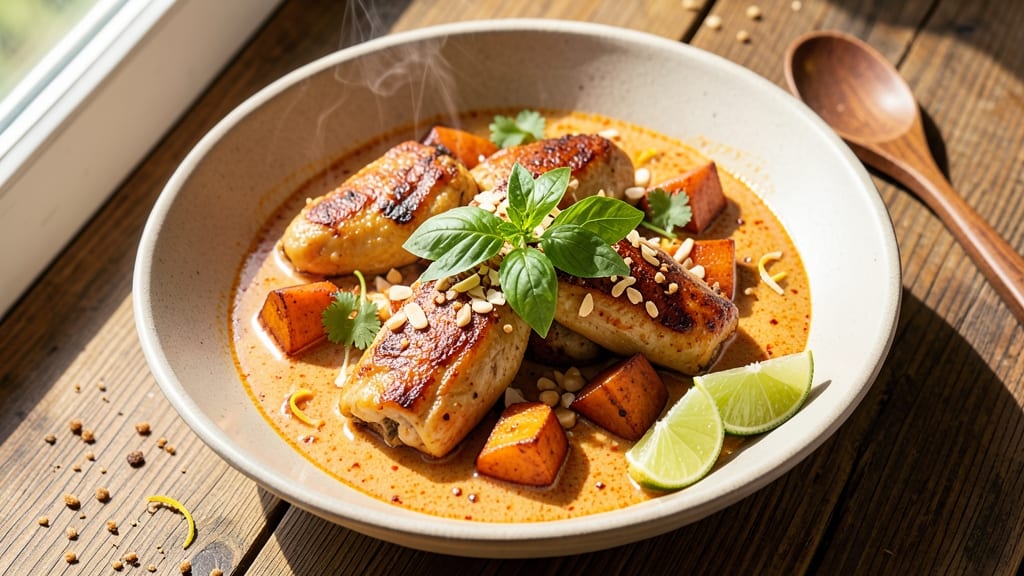
This Thai chicken sweet potato curry recipe brings the vibrant flavors of Thailand to your dinner table with fragrant lemongrass, creamy coconut milk, and tender sweet potatoes. I developed this dish after years of perfecting the balance between sweet, spicy, and savory—each bite delivers a harmony of traditional Thai spices with modern accessibility. The secret lies in slow-cooked chicken and caramelized sweet potatoes that soak up the aromatic sauce.
The beauty of this recipe is its simplicity—just 30 minutes of active prep, then hands-off simmering while you enjoy the intoxicating aroma filling your kitchen. I use fresh lemongrass and galangal for that authentic Thai depth, but don't worry if you can't find them; dried spices work beautifully as substitutes.
The coconut milk creates a luscious, velvety base that perfectly complements the tender chicken and naturally sweet potatoes.
What you'll end up with is a restaurant-quality curry that's rich, fragrant, and packed with complex flavors—creamy yet not too heavy, sweet yet balanced with heat. The sweet potatoes develop a caramelized texture that contrasts beautifully with the tender chicken, while the sauce clings to every bite.
This dish is perfect for feeding a crowd or meal prepping for the week ahead.
Serve with steamed jasmine rice to soak up every last drop of that fragrant coconut sauce. The combination of textures and flavors makes this curry a weeknight favorite that feels like a special occasion. Let's get cooking!
Ingredients for thai chicken sweet potato curry
Fragrant lemongrass and creamy coconut milk transform simple chicken and sweet potatoes into restaurant-quality curry.
| Ingredient | Amount | Notes |
|---|---|---|
| Boneless Chicken Thighs 🍗 | 1 ½ lb | Skin-on for flavor, cut into bite-sized pieces |
| Sweet Potatoes 🍠 | 2 medium | Peeled, cut into 1-inch chunks |
| Fresh Lemongrass 🌿 | 1 stalk | Bruised and cut into 2-inch pieces |
| Galangal | 2 inches | Peeled, sliced thinly (or 1 tbsp galangal paste) |
| Coconut Milk 🥥 | 1 can | Full-fat, 13.5 oz can |
| Red Curry Paste 🌶️ | 2 tbsp | Store-bought or homemade |
| Fish Sauce 🍶 | 1 tbsp | Red Boat preferred |
| Brown Sugar 🍯 | 2 tbsp | Light or dark variety |
| Lime Juice 🍋 | 2 tbsp | Freshly squeezed |
| Fresh Cilantro 🌿 | ¼ cup | Chopped, for garnish |
| Vegetable Oil 🫒 | 1 tbsp | For searing |
| Salt 🧂 | ½ tsp | Kosher or sea salt |
| Black Pepper 🌶️ | ¼ tsp | Freshly ground |
| Garlic Cloves 🧄 | 4 cloves | Minced |
| Thai Basil 🌿 | ¼ cup | Or regular basil in a pinch |
Lemongrass and galangal are the heart of this dish—find them at Asian markets or well-stocked grocery stores like Whole Foods. If galangal's unavailable, ginger at half the amount works in a pinch, though it won't be identical. For lemongrass, grab the stalks with tight, pale leaves—avoid any that feel woody or dried out. The chicken thighs should have visible fat marbling for juiciness. Costco often has great prices for bulk chicken, or look for bone-in thighs at your local butcher for extra flavor. Sweet potatoes should be firm with smooth skin—no soft spots or bruises.
No fresh galangal? 1 tbsp galangal paste (found in Asian aisles) or 1 tsp ginger powder will do, though the flavor won't be quite the same. Thai basil is ideal, but regular basil or cilantro work if you're improvising. The red curry paste is non-negotiable—Maesri or Thai Kitchen brands are my go-tos, but any good-quality paste will work. For the coconut milk, full-fat is essential—light versions won't give that creamy texture. If you can't find full-fat, add 1 tbsp coconut cream to light coconut milk for richness. The brown sugar should be light unless you want deeper caramel notes.
This curry tastes even better the next day as flavors meld—make a double batch and freeze half for lazy weeknights. Store in airtight containers for 4-5 days in the fridge, or freeze for up to 3 months. The sauce thickens as it cools, so add a splash of water or coconut milk when reheating. Garnish with fresh cilantro and Thai basil right before serving—they wilt fast once chopped. Serve with steamed jasmine rice to soak up every last drop of that fragrant sauce.
Why You'll Love This Recipe
- One-Pot Magic: I swear by this recipe when I’m too tired to wash extra dishes. Toss everything—chicken, sweet potatoes, galangal, lemongrass—into one pot with coconut milk, and let it simmer. The sweet potatoes soften just enough to soak up all the aromatic broth, while the chicken stays juicy without drying out. No chopping boards left in the sink, just pure satisfaction.
- Sweet Heat Balance: Between us, I’ve tried curries that were either too sweet or too spicy. This one? It’s perfect—the natural sweetness of the potatoes plays off the bright citrusy lemongrass, while the galangal adds that deep, earthy kick without overpowering. The coconut milk rounds it all out, creamy but never heavy. Honestly, it’s the kind of flavor that makes you pause mid-bite.
- Leftovers That Don’t Suck: I make this on Sundays because it actually improves the next day. The flavors meld even more, and the texture? Even better—slightly thicker, with the chicken falling apart at the touch of a fork. Pack it for lunches or reheat it for dinner; it’s just as good cold in a wrap or over rice. No sad, dry reheated curry here.
- Budget-Friendly Luxury: Here’s what sold me—this tastes like a fancy restaurant dish, but the ingredients won’t break the bank. Chicken thighs are cheaper than breasts, sweet potatoes last forever, and lemongrass (plus galangal if you can find it) stretches a long way. For under $15, I feed four people something that feels special. That’s my kind of cooking win.
Step-by-step instructions for Thai chicken sweet potato curry
This aromatic curry comes together with layers of flavor—start with searing chicken, then build the fragrant base.
Sear the Chicken for Maximum Flavor
Heat the 1 tablespoon vegetable oil in a large pot or deep skillet over medium-high heat until shimmering. Pat the 1.5 lb boneless chicken thighs dry with paper towels—this ensures a proper sear. Working in batches if needed, add the chicken pieces and cook undisturbed for 4-5 minutes until golden brown on one side. Flip and sear the other side for another 3-4 minutes. You'll see the edges develop a deep caramelization—that's your signal the chicken is ready.
Remove the chicken from the pot and set aside. This initial searing locks in juices and develops deep, meaty flavors that will infuse the curry. If the oil starts smoking before the chicken browns, reduce the heat slightly—you want color, not char.
Build the Aromatic Curry Base
In the same pot, reduce heat to medium and add the 2 inches galangal (peeled and sliced) and 4 cloves garlic (minced). Stir for 1 minute until the galangal softens and the garlic becomes fragrant—this releases their essential oils. Add the 2 tbsp red curry paste and stir for another 30 seconds until it darkens slightly and fills your kitchen with that unmistakable Thai aroma.
Pour in the 1 can coconut milk, scraping up any browned bits from the bottom of the pot. Add the 1 tbsp fish sauce and 2 tbsp brown sugar, then bring to a gentle simmer. This is where the magic happens—the coconut milk will slowly infuse with the spices, creating a velvety base. Let it simmer for 5 minutes while you prepare the sweet potatoes.
Add Sweet Potatoes and Simmer
Peel and cut the 2 medium sweet potatoes into 1-inch chunks—uniform size ensures even cooking. Add them to the simmering curry along with the 1 stalk fresh lemongrass (bruised and cut into 2-inch pieces). Stir gently to submerge everything in the coconut milk mixture. The sweet potatoes should be mostly covered, but a little exposure to the sauce helps develop flavor.
Return the seared chicken to the pot, spooning some of the curry sauce over the top to coat. Partially cover and simmer for 15-20 minutes on medium-low heat, stirring occasionally. You're looking for the sweet potatoes to become tender when pierced with a fork—fork-tender is the goal, not mushy. The chicken will finish cooking in this time, reaching an internal temperature of 165°F.
Finish with Bright, Balanced Flavors
Once the sweet potatoes are tender, stir in the 2 tbsp lime juice and adjust seasoning with the 0.5 tsp salt and 0.25 tsp black pepper. Taste and add more fish sauce if needed—this is where you balance the sweetness of the coconut and sweet potatoes with the savory umami. The curry should be vibrant, with a perfect harmony of spicy, sweet, and tangy notes.
Remove from heat and let the curry sit for 5 minutes—this allows all the flavors to meld together. Stir in the 0.25 cup Thai basil just before serving to keep its bright flavor intact. The basil will wilt slightly but still deliver that fresh, aromatic punch that Thai curries are known for.
Pro Tips For Making Thai Chicken Sweet Potato Curry
- Sear Chicken First: Hit the chicken thighs with a quick 3-4 minute sear in a hot pan before adding anything else—this locks in juices and builds flavor. I used to skip this and ended up with rubbery chicken that soaked up the coconut milk like a sponge instead of staying tender.
- Pound the Galangal: Galangal’s tough fibers need a good smack with the flat side of a knife or meat mallet before slicing—otherwise, you’ll end up with a curry that’s more chewy than aromatic. My first attempt tasted like I’d forgotten the spice entirely.
- Simmer Sweet Potatoes Low: Add the sweet potatoes after the coconut milk comes to a gentle simmer, not before—otherwise, they’ll turn to mush instead of caramelizing into tender, flavorful chunks. Aim for 15-20 minutes on low heat, stirring occasionally.
- Use Coconut Milk Twice: Strain the thick cream from the can of coconut milk after blending your paste, then save the lighter liquid for later—this keeps the curry rich without making it greasy. I now save the cream for a quick drizzle at the end, and it makes a real difference.
Regional styles of this thai chicken sweet potato curry
Thai-Inspired Adaptations
This curry draws from classic Thai techniques but adapts them for home cooks. The red curry paste is the foundation—look for Maesri or Thai Kitchen brands for that authentic heat. I like to toast the paste in the pot for 30 seconds before adding coconut milk to deepen its flavor.
This step mimics traditional Thai cooking where spices are bloomed in oil before liquids are added. 🌶️
For extra authenticity, use Thai eggplant instead of sweet potatoes—its mild sweetness and creamy texture pair beautifully with coconut milk. If you can't find it, regular eggplant works, though the texture will be slightly different. The key is to keep the sweet element balanced with the curry's natural richness.
Isaan-Influenced Twist
In Thailand's Isaan region, they often use dried shrimp and fermented fish sauce for depth. For this recipe, I recommend adding 1 teaspoon of dried shrimp (found in Asian markets) to the curry base for a savory umami boost.
It dissolves completely into the sauce, adding complexity without overpowering the sweet potatoes. 🍤
Another Isaan technique is to add roasted chili flakes at the end for smoky heat. Simply toast 1 teaspoon of red chili flakes in a dry pan for 30 seconds until fragrant, then sprinkle over the finished curry.
This adds a smoky dimension that elevates the dish from restaurant-style to street-food-inspired.
Southern Thai Style
Southern Thai curries often feature kaffir lime leaves for their citrusy aroma. Add 2-3 leaves (torn in half) to the simmering curry along with the lemongrass. Remove them before serving since they're not meant to be eaten.
The leaves infuse the coconut milk with a bright, floral note that cuts through the richness. 🍋
For a Southern Thai touch, finish the curry with 1 tablespoon of palm sugar instead of brown sugar. Palm sugar has a caramel-like depth that enhances the coconut milk's natural sweetness. It's available in Asian markets or online—just make sure it's finely ground for easy dissolving.
Modern Fusion Approach
For a contemporary twist, swap the sweet potatoes for butternut squash—its nutty sweetness pairs wonderfully with coconut milk. Cut the squash into 1-inch cubes and roast them separately until tender before adding to the curry. This adds a caramelized texture that contrasts beautifully with the creamy sauce. 🍠
Another fusion idea: stir in 1 cup of cooked jasmine rice into the curry during the final 5 minutes of cooking. This transforms the dish into a one-pot rice curry that's perfect for meal prep.
The rice soaks up the sauce while staying separate enough to scoop up with each bite.
Spice Level Customization
Thai curries vary dramatically in heat. For a mild version, reduce the curry paste to 1 tablespoon and add ½ teaspoon of honey to balance any lingering spice.
For medium heat, use the full 2 tablespoons of paste and add 1 teaspoon of chili flakes at the end. 🌶️
For a spicy kick, add 1-2 slices of fresh Thai bird's eye chili (seeds removed for less heat) to the simmering curry. Remove them before serving—this adds a bright, fruity heat that's characteristic of street food curries.
Always taste as you go, especially when using fresh chilies, as heat levels can vary significantly.
Nutrition facts
Frequently asked questions
Can I substitute chicken breast for thighs in this recipe?
Chicken breast works, but thighs are ideal for this curry. Thighs stay juicier during the long simmer and have more fat for flavor. If using breast, cut into 1-inch pieces and cook for 10 minutes less to avoid drying out. For extra moisture, add 2 tablespoons of coconut milk when returning the chicken to the pot.
How do I make this curry less spicy?
Start by reducing the red curry paste to 1 tablespoon instead of 2. For extra mildness, add ½ teaspoon of honey or 1 teaspoon of brown sugar during the final simmer. If you've already cooked it, stir in 1 tablespoon of coconut milk to dilute the heat. Taste as you go—Thai curries build flavor over time!
Can I make this curry in an Instant Pot?
Sear the chicken first, then add all ingredients except the basil. Cook on high pressure for 8 minutes, then quick-release. Stir in lime juice and basil at the end. The Instant Pot version finishes in 25 minutes total—perfect for busy weeknights. For extra richness, add ½ cup of water to prevent burning.
What's the best way to reheat leftovers?
Reheat gently on the stove over low heat with 2 tablespoons of water or coconut milk to prevent drying. Avoid microwaving—it makes the sauce separate. For best results, reheat just until warmed through (3-5 minutes) and stir well. The curry tastes even better the next day as flavors meld!
Why did my sweet potatoes turn mushy?
Overcooking or cutting them too small causes mushiness. For perfect texture, keep chunks 1-inch and simmer for 15-20 minutes max. If they're still firm, cover and cook 5 minutes longer. For extra tenderness, add ¼ cup of water to the pot during simmering. The sweet potatoes should be fork-tender, not falling apart!